Clear Pork Rib Soup (清炖排骨汤) is the quintessential Chinese home soup — a crystal-clear, lightly seasoned broth that lets the pure pork flavor shine. Unlike Western stews, this soup is intentionally subtle, with just ginger, scallions, and a touch of salt coaxing flavor from pork ribs and daikon radish over a gentle 2-hour simmer.
In Chinese cooking, 清炖 (qīng dùn) means “clear-simmered” — a technique that treats the broth itself as the dish. It sits at the opposite end of the spectrum from rich, milky soups like pork-bone ramen broth: the goal is transparency, a clean aroma, and a flavor so pure it tastes restorative. Families across Guangdong, Jiangnan, and northern China make a version of this soup year-round, adding whatever vegetable is in season — daikon in winter, corn in summer, lotus root in autumn.
This recipe comes from a Cantonese grandmother who taught me the cardinal rule: never let the soup boil. A rolling boil turns the broth cloudy and rough. A gentle simmer keeps it crystal clear and smooth, the hallmark of a well-made Chinese clear soup.
清炖 vs. 老火汤: Two Kinds of Chinese Soup
Cantonese soup culture distinguishes between two broad approaches. 老火汤 (“old fire soup”) is the long-simmered medicinal style — hours on the stove with dried herbs, roots, and sometimes seeds, producing a darker, more concentrated broth with a stated purpose (cooling, warming, nourishing). 清炖 is the other end: a short, gentle simmer with minimal ingredients, where the broth stays clear and the flavor is the meat’s own. Both appear on Cantonese tables, often on the same day — a 老火汤 for its properties, a 清汤 like this one for the pleasure of drinking a clean, sweet broth. This recipe belongs firmly in the second category, and its virtue is that it asks for nothing beyond good ribs, fresh aromatics, and patience.
Why the Broth Must Never Boil
- A rolling boil emulsifies fat and protein — that is what turns a clear broth milky and gives it a rough, granular mouthfeel
- A bare simmer keeps everything separate — fat rises to the surface where it can be skimmed, and proteins coagulate rather than dispersing
- Blanch the ribs first — 3 minutes in boiling water, then rinse; this removes the blood and impurities that cloud the broth
- Skim during the first 30 minutes — foam and grey scum rise early, and removing them promptly is what makes the final broth clean
- Do not stir — stirring disturbs the sediment at the bottom and clouds the liquid
- Season at the end — salt added early tightens the meat; add it in the last 10 minutes
- Let it settle before serving — a few minutes off the heat lets any remaining particles sink
Seasonal Vegetables
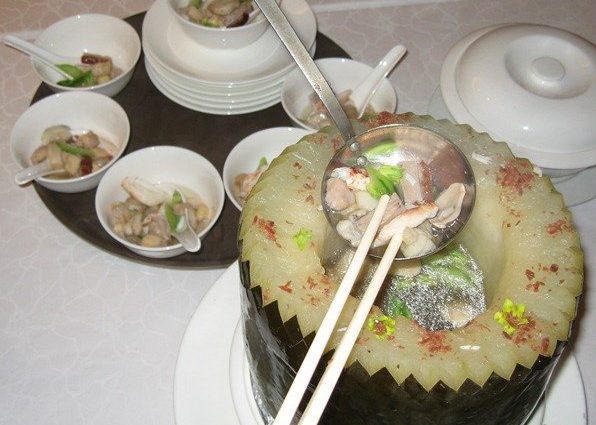
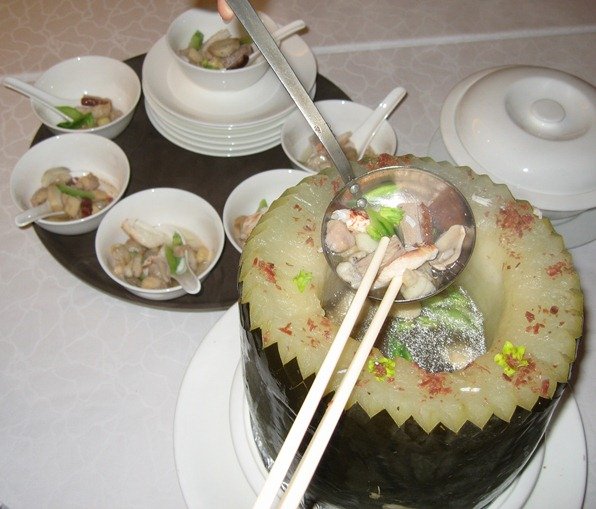
The soup is a canvas, and what goes in it changes with the calendar. Daikon radish in winter is the most common pairing — it turns translucent and sweet, absorbing the pork flavor. Corn and carrot in summer add sweetness and color. Lotus root in autumn gives a starchy, faintly crunchy texture. Winter melon, chayote, or simply a handful of goji berries and red dates are all traditional. The rule is that the vegetable should be mild, so it supports the broth rather than dominating it.
Ingredients and Where to Find Them
- Pork ribs — pork spare ribs, cut into 4cm pieces
- Daikon radish — daikon, or a seasonal substitute
- Dried scallops — dried scallops, optional but traditional for extra sweetness
Also needed: ginger, scallions, Shaoxing wine, salt, and white pepper. Optional additions: goji berries, red dates, corn, carrot, or lotus root.
How to Make It
- Blanch 800g (1.75 lb) pork ribs in boiling water for 3 minutes; drain and rinse off all scum
- Place the ribs in a pot with 2.5 liters cold water, 5 ginger slices, and 3 scallions; add 1 tablespoon Shaoxing wine
- Bring to a bare simmer over medium heat — small bubbles only, never a rolling boil
- Skim the foam carefully for the first 30 minutes
- Add 500g (1.1 lb) daikon cut into chunks (or your seasonal vegetable) and simmer 90 minutes
- Season with salt and a pinch of white pepper in the last 10 minutes
- Skim any surface fat, ladle into bowls, and scatter with chopped scallions
Variations
- With lotus root (莲藕排骨汤) — an autumn classic; simmer the lotus root for the full 2 hours
- With corn and carrot — a sweeter, lighter summer version
- With winter melon — add in the last 30 minutes, as it softens quickly
- With 瑶柱 and red dates — a Cantonese-style upgrade; the dried scallops add depth and sweetness
Frequently Asked Questions
Why did my soup turn cloudy?
It boiled, or the ribs were not blanched. Keep the pot at a bare simmer with only occasional bubbles, blanch the ribs first and rinse them, and skim the foam in the first half hour. Cloudiness comes from emulsified fat and dispersed protein, both of which are avoidable.
Should I salt the soup at the beginning?
No — add salt in the last ten minutes. Salt added early draws moisture out of the meat and can make the ribs firmer, and it also concentrates as the broth reduces, risking an over-seasoned result.
How long does it keep?
Refrigerated in a sealed container, it keeps 3 days; the flavor actually deepens overnight. Reheat gently on the stove — never boil — and skim any solidified fat before serving. It also freezes well for up to 2 months.
Can I make it in a slow cooker?
Yes, and it is well suited to one — 6 hours on low produces a clear, sweet broth. Blanch the ribs first and skim any foam before closing the lid, and add the vegetables in the last 90 minutes so they do not disintegrate.
More Nourishing Soups
Love slow-simmered soups? Try my Lotus Root Pork Rib Soup 莲藕排骨汤, the peppery Pig Lung and Almond Soup 猪肺杏仁汤, or the light Spinach Tofu Soup 菠菜豆腐汤.
As an Amazon Associate, I earn from qualifying purchases. These are affiliate links at no extra cost to you.