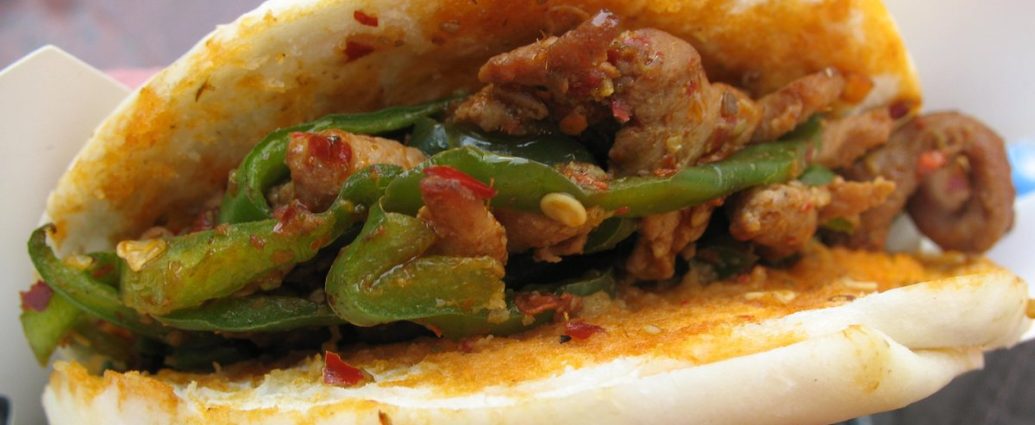
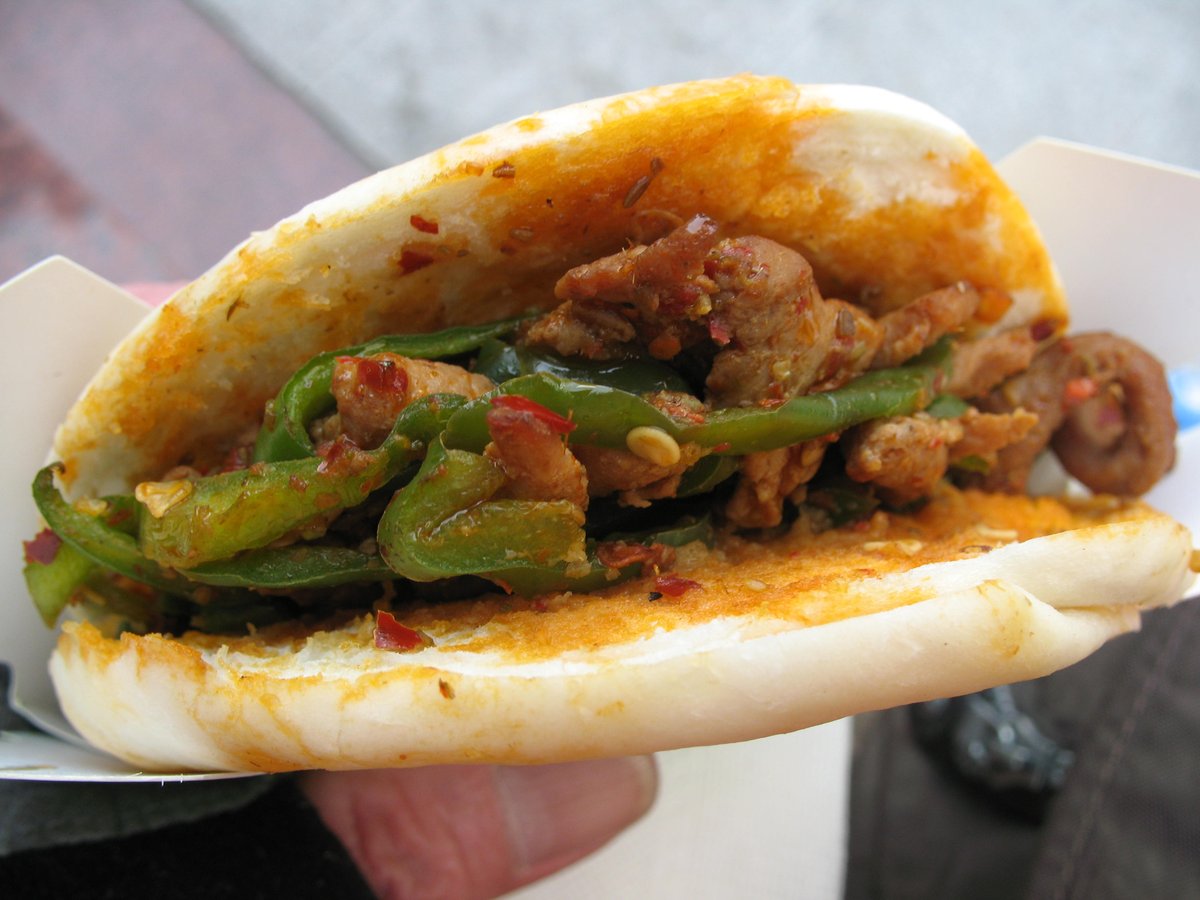
Rou Jia Mo (肉夹馍), often called the Chinese hamburger, is one of China’s most beloved street foods — tender, fall-apart braised pork belly crammed into a warm, chewy flatbread, finished with a sprinkle of fresh cilantro and a drizzle of braising jus. It is messy, satisfying, and utterly addictive.
The name is a small linguistic puzzle: 肉夹馍 literally reads “meat sandwiching bread,” which is backwards. The usual explanation is that it is a contraction of 肉夹于馍 — “meat sandwiched in bread” — with the 于 dropped over time. It is a Xi’an specialty, and in Shaanxi the dish has a formal vocabulary: the meat is 腊汁肉 (braised pork in a master brine) and the bread is 白吉馍, a dense, chewy flatbread that is steamed then pan-fried. The brine is often described as a 老汤 (old broth) kept and replenished for years, which is why a good 肉夹馍 tastes like nothing else.
This recipe comes from a street vendor in Xi’an who has been making rou jia mo for over 30 years. His secret: a spice blend of star anise, cassia, cloves, and Sichuan peppercorns that perfumes the pork as it braises for hours until it surrenders into silky, shreddable perfection.
The Braise: 腊汁肉
The pork is the heart of the dish, and it is braised in a way that has more in common with a master brine than a simple stew. Aromatics and spices go in, the pork belly simmers gently for two to three hours, and the liquid is then reserved and reused — each batch deepening the flavor. The meat is not sliced when it is served; it is chopped on a wooden board with a cleaver and moistened with a spoonful of the braising liquid, so it stays juicy inside the bread.
- Pork belly with skin — the fat and collagen are what make the meat shreddable and rich
- A generous spice blend — star anise, cassia bark, cloves, fennel, Sichuan peppercorns, and bay leaf
- Rock sugar and both soy sauces — for the deep reddish-brown color and sweet-savory depth
- Long, gentle braise — 2–3 hours at a bare simmer; the meat should fall apart under light pressure
- Keep the liquid — the braising broth is used to moisten the chopped meat, and it can be frozen and reused
The Bread: 白吉馍
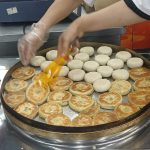
白吉馍 is not a soft bun. It is a dense, chewy flatbread made from a simple flour-and-water dough, shaped into a disc, and cooked in two stages: first on a dry griddle, then briefly in an oven or covered pan so the interior steams while the outside crisps. The result is a bread with a thin, faintly crisp crust and a tender, layered crumb — strong enough to hold a generous amount of juicy meat without disintegrating. A soft Western bun would collapse immediately.
Ingredients and Where to Find Them
- Pork belly — skin-on pork belly, in one large piece
- Star anise and cassia — star anise and cassia bark for the braise
- Rock sugar — rock sugar for color and balance
Also needed: light and dark soy sauce, Shaoxing wine, ginger, scallions, garlic, Sichuan peppercorns, fennel seeds, cloves, bay leaves, and cilantro. For the bread: all-purpose flour, yeast, water, and a pinch of salt.
How to Make It
- Cut 1kg (2.2 lb) pork belly into large chunks and blanch 3 minutes in boiling water; drain
- Combine with 3 star anise, 1 cassia stick, 6 cloves, 1 teaspoon fennel, 1 teaspoon Sichuan peppercorns, 2 bay leaves, ginger, scallions, 3 tablespoons light soy, 1 tablespoon dark soy, 2 tablespoons Shaoxing wine, and 30g rock sugar
- Add water to cover, bring to a boil, then simmer gently for 2.5 hours until the meat falls apart
- For the bread: mix 400g (3.3 cups) flour, 1 teaspoon yeast, 1/2 teaspoon salt, and 220ml water; knead 8 minutes, rest 1 hour, then divide into 8 pieces
- Roll each piece into a long strip, coil it, and flatten into a 1cm disc; rest 15 minutes
- Cook the discs on a dry griddle over medium heat for 3 minutes per side, then cover and steam 3 minutes, or finish in a 200°C (400°F) oven for 5 minutes
- Chop the braised pork finely with a cleaver, moisten with a spoonful of braising liquid, split a warm mo, and fill it; add cilantro and a drizzle of jus
Variations
- With beef — 腊牛肉夹馍 uses the same brine with beef shank; a common Xi’an variation
- With a fried egg — 蛋夹馍 adds a fried egg alongside the pork
- With green pepper — chopped raw green pepper mixed into the meat adds a fresh crunch
- With extra chili oil — a spoonful of chili oil in the filling is common in Shaanxi
Frequently Asked Questions
Why is it called “meat sandwiching bread” if the meat is inside the bread?
It is generally explained as a contraction of 肉夹于馍 — “meat sandwiched in bread” — with the character 于 dropped through everyday use. The name has been fixed in this form for centuries and is not meant to be read literally.
What cut of pork should I use?
Skin-on pork belly is traditional — the fat and collagen break down during the long braise and give the meat its shreddable, juicy texture. Pork shoulder with a good fat cap also works. Lean cuts like loin turn dry and stringy.
Can I use a slow cooker?
Yes, for the braise — 6–8 hours on low works well. Brown the pork and bloom the spices in a pan first, then transfer everything to the slow cooker. The bread must still be made fresh, as it does not keep well.
How do I reheat leftover rou jia mo?
Reheat the pork in a pan with a splash of water. Reheat the mo in a dry pan or toaster oven for 2 minutes. Assemble fresh — never microwave the assembled burger or the bread becomes rubbery.
More Chinese Street Food
Love night-market flavors? Try my Tanghulu 糖葫芦, the smoky Lamb Skewers 羊肉串, or the savory Jianbing 煎饼果子.
As an Amazon Associate, I earn from qualifying purchases. These are affiliate links at no extra cost to you.