
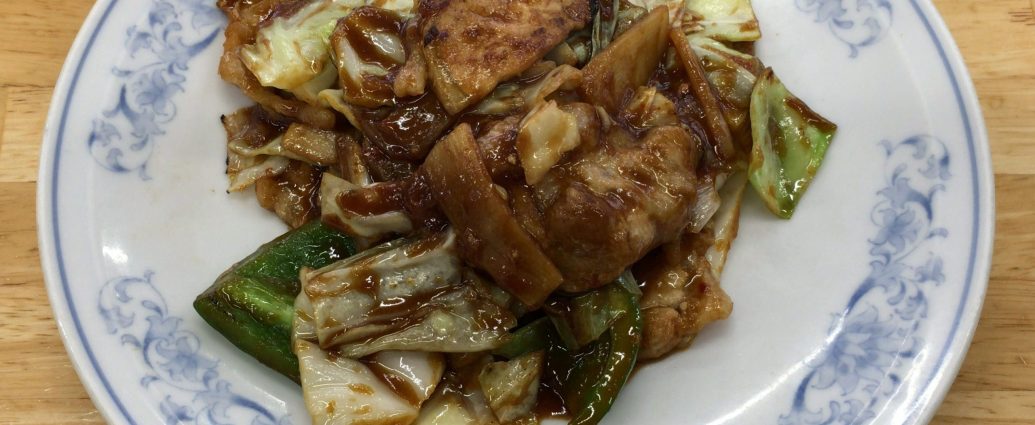
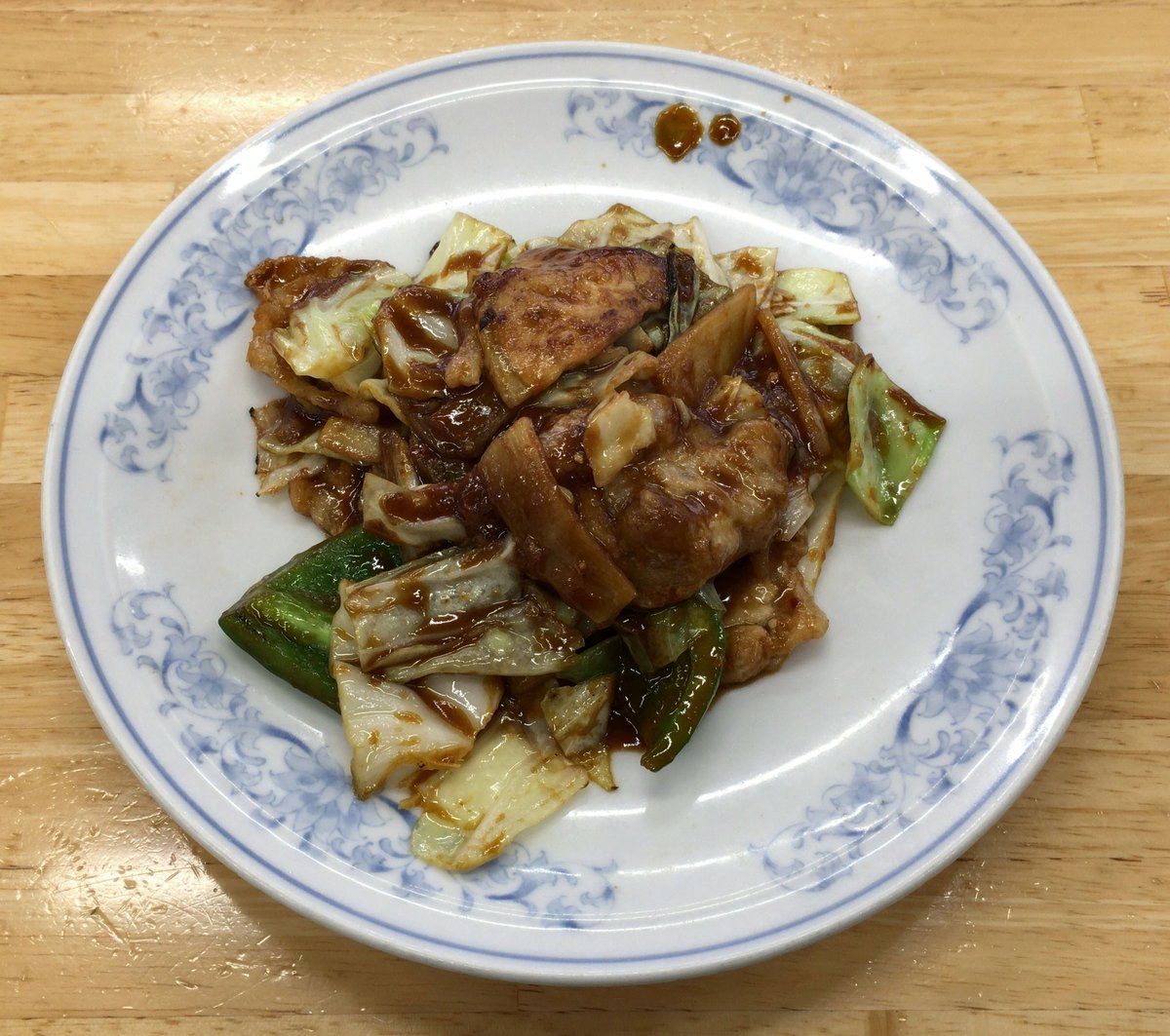
Hui Guo Rou (回锅肉), or Twice-Cooked Pork, is one of Sichuan province’s most beloved dishes — tender slices of pork belly first boiled, then wok-fried until caramelized, and tossed in a bold, spicy sauce with fermented black beans and leeks. It is savory, slightly spicy, and irresistibly smoky.
回锅 means “returned to the pot,” and the name describes the entire technique: the pork is simmered whole first, then sliced and fried a second time. Many Sichuan cooks consider it the definitive home dish — the one that appears on the table more often than any other, and the one by which a household’s cooking is judged. The signature visual is 灯盏窝 (“lamp-dish curl”), the way each slice curls into a shallow cup as it fries, holding a pool of red oil and sauce. When you see the slices curl, you know it was made properly.
This recipe comes from a chef in Chengdu who taught me that the secret to great Hui Guo Rou is the order of ingredients — add the doubanjiang early to fry in oil until the oil turns red, and never overcrowd the wok.
Why Boil First, Then Fry
Pork belly is layered fat and muscle, and it behaves badly if you simply stir-fry it raw — the fat renders before the meat cooks, and the slices come out greasy and tough. Simmering the belly whole for 20–30 minutes changes that. The meat firms up enough to slice paper-thin, some of the fat renders out into the poaching water, and the collagen begins to soften. The slices then hit a hot wok, where they fry quickly into that curled, slightly crisp-edged shape. The two-stage method gives you a texture no single cooking method can: tender inside, crisp at the edge, and not greasy.
The 灯盏窝 Curl
- Slice thin and even — 2mm; a thick slice will not curl and will feel heavy
- Chill the boiled pork before slicing — cold belly slices cleanly; warm belly tears
- Fry in a dry-ish wok first — let the slices render and curl before any sauce goes in
- Do not crowd the pan — overlapping slices steam instead of frying, and they will never curl
- Wait for the curl before adding doubanjiang — the sauce goes in once the slices have taken their shape
Ingredients and Where to Find Them
- Pork belly (skin-on) — pork belly, one even slab with clear layers
- Pixian doubanjiang — doubanjiang, the aged chili-bean paste at the heart of the dish
- Fermented black beans (douchi) — douchi, rinsed and mashed
Also needed: Chinese leeks or garlic sprouts (蒜苗) — the traditional vegetable, though green peppers or cabbage work — plus garlic, ginger, Shaoxing wine, light and dark soy sauce, and a little sugar.
How to Cook It
- Simmer 500g (1.1 lb) skin-on pork belly in water with ginger and Shaoxing wine for 25 minutes until firm; cool, then refrigerate 1 hour and slice into 2mm pieces
- Cut 4 Chinese leeks or garlic sprouts into 4cm lengths, separating the white and green parts
- Heat a wok over medium heat and add the pork slices in a single layer — no oil needed
- Fry 2–3 minutes, turning, until each slice curls and the edges turn golden; pour off excess fat
- Push the pork aside, add 1.5 tablespoons doubanjiang and 1 teaspoon mashed douchi to the oil, and fry 1 minute until red and fragrant
- Add garlic and ginger, then the leek whites; toss 1 minute, then add the leek greens
- Season with 1 teaspoon light soy, 1/2 teaspoon dark soy, and 1/2 teaspoon sugar; toss 30 seconds and serve immediately with rice
Variations
- With green peppers — the most common substitute for leeks; blanch briefly first so they stay crisp
- With cabbage — a hearty winter version; use napa or green cabbage cut into squares
- With more heat — add 6 snipped dried chilies with the doubanjiang
- With tofu — firm tofu slices fried alongside the pork make a lighter, meat-reduced version
Frequently Asked Questions
Do I really need to boil the pork first?
Yes — it is what defines the dish. Boiling firms the meat so it can be sliced paper-thin and removes excess fat before frying. Skipping it produces greasy, tough slices and a dish that is no longer 回锅肉.
What is 灯盏窝 and why does it matter?
灯盏窝 means “lamp-dish curl” — the way a properly fried slice of pork belly curls into a shallow cup, holding sauce. It signals that the slice was cut thin enough, the wok was hot enough, and the pork was not crowded. It is the visual sign of a correctly made 回锅肉.
Can I use bacon or other pork cuts?
Bacon is too salty and thin, and lean cuts turn dry. Skin-on pork belly is the right choice. If you cannot find it, pork shoulder with a good fat cap is the closest substitute, though the texture will differ.
What is the difference between 回锅肉 and 小炒肉?
回锅肉 uses pork belly that is boiled first, then fried with doubanjiang and fermented black beans — it is Sichuan, with a fermented, spicy depth. 小炒肉 uses raw pork belly fried directly with fresh chilies and no doubanjiang — it is Hunan, brighter and more direct. Different techniques, different provinces.
More Sichuan Classics
Love Sichuan food? Try my Mapo Tofu 麻婆豆腐, the cold Fu Qi Fei Pian 夫妻肺片, or the fiery Mao Xue Wang 毛血旺.
As an Amazon Associate, I earn from qualifying purchases. These are affiliate links at no extra cost to you.
3 Comments