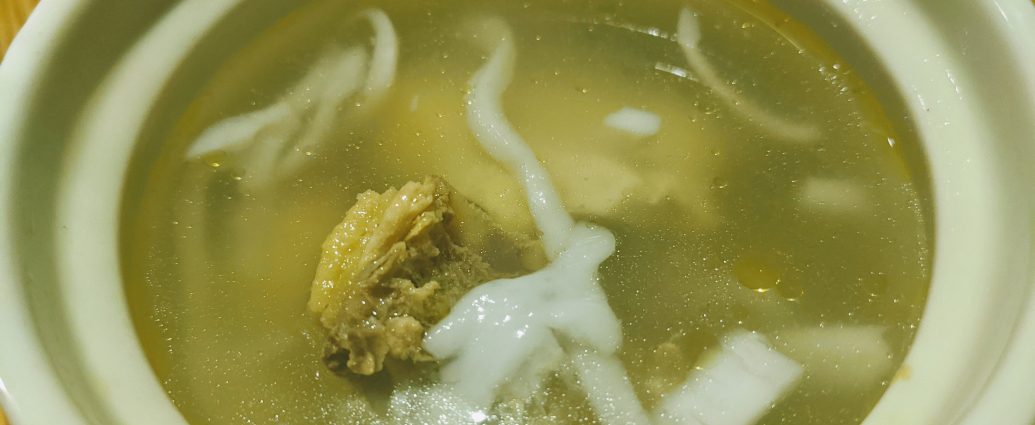
Hainanese coconut chicken soup (椰子鸡汤) is the taste of Hainan island in a bowl — young coconut water and tender coconut meat simmered with chicken into a broth that is impossibly clean, faintly sweet, and deeply savory. On Hainan and in southern Guangdong, it is both everyday comfort and the base of the famous coconut chicken hotpot, where the soup is drunk first and the chicken dipped in a chili-lime-soy sauce.
The dish comes from Wenchang, a Hainan town famous for its free-range chickens, paired with the island’s young green coconuts (椰青). The coconut water needs no stock — it is the stock. Simmered gently with ginger and red dates, the broth turns golden and aromatic, while the coconut meat softens into tender strips that taste almost like a mild vegetable. This recipe captures the classic home version, ready in about an hour.
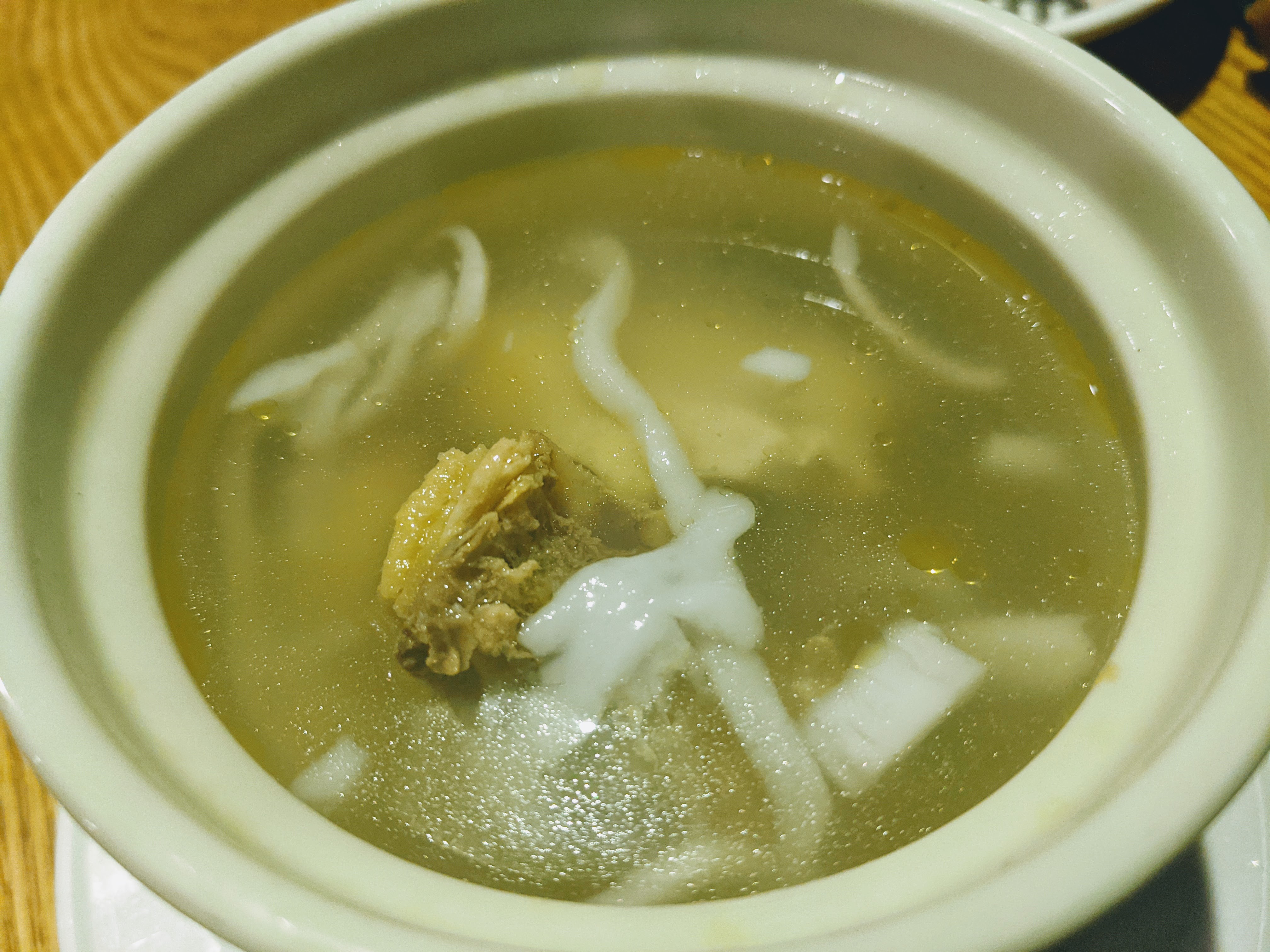
Photo via Wikimedia Commons, CC BY-SA 4.0
Why the Coconut Replaces the Stock
Most Chinese soups begin with a broth built from bones, aromatics, and hours of simmering. 椰子鸡汤 does something unusual: it uses young coconut water as the entire liquid base. 椰青 — the green coconut harvested before the flesh hardens — holds water that is mildly sweet, faintly saline, and remarkably clear, and it carries enough natural savoriness to stand on its own. The chicken and ginger are there to add depth, not to create the broth. This is why the soup tastes clean rather than rich, and why it can be made in an hour rather than a day.
Wenchang Chicken and Hainan’s Coconut Culture
- Wenchang chicken — the island’s signature breed, free-range and lean, prized for firm, flavorful meat; it is the traditional bird for this dish
- 椰青 (young green coconut) — chosen over mature coconuts for its water; the flesh is soft enough to eat as a tender strip after simmering
- Red dates and goji — traditional additions that add gentle sweetness and color
- Ginger — a few slices only; too much overwhelms the coconut’s delicate perfume
- No heavy seasoning — salt at the end, nothing else; the point of the dish is its clarity
The Hotpot Ritual
On Hainan and in Guangdong, 椰子鸡汤 is often served as a hotpot, and the meal has a set order that regulars follow carefully. First the broth comes to the table and everyone drinks a bowl of it plain — before anything else is cooked in it — because the first, cleanest extraction of coconut and chicken is considered the best. Then the chicken is lifted out and eaten with a dipping sauce of light soy, lime juice, and fresh chili, sometimes with a little minced garlic and cilantro. Only after that do diners add mushrooms, corn, tofu skin, and leafy greens to the now-enriched broth, cooking them at the table and eating them with the same dip. The sequence matters: if you add vegetables first, the broth turns cloudy and vegetal, and the clean coconut note is lost. It is a good example of how Chinese hotpot is often a structured meal rather than a free-for-all.
Ingredients and Where to Find Them
- Young green coconuts — young coconuts, for both water and meat; bottled coconut water is a workable substitute
- Free-range chicken — free-range chicken, cut into pieces; thigh meat stays juiciest
- Dried red dates — jujubes for gentle sweetness
Also needed: ginger, goji berries, salt, and white pepper. For the hotpot version: mushrooms, corn, and a dipping sauce of light soy, lime juice, and fresh chili.
How to Make It
- Crack open 2 young coconuts, pour the water into a pot (about 1 liter), and scrape out the soft flesh into strips
- Blanch 800g (1.75 lb) chicken pieces in boiling water for 3 minutes; drain and rinse
- Add the chicken to the coconut water with 4 ginger slices and 6 red dates
- Bring to a boil, then reduce to a bare simmer and cook 40 minutes, skimming any foam
- Add the coconut meat strips and a handful of goji berries; simmer 10 minutes more
- Season with salt and a pinch of white pepper; taste and adjust — it should be delicate, not salty
- Serve the soup in bowls, then use the remaining broth at the table as a hotpot base if you like
Variations
- As a hotpot (椰子鸡火锅) — drink some of the soup, then add mushrooms, corn, and vegetables at the table and cook them in the simmering broth
- With bamboo shoots — adds a clean crunch that complements the coconut
- With taro — a starchier, more filling version
- With fish instead of chicken — coconut water poaches white fish beautifully in 8 minutes
Frequently Asked Questions
Can I use bottled coconut water?
Yes, and it is a reasonable substitute — look for unsweetened 100% coconut water. Fresh young coconut is better because you also get the tender flesh, which is a real part of the dish. Avoid sweetened or flavored coconut drinks.
Why is my soup not sweet enough?
Mature coconuts have less sweet water than young green ones. Add 2 more red dates and a small piece of rock sugar, but keep it restrained — the dish is meant to be subtly sweet, not dessert-like.
Can I make it in a slow cooker?
Yes — 3 hours on low works well. Add the coconut meat and goji in the last 30 minutes so they do not disintegrate. The broth may reduce, so top up with a little extra coconut water if needed.
Is this dish healthy?
It is a light, broth-based soup with lean protein, and it is traditionally regarded as a nourishing and restorative dish. As with any food, it is one part of a balanced diet rather than a treatment for any condition.
More Comforting Soups
Love a soul-warming bowl? Try my Pig Lung and Almond Soup 猪肺杏仁汤, the rich Tomato Beef Brisket Soup 番茄牛腩汤, or the classic Winter Melon Pork Rib Soup 冬瓜排骨汤.
As an Amazon Associate, I earn from qualifying purchases. These are affiliate links at no extra cost to you.