
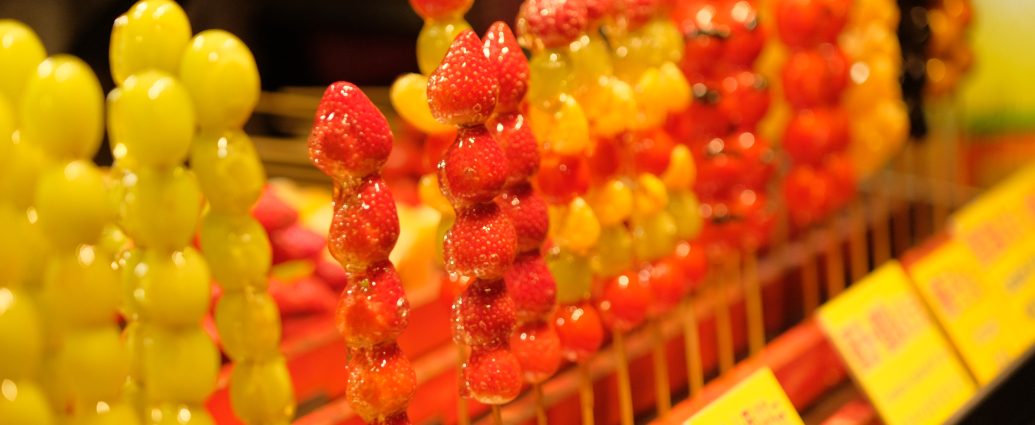
Tanghulu (糖葫芦), or Candied Hawthorn, is China’s most iconic winter street snack — bright red hawthorn berries skewered on bamboo sticks and coated in a brittle, crackling sugar shell. The first bite is pure sugar crunch; the second is tart, fruity, and impossibly refreshing. Here is how to make this beloved treat at home.
Tanghulu (糖葫芦) is a Chinese street snack of hawthorn berries (or other fruits) skewered on sticks and coated in a hard, crackling sugar syrup. It is a classic winter treat known for its sweet candy shell over tart fruit.
Walk through any northern Chinese city in winter and you will find them: carts of glassy red skewers stacked upright like bouquets, sold by vendors who have been making them the same way for decades. 糖葫芦 literally means “sugar gourd,” after the gourd-like shape of a full skewer. The tradition is centuries old — one popular legend traces it to the Southern Song dynasty, when a physician supposedly prescribed hawthorn coated in sugar to cure an imperial consort’s illness. Whether or not the story is true, the appeal has never faded: in Beijing, the arrival of 冰糖葫芦 on street corners is as reliable a sign of winter as the first snow.
This recipe comes from a tanghulu vendor in Beijing who taught me the crucial technique: the sugar syrup must reach the “hard crack” stage (150°C) and be applied in a flash dip. Too hot and the fruit cooks; too cool and the shell stays soft and sticky.
The Hard-Crack Window
Everything about tanghulu comes down to sugar temperature. At 150°C (300°F), sugar syrup is at the “hard crack” stage — it sets into a glassy, brittle shell the instant it cools. Below that, the coating stays chewy and sticks to your teeth; above it, the sugar begins to caramelize and turn bitter, and the fruit inside cooks and releases water, which ruins the shell. A candy thermometer is the single most useful tool for this recipe. Without one, drop a little syrup into ice water: if it hardens into a brittle thread that snaps rather than bends, you are there.
Choosing and Preparing the Fruit
- Hawthorn (山楂) — the classic; tart, firm, and small enough to skewer whole. Sold fresh in autumn and winter at Chinese grocers
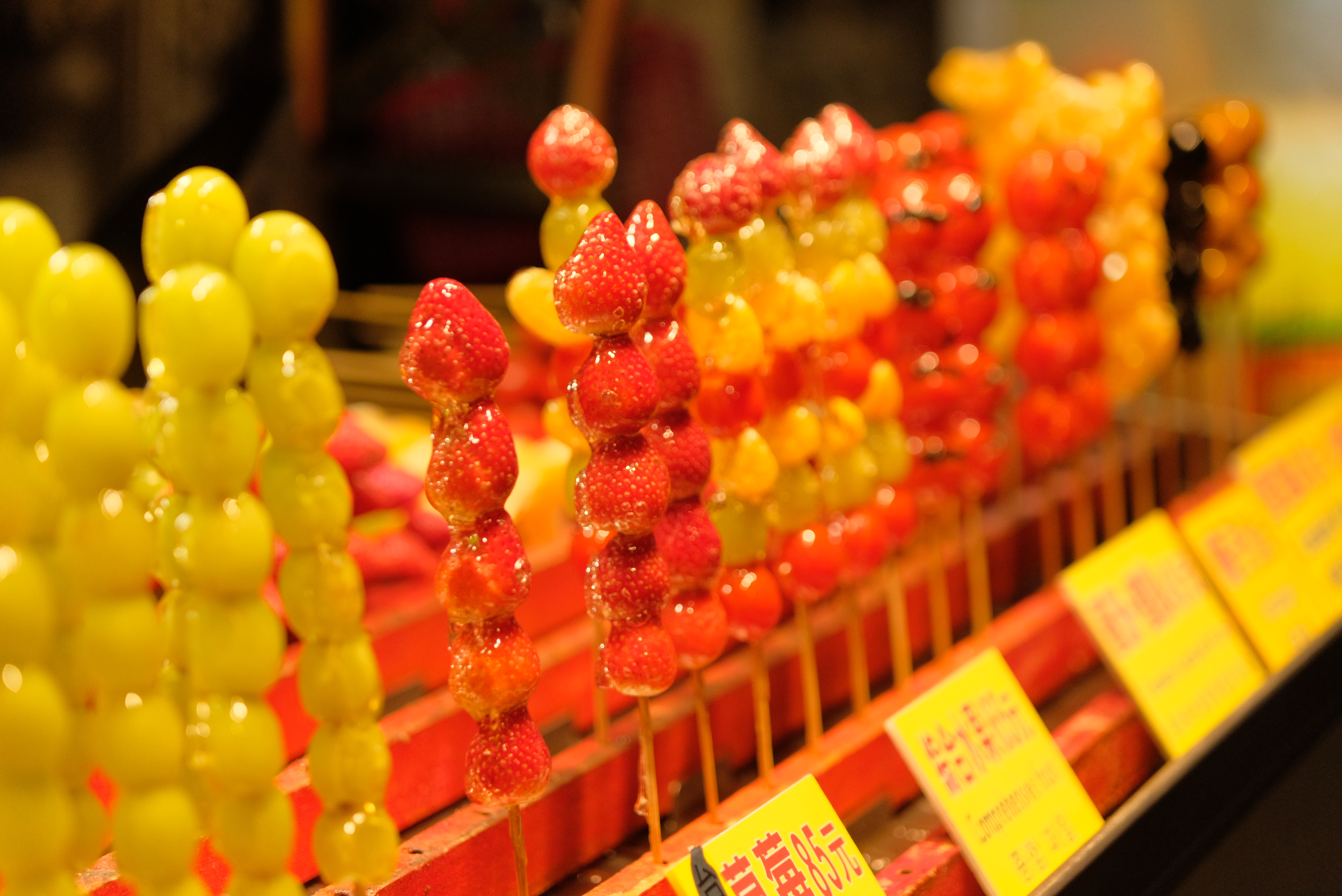
- Strawberries — the most popular modern variation; choose firm, dry, evenly sized berries
- Grapes — seedless red or green grapes work beautifully and need no prep
- Tangerine segments — a winter favorite, but they must be completely dry or the syrup slides off
- Cherry tomatoes — the sweet-savory “圣女果” version, popular in the north
- Dry the fruit thoroughly — any surface moisture causes the sugar to seize and turn grainy
Ingredients and Where to Find Them
- Hawthorn berries — fresh hawthorn; frozen or canned work in a pinch but release more moisture
- Rock sugar or granulated sugar — rock sugar gives a clearer, glossier shell than granulated
- Bamboo skewers — bamboo skewers, soaked and dried
Also needed: water (in a strict 2:1 sugar-to-water ratio), a candy thermometer, and a sheet of parchment or a silicone mat for cooling. A little toasted sesame is a traditional finish.
How to Make It
- Wash and thoroughly dry your fruit; remove hawthorn stems and any pits if you prefer
- Thread 5–6 pieces onto each skewer, leaving a 5cm handle at the bottom
- Combine 300g sugar with 150ml water in a heavy saucepan; stir once over medium heat until dissolved
- Stop stirring and let it boil until it reaches 150°C (300°F) — about 8–10 minutes; do not stir after the sugar dissolves
- Remove from heat and let the bubbles subside for 10 seconds
- Dip each skewer, rotating to coat evenly, then let the excess drip for a second
- Lay the skewers on parchment and let them harden for 5 minutes at room temperature; serve within a few hours
Variations
- With sesame — sprinkle toasted sesame seeds over the syrup before it hardens
- Stuffed hawthorn — split the berries, remove the pits, and fill with red bean paste before skewering; a classic Beijing upgrade
- Mixed fruit skewers — alternate strawberries, grapes, and tangerine segments for color
- Tanghulu milk tea — crush a skewer over a cup of milk tea for a modern dessert drink
Frequently Asked Questions
Why is my sugar coating sticky instead of crunchy?
The syrup did not reach 150°C (300°F). Below that temperature, sugar sets soft and chewy rather than brittle. Use a candy thermometer, or test by dropping a little syrup into ice water — it should harden into a thread that snaps.
Why did my sugar turn grainy?
Stirring after the sugar dissolved, or a stray grain of sugar on the pan’s side, causes crystallization. Stir only until dissolved, then leave it alone. Brushing the pan’s inner wall with a wet pastry brush also helps.
Can I use other fruits?
Yes — strawberries, grapes, tangerine segments, cherry tomatoes, and even pineapple chunks all work. The only requirement is that the fruit is firm and completely dry, since surface moisture makes the sugar seize.
How do I store tanghulu?
Best eaten within a few hours. Store in a cool, dry, airtight container (away from humidity). Do not refrigerate — condensation makes the shell sticky and soft.
More Chinese Street Snacks
Love night-market flavors? Try my Lamb Skewers 羊肉串, the savory Rou Jia Mo 肉夹馍, or the spicy Mala Tang 麻辣烫.
As an Amazon Associate, I earn from qualifying purchases. These are affiliate links at no extra cost to you.
2 Comments