
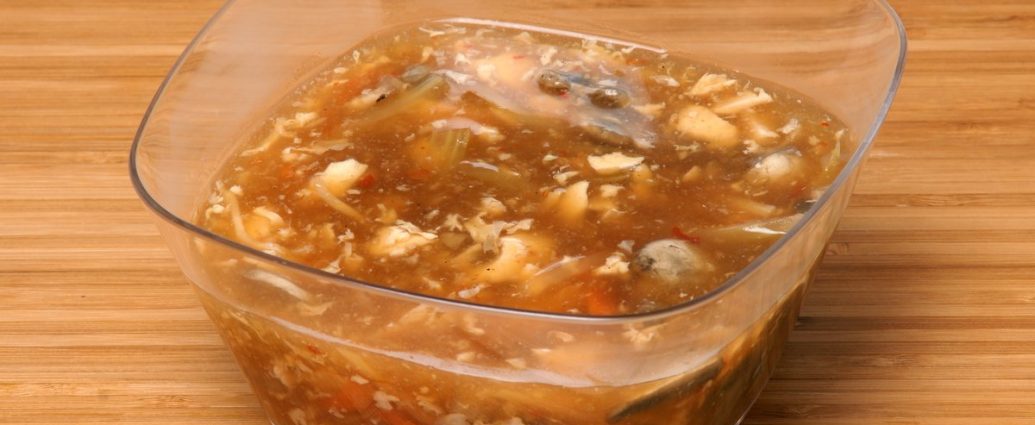
Hot and Sour Soup (酸辣汤) is the ultimate Chinese comfort soup — a silky, tangy, and peppery broth loaded with silken tofu, wood ear mushrooms, and delicate egg ribbons. The “hot” comes from white pepper, not chili, and the “sour” from Chinese black vinegar, creating a warming, appetite-stimulating balance that has made this soup a staple in Chinese households and restaurants worldwide.
酸辣汤 is one of the few Chinese dishes that is genuinely pan-regional — it appears on Sichuan menus, Beijing menus, and Cantonese menus, each with its own variation, and it is the soup most likely to be found in a Chinese restaurant anywhere in the world. What unites the versions is the balance named in the title: 酸 (sour) and 辣 (hot). Crucially, the 辣 in 酸辣汤 is traditionally white pepper rather than chili — a warmth that rises in the back of the throat rather than a burn on the tongue. That distinction is what separates it from a chili-based soup and gives it its gentle, restorative character.
This recipe comes from a Sichuan chef who taught me that the secret to perfect hot and sour soup is the order of additions: tofu first, then the vinegar-pepper seasoning, then the cornstarch slurry, and finally the egg drizzle for those signature silky ribbons.
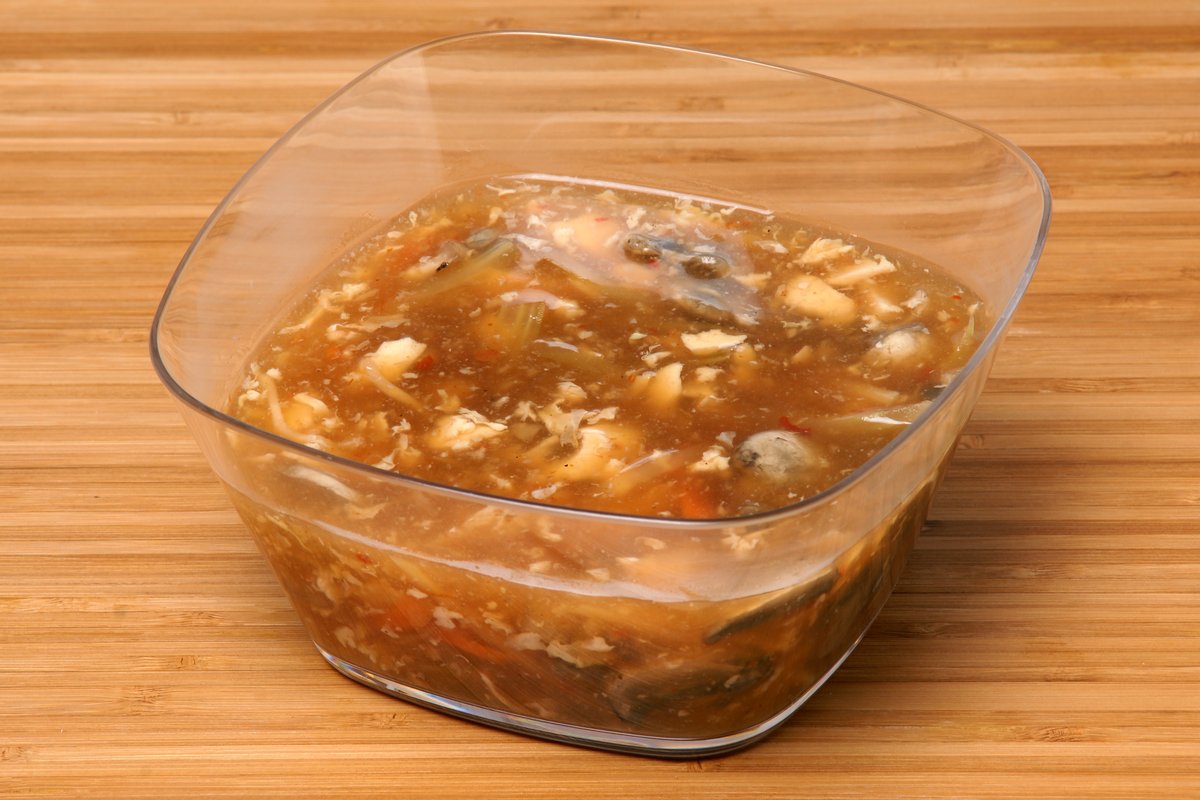
The Order of Additions
This soup comes together in fifteen minutes, which means every step happens fast and the sequence matters:
- Build the broth. Stock, ginger, and the rehydrated wood ear and shiitake simmer first so their flavors infuse.
- Add the tofu and bamboo shoots. They need a few minutes to warm through, and the tofu is fragile — add it gently.
- Season with vinegar and white pepper. These go in before the starch, so their flavors distribute evenly rather than sitting on the surface.
- Thicken with the cornstarch slurry. Added slowly and stirred constantly, it turns the broth silky and gives the egg something to cling to.
- Drizzle in the egg last. Off the boil, in a thin stream, stirred once — the same technique as Egg Drop Soup 蛋花汤.
White Pepper, Not Chili
- Use plenty of white pepper — it is the “hot” in the name; a full teaspoon for four servings is not too much
- Chinkiang vinegar for the sour — mellow and malty; rice vinegar works but is sharper
- Add vinegar late and taste — vinegar’s sharpness fades with prolonged heat, so adjust at the end
- A little light soy for salt — and a few drops of sesame oil off the heat for aroma
- Balance is everything — neither sour nor hot should dominate; the goal is a soup that makes you want another spoonful
Ingredients and Where to Find Them
- Silken tofu — silken tofu, cut into thin strips or small cubes
- Wood ear mushrooms — dried wood ear, soaked and shredded
- Chinkiang black vinegar — Chinkiang vinegar
Also needed: eggs, bamboo shoots, dried shiitake, ginger, scallions, cornstarch, light soy sauce, white pepper, sesame oil, and chicken stock. Some versions add pork slivers, peas, or a little chili oil.
How to Make It
- Soak 15g wood ear and 4 dried shiitake in warm water for 30 minutes; shred the wood ear and slice the shiitake
- Simmer 1 liter chicken stock with the mushrooms, 3 ginger slices, and 60g (2 oz) shredded bamboo shoots for 10 minutes
- Add 200g (7 oz) silken tofu cut into thin strips; warm through 2 minutes without stirring
- Season with 2 tablespoons Chinkiang vinegar, 1 teaspoon white pepper, 1 tablespoon light soy, and 1 teaspoon salt
- Thicken with a slurry of 3 tablespoons cornstarch and 4 tablespoons water, stirring slowly until silky
- Drizzle in 2 beaten eggs in a thin stream while stirring gently in one direction; let set 10 seconds
- Finish with a few drops of sesame oil and chopped scallions; taste and adjust the vinegar and pepper before serving
Variations
- With pork slivers — thin strips of pork loin added with the tofu make a heartier soup
- With peas and corn — a restaurant-style version that adds sweetness and color
- Spicier — add a teaspoon of chili oil or a little doubanjiang for genuine chili heat alongside the pepper
- Thicker — increase the cornstarch for a more substantial, almost gravy-like soup
Frequently Asked Questions
Why is my soup cloudy instead of clear?
Cloudy soup is usually from over-stirring the tofu or adding the egg too vigorously. Slide the tofu in gently and drizzle the egg in a steady stream while stirring slowly in one direction only.
Is the “hot” in hot and sour soup from chili?
Traditionally no — it comes from white pepper. That is what gives the soup its warm, gentle heat rather than a chili burn. Some modern versions add chili oil, but white pepper is the classic source.
Can I make it vegetarian?
Yes — use vegetable stock and omit any pork. The wood ear and shiitake provide plenty of savory depth, and a teaspoon of mushroom soy deepens it further.
How do I keep the egg ribbons delicate?
Thicken the broth first — egg drizzled into a thin broth spreads into strands, while egg in a thick broth forms clumps. Then drizzle in a slow, thin stream off the boil and stir only once.
More Chinese Soups
Enjoying Chinese soups? Try my Egg Drop Soup 蛋花汤, the elegant Sister Song’s Fish Soup 宋嫂鱼羹, or the light Spinach Tofu Soup 菠菜豆腐汤.
As an Amazon Associate, I earn from qualifying purchases. These are affiliate links at no extra cost to you.
3 Comments