
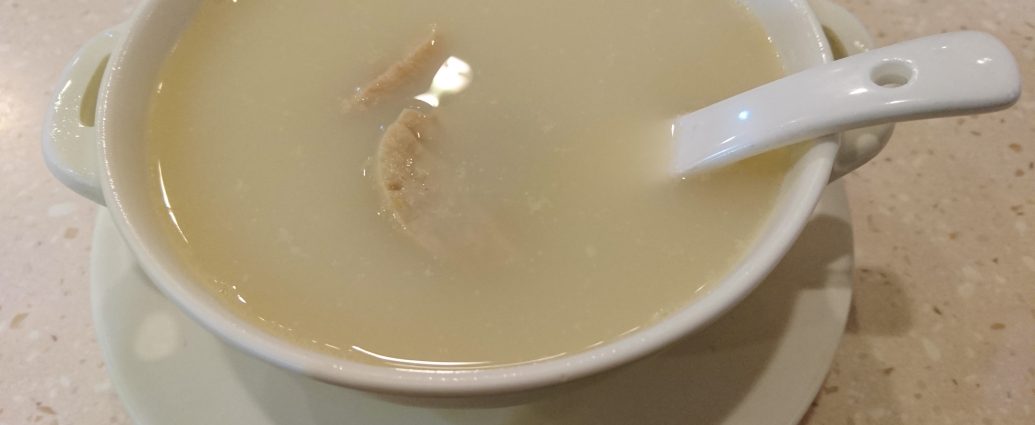
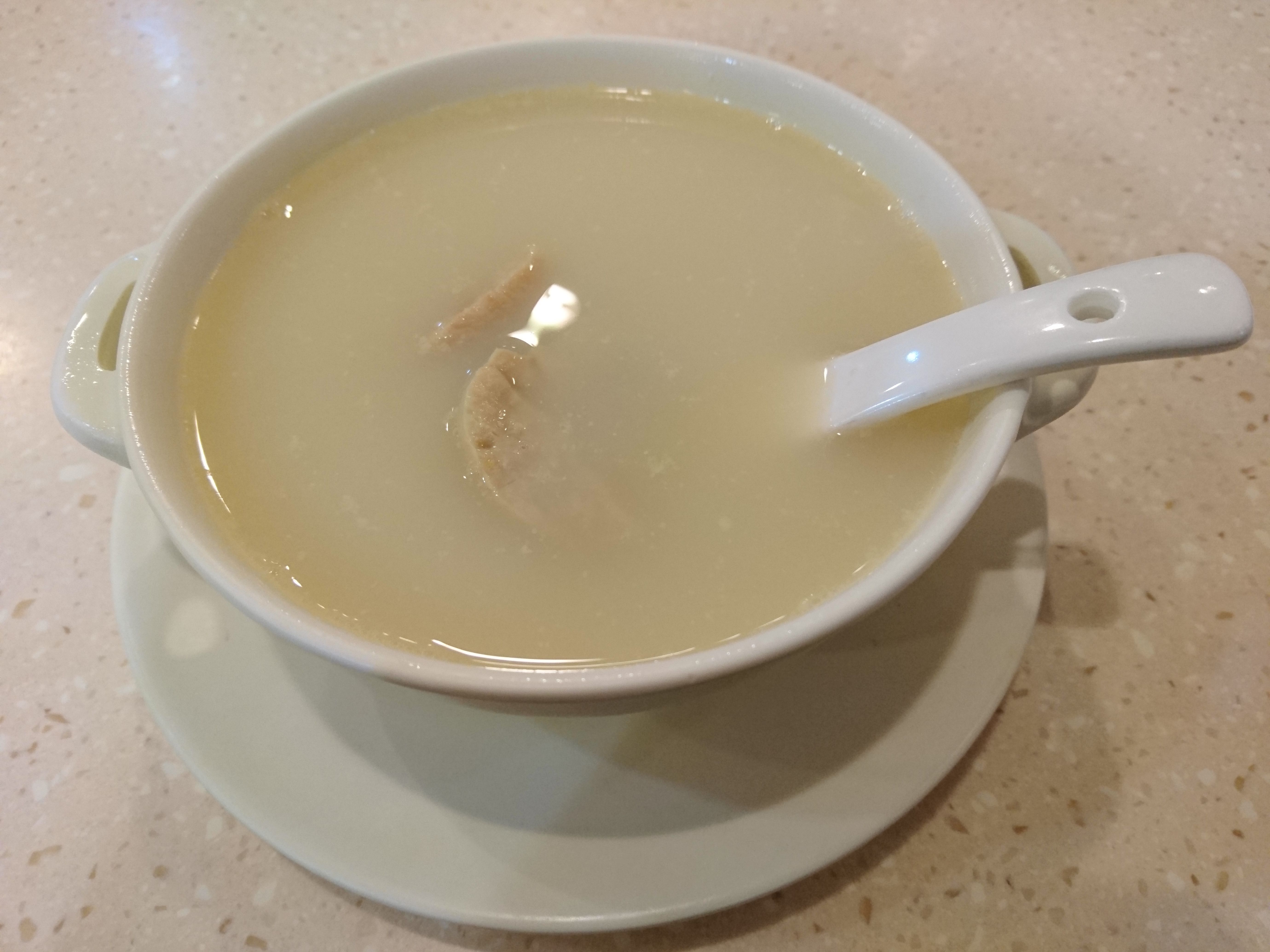
Pig Lung and Almond Soup (猪肺杏仁汤) is one of Cantonese cuisine’s most treasured slow soups — a milky, nourishing broth made from thoroughly cleaned pig lungs, sweet almonds, and dried apricot kernels. Cantonese grandmothers swear by it for lung health and respiratory wellness, simmering it low and slow for hours. Here is the traditional method.
Pig lung and almond soup (猪肺杏仁汤) is a Cantonese slow-cooked soup made with thoroughly cleaned pig lungs, sweet almonds, and dried apricot kernels. It is a nourishing traditional soup believed to support lung health, with a milky, subtly sweet broth.
In Cantonese home cooking, soups are classified by purpose as much as by flavor. Alongside everyday 例汤 (soups of the day) sit 滋补汤 — nourishing soups made for specific seasons and conditions, based on the traditional Chinese principle of 以形补形 (using a food’s form to support the corresponding organ). 猪肺杏仁汤 is one of the best-known of these: pig lung for the lungs, almonds and apricot kernels for their soothing, sweet character. Whether or not one accepts the traditional reasoning, the soup itself is genuinely delicious — a pale, milky broth with a delicate nutty sweetness and none of the heaviness you might expect. Note that these are traditional beliefs rather than medical claims; the soup is a comfort food first and foremost.
This recipe comes from a Cantonese home cook who taught me the essential and non-negotiable step: the pig lung must be cleaned by running water through the trachea repeatedly until it turns white, then parboiled and sliced. Skipping this leaves a muddy, off-putting soup.
Cleaning the Lung — The Whole Recipe Rests Here
Every Cantonese cook will tell you the same thing: this soup succeeds or fails on the cleaning. A pig lung is a sponge of air sacs, and it holds blood and foam in every crevice. The traditional method is to fit a hose or faucet to the trachea and run cold water through it until the lung inflates, then squeeze the water out — repeating eight or ten times until the lung runs pale and the water comes out clean. After that, parboil it whole with ginger and wine, discard the water, and slice. Do this properly and the finished soup is clean and sweet; rush it and no amount of simmering will rescue the flavor.
Understanding the Two Almonds
- Sweet almonds (南杏) — the larger, milder kernel; these provide the soup’s gentle sweetness and most of its body
- Bitter apricot kernels (北杏) — smaller and intensely aromatic; used in small quantities for their fragrance and traditional properties
- The classic ratio — roughly 3 parts sweet to 1 part bitter; bitter kernels are potent, so do not overdo them
- Soaking matters — 30 minutes in warm water softens them and removes some bitterness
Ingredients and Where to Find Them
- Pig lung — pig lung from a Chinese butcher; ask them to clean it if they can
- Sweet almonds and apricot kernels — sweet almonds (南杏) and bitter apricot kernels (北杏)
- Pork ribs — pork ribs add sweetness and body to the broth
Also needed: ginger, dried tangerine peel (陈皮), red dates, Shaoxing wine, and salt. Some cooks add a small piece of 蜜枣 (candied date) for extra sweetness.
How to Make It
- Clean the pig lung by running cold water through the trachea until the lung inflates, then squeeze out the water; repeat 8–10 times until the water runs clear
- Parboil the lung whole for 10 minutes with ginger and 1 tablespoon Shaoxing wine; drain, cool, and slice into bite-sized pieces
- Blanch 300g (10.5 oz) pork ribs for 3 minutes and rinse away the scum
- Soak 40g sweet almonds and 15g bitter apricot kernels in warm water for 30 minutes; peel if you prefer
- Combine the lung, ribs, almonds, 3 ginger slices, 1 piece dried tangerine peel, and 6 red dates in a large pot with 3 liters water
- Bring to a bare simmer and cook gently for 2 hours, skimming occasionally — never let it boil hard or the broth turns cloudy and rough
- Season with salt at the end and serve hot, with the solids on the side if you like
Variations
- With pig’s lung and white radish — adding daikon in the last 45 minutes lightens the soup and adds sweetness
- With snow pear — a peeled Asian pear added in the final 30 minutes gives a fresh, cooling note, popular in autumn
- Chicken version — replace the pork ribs with chicken thighs for a lighter broth
- Sweet version — omit the meat entirely and simmer almonds, apricot kernels, and rock sugar for a traditional sweet soup (杏仁茶)
Frequently Asked Questions
Do I really need to clean the pig lung that thoroughly?
Yes — it is the single step that determines whether the soup is good. The lung must be flushed until the water runs clear, then parboiled and rinsed. Skipping or rushing this leaves a muddy flavor and a murky broth that no amount of simmering will fix.
What is the difference between 南杏 and 北杏?
南杏 (sweet almonds) are larger, milder, and used in quantity for sweetness and body. 北杏 (bitter apricot kernels) are smaller, more aromatic, and used sparingly — typically a quarter of the sweet almond quantity. Together they give the soup its characteristic nutty balance.
Is this soup a medicine?
It is a traditional Cantonese nourishing soup, eaten for comfort and believed by many to support respiratory wellness. Those are traditional beliefs, not medical claims, and this soup is not a treatment for any condition. If you have a health concern, consult a qualified professional.
How long does it keep?
2-3 days refrigerated. Reheat gently on the stove. The soup also freezes well for 1 month.
More Cantonese Slow Soups
Love slow-simmered Cantonese soups? Try my Clear Pork Rib Soup 清炖排骨汤, the classic Lotus Root Pork Rib Soup 莲藕排骨汤, or the light Spinach Tofu Soup 菠菜豆腐汤.
As an Amazon Associate, I earn from qualifying purchases. These are affiliate links at no extra cost to you.
3 Comments