
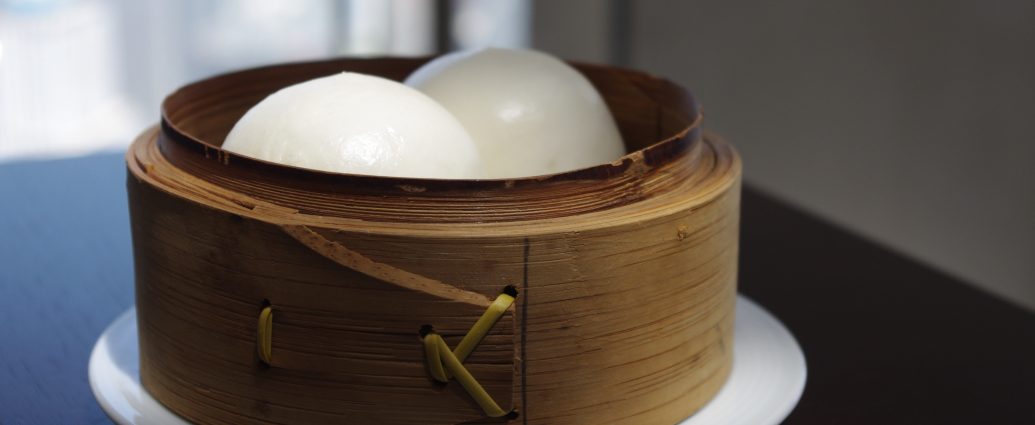
Custard Buns (奶黄包), known as Nai Huang Bao, are a classic dim sum sweet — soft, fluffy steamed buns filled with a thick, creamy egg-custard that is sweet and comforting. Unlike the molten lava of liu sha bao, the custard here is firm and silky, holding its shape until you bite in. Here is the classic recipe.
Custard buns (奶黄包) are steamed dim sum buns filled with a thick, sweet egg custard made from eggs, milk, sugar, and butter. The custard is creamy and firm — distinct from the molten salted-egg filling of liu sha bao.
奶黄 (nǎi huáng) means “milk yellow,” a description of both the ingredient and the color: a pale golden custard built on milk, egg yolks, and butter. The bun is one of the oldest sweets on the dim sum trolley and one of the most forgiving to make at home, because the filling is cooked on the stove rather than relying on steam to set it. That is the crucial difference from its flashier cousin 流沙包, where the salted egg yolk filling must be frozen and handled fast. Here, you make a proper custard, chill it firm, and wrap it at leisure.
This recipe comes from a Hong Kong dim sum master who taught me the essential trick: the custard must be cooked and CHILLED until firm before wrapping — a soft custard leaks through the dough during steaming. The dough should be soft, slightly sweet, and pillowy.
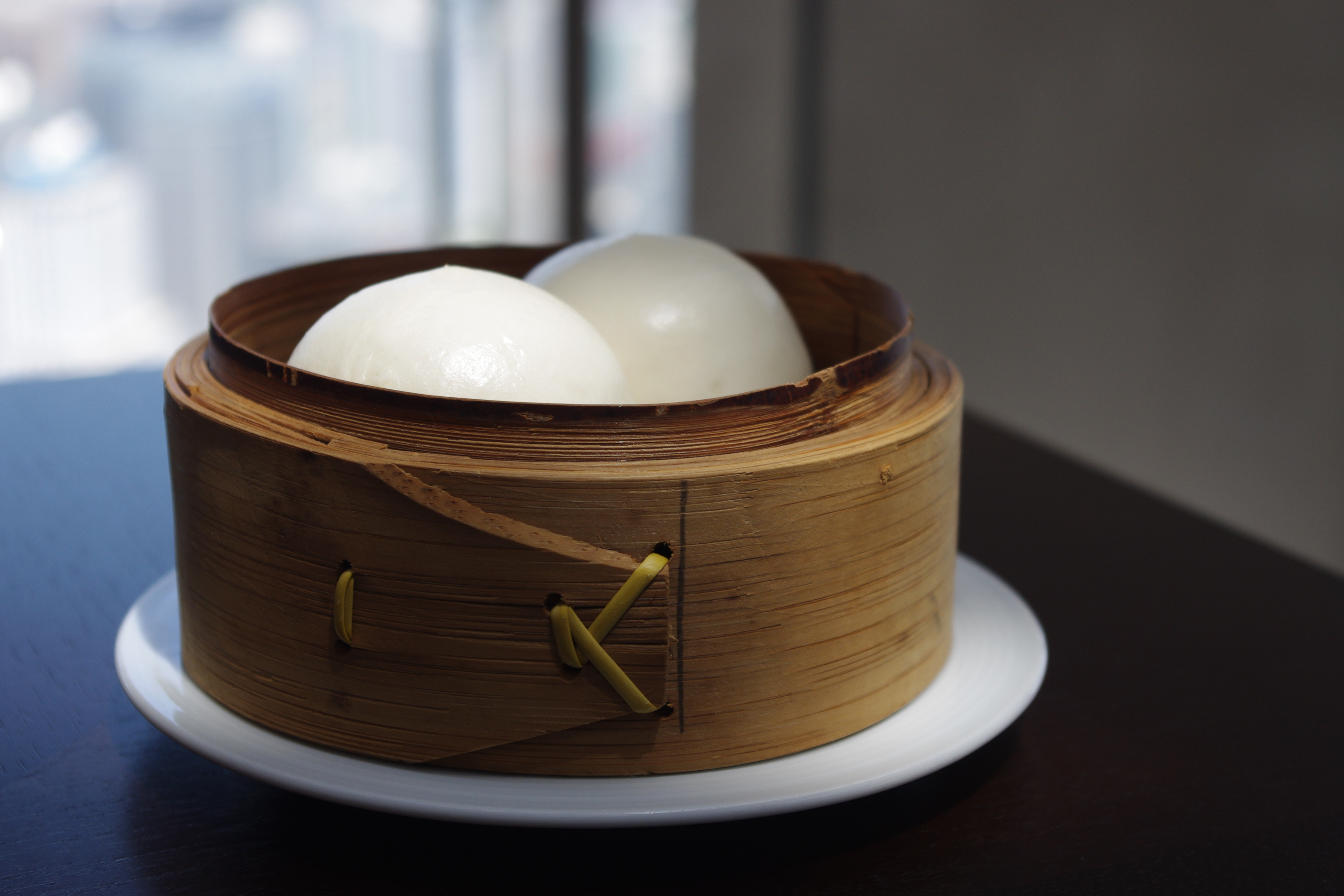
Cook the Custard, Then Chill It Firm
The most common failure with custard buns is a filling that runs out during steaming. The cause is almost always the same: the custard was too soft when wrapped. Cook the custard on the stovetop until it thickens to a paste that holds a trail behind the whisk, then chill it thoroughly — at least two hours, ideally overnight. Cold, firm custard can be portioned into neat balls that sit obediently inside the dough. Warm or loose custard will seep into the seams the moment the steam hits it.
Getting the Dough Pillowy
- Use low-protein flour — cake or bao flour gives the softest crumb; bread flour makes them chewy
- Add a little cornstarch — it lightens the crumb and helps the buns stay white
- Let the dough rise until doubled — under-proofed dough steams dense and heavy
- Knead until smooth — a smooth surface is what gives the finished bun its glossy, unblemished look
- Steam over medium heat with a towel-wrapped lid — condensation dripping onto the buns leaves pockmarks
Ingredients and Where to Find Them
- Cake or bao flour — low-protein cake flour for the softest crumb
- Instant yeast — instant yeast for a reliable rise
- Whole milk powder — milk powder intensifies the custard’s dairy flavor (optional but traditional)
Also needed: eggs, sugar, butter, cornstarch, and a pinch of salt for the custard; flour, yeast, sugar, milk, and a little oil for the dough. Custard powder is a common shortcut in Hong Kong home kitchens and works well.
How to Make Them
- Custard: whisk 3 egg yolks with 60g (1/3 cup) sugar, 30g (1/4 cup) cornstarch, and 200ml milk until smooth
- Cook over low heat, stirring constantly, until very thick — about 5 minutes; stir in 30g butter and 1 teaspoon vanilla
- Press plastic wrap onto the surface and chill at least 2 hours until firm; roll into 12 balls
- Dough: mix 300g (2.4 cups) flour, 1 teaspoon yeast, 40g sugar, 1/2 teaspoon salt, and 170ml warm milk; knead 8 minutes until smooth
- Rise until doubled (about 1 hour), then punch down and divide into 12 pieces
- Flatten each piece, place a custard ball in the center, and pleat the dough closed; seal firmly
- Rest 20 minutes, then steam over medium heat for 12 minutes with a towel-wrapped lid; rest 3 minutes before opening
Variations
- Salted egg custard (流沙包) — add 2 mashed salted egg yolks and freeze the filling before wrapping for a molten center
- Coconut custard — replace 50ml milk with coconut milk and add 2 tablespoons desiccated coconut
- Baked version — brush with egg wash and bake at 180°C (355°F) for 18 minutes for a golden, slightly crusty bun
- Pandan custard — add 1 teaspoon pandan extract to the custard for color and fragrance
Frequently Asked Questions
What is the difference between 奶黄包 and 流沙包?
奶黄包 (custard buns) have a firm, creamy egg custard that holds its shape. 流沙包 (liu sha bao) contain a molten salted-egg-yolk custard that flows out when you bite — it requires freezing the filling before wrapping so it does not leak during steaming. Same dough, very different filling behavior.
Why did my custard leak out during steaming?
The custard was not firm enough. Cook it until it is genuinely thick — it should hold a clear trail behind the whisk — and chill it thoroughly, at least two hours. Also make sure the dough is sealed completely with no thin spots at the pleats.
Can I use custard powder instead of making custard from scratch?
Yes — Hong Kong home cooks often do. Use about 40g custard powder with 200ml milk, 40g sugar, and 20g butter, cooked the same way. It is faster and gives a reliably firm set, though the flavor is slightly more vanilla-forward than the from-scratch version.
How do I store them?
Assembled uncooked buns freeze 2 months — steam from frozen for 12 minutes. Cooked buns keep 2 days refrigerated, reheated by steaming 4 minutes.
More Dim Sum Sweets
Complete your dim sum spread with the molten Salted Egg Yolk Custard Buns 流沙包, the classic Hong Kong Egg Tart 蛋挞, or the airy Malay Cake 马拉糕.
As an Amazon Associate, I earn from qualifying purchases. These are affiliate links at no extra cost to you.
2 Comments