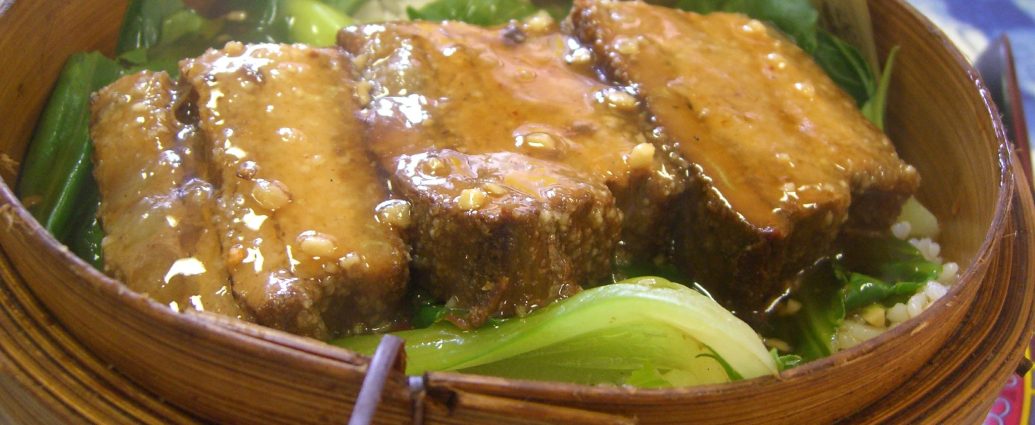
Fen Zheng Rou (粉蒸肉) is the great comfort dish of Hunan and central China — tender pork belly that has been coated in fragrant toasted rice flour, then steamed for an hour until the rice turns soft, nutty, and slightly sticky, clinging to every slice like velvet. A bowl of Fen Zheng Rou tastes like a warm family kitchen, and it deserves a far bigger audience outside China.
The name translates plainly as “flour-steamed meat,” but the technique is anything but plain: pork belly is marinated in a rich paste of doubanjiang, soy sauce, and Shaoxing wine, then dredged through freshly ground toasted rice scented with star anise and Sichuan peppercorn. Slow steaming renders the fat into silk while the rice absorbs every drop of seasoning. This version adds a classic Hunan twist — sweet potato underneath to catch the dripping juices.
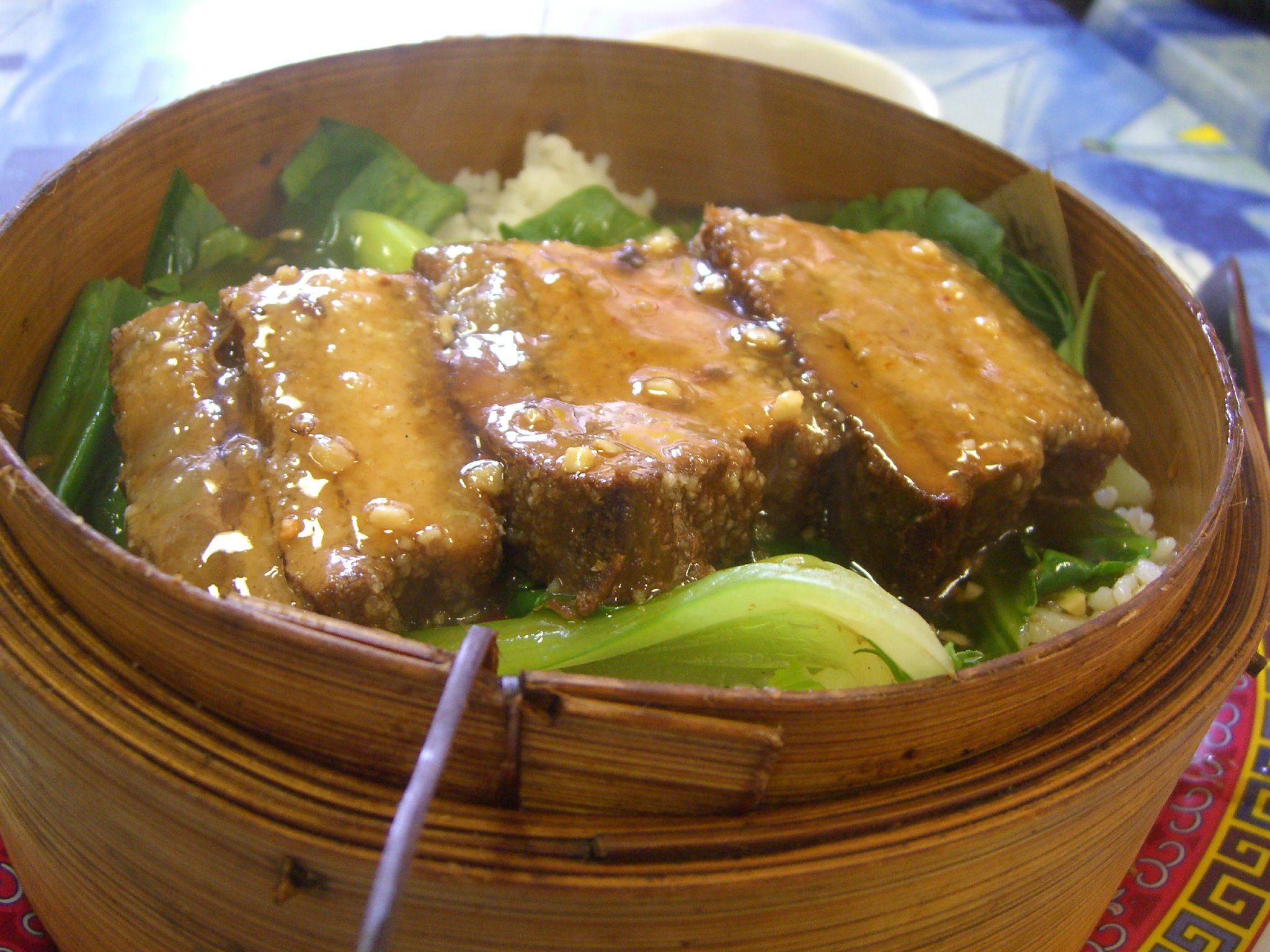
Photo via Wikimedia Commons, CC BY-SA 2.0
Steaming Is the Technique of Central China
粉蒸肉 belongs to a broader tradition of 蒸菜 — steamed dishes — that runs through Hunan, Hubei, and Sichuan. In Hubei, 沔阳三蒸 (“the three steamed dishes of Mianyang”) makes a whole cuisine of steaming meat, fish, and vegetables with rice flour. In Hunan, 粉蒸肉 is a home staple and a banquet dish at once. The technique exists because it is efficient and forgiving: coating the meat in spiced rice flour absorbs the rendered fat, so nothing is wasted, and a long steam needs no attention. What emerges is a dish that is simultaneously rich and light — the pork silky, the coating nutty and moist.
The Rice Flour Is the Dish
Store-bought rice flour will not do. The coating is made from raw rice — usually a mix of regular and glutinous rice — toasted in a dry wok with star anise, Sichuan peppercorns, and sometimes a cinnamon stick until it smells nutty and turns faintly golden, then ground coarsely. That toasting step is where the dish’s fragrance comes from, and it cannot be replicated by using plain flour. Grind it coarse: the texture should be like rough sand, so the coating clings and stays distinct rather than turning to paste.
- Toast the rice and spices together — the spices perfume the rice as it toasts
- Grind coarsely — a blender pulse or spice grinder; stop before it becomes powder
- Use both rice types — regular rice for structure, glutinous rice for stickiness
- Make extra and store it — the spiced rice flour keeps for months in a jar and is used for steamed pork ribs and vegetables too
- Coat generously — every surface of every slice should be covered; the coating is the point
Ingredients and Where to Find Them
- Pork belly — pork belly, sliced thick with the skin on
- Pixian doubanjiang — doubanjiang for the marinade
- Fermented bean curd (furu) — fermented bean curd; a spoonful deepens the marinade
Also needed: rice and glutinous rice, star anise, Sichuan peppercorns, ginger, garlic, scallions, light and dark soy sauce, Shaoxing wine, sugar, and sweet potato or taro for the base.
How to Make It
- Rice flour: toast 100g rice and 50g glutinous rice with 2 star anise and 1 teaspoon Sichuan peppercorns in a dry wok for 5 minutes until fragrant; cool and grind coarsely
- Slice 600g (1.3 lb) pork belly into 5mm pieces
- Marinate 1 hour with 1.5 tablespoons doubanjiang, 1 cube mashed fermented bean curd, 1 tablespoon light soy, 1 teaspoon dark soy, 1 tablespoon Shaoxing wine, 1 teaspoon sugar, garlic, ginger, and scallions
- Toss the pork with the spiced rice flour until every piece is thickly coated; add 3 tablespoons water if the mixture looks dry
- Peel and slice 300g (10.5 oz) sweet potato and arrange in the base of a shallow bowl
- Lay the coated pork over the sweet potato and steam over simmering water for 60–75 minutes until the pork is tender and the rice coating is soft
- Invert onto a plate, scatter with scallions, and serve with rice
Variations
- With pork ribs (粉蒸排骨) — the same coating on chopped ribs; steam 60 minutes
- With taro — taro makes a creamier, starchier base than sweet potato
- With pumpkin — a sweeter, more colorful base; popular in autumn
- With chicken — chicken thighs steam in 35–40 minutes and are lighter
Frequently Asked Questions
Can I use store-bought rice flour?
It works in a pinch but loses the toasted, spiced fragrance that defines the dish. Toasting rice with star anise and Sichuan peppercorns and grinding it coarsely takes ten minutes and makes a noticeable difference.
Why did my rice coating turn pasty?
The rice was ground too fine, or too much water was added. Grind coarsely — like rough sand — and add water sparingly, just enough to make the coating adhere. A fine powder turns to paste when it steams.
How long does it keep?
Three to four days refrigerated, and it reheats well by re-steaming for 15 minutes. It also freezes well for up to 2 months. Like most braised and steamed dishes, it improves overnight as the coating absorbs more flavor.
Can I use other meats?
Absolutely — the same spiced rice coating works with chicken thighs (steam 35–40 minutes) or beef short ribs (steam 90 minutes). Adjust marinating time so the meat absorbs the seasoning.
More Hunan Classics to Try
Explore more Hunan flavor: my Mei Cai Kou Rou 梅菜扣肉, the homey Home-Style Fried Tofu 家常豆腐, or the famous Steamed Fish Head with Chopped Chili 剁椒鱼头.
As an Amazon Associate, I earn from qualifying purchases. These are affiliate links at no extra cost to you.