
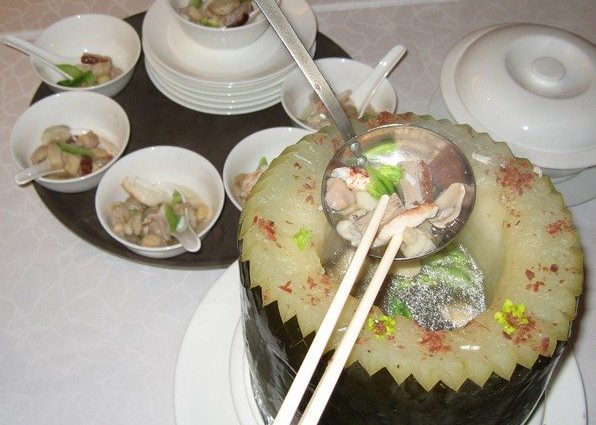
Winter Melon Pork Rib Soup (冬瓜排骨汤) is the quintessential Chinese slow soup — a clear, golden broth that has been simmered for hours to extract every drop of flavor from pork ribs and winter melon. The melon absorbs the savory goodness of the broth while releasing its own subtle sweetness, creating a soup that is simultaneously light and deeply nourishing.
In Cantonese households this soup is summer food. Winter melon — 冬瓜, literally “winter melon” despite being harvested in summer — is regarded in traditional Chinese cooking as a cooling ingredient, the kind of thing you eat when the weather is hot and humid. It is over 95% water, so it dilutes the broth rather than enriching it, which is exactly why the soup tastes light even after two hours of simmering pork ribs. Traditional belief holds that it helps clear internal heat and reduce dampness; whether or not one follows that reasoning, it is one of the most refreshing soups in the Cantonese repertoire. These are traditional beliefs, not medical claims.
This recipe comes from a Cantonese grandmother who taught me that the secret to a great slow soup is patience — the broth must simmer gently for at least 2 hours, never boiling vigorously, so that the flavors meld slowly and the broth remains crystal clear.
Why the Broth Stays Clear
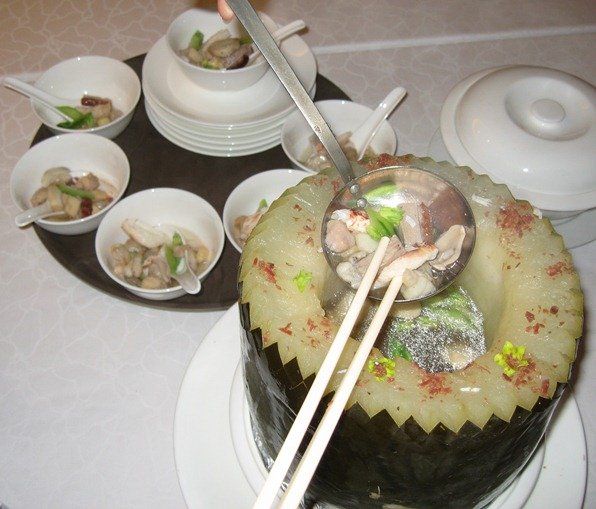
Cantonese 清汤 (clear soup) is a discipline of restraint. The clarity comes from three habits: blanching the ribs first to remove blood and impurities, never letting the pot reach a rolling boil, and skimming diligently in the first twenty minutes. A hard boil emulsifies fat and protein into the liquid and turns the broth opaque and cloudy — which is exactly what you want for a 奶白 (milky) soup like lotus root and pork rib, but wrong for this one. Winter melon soup is meant to be pale and translucent, so the flame stays low and the lid stays half-open.
Choosing and Handling Winter Melon
- Look for a firm, heavy melon with unblemished, dark green skin and a white, waxy bloom
- The flesh should be white and crisp, not soft or yellowing — a soft melon turns to mush in the pot
- Peel, seed, and cut into 3cm chunks, or into thin slices if you want them to soften faster
- Add late, not early — winter melon needs only 30–45 minutes; add it in the last stretch so it holds its shape
- Do not salt early — salt draws water out of the melon and dilutes the broth
Ingredients and Where to Find Them
- Pork ribs — meaty pork spare ribs, cut into pieces
- Winter melon — winter melon from Asian grocers; a whole melon keeps for weeks
- Dried scallop or conpoy (optional) — dried scallops add a deep savory note
Also needed: ginger, scallions, Shaoxing wine, and salt. Dried tangerine peel, goji berries, and a few dried shiitake are common Cantonese additions.
How to Make It
- Blanch 600g (1.3 lb) pork ribs in boiling water for 3 minutes; drain and rinse away the scum
- Combine the ribs, 4 ginger slices, and 2 scallions in a pot with 2.5 liters cold water
- Bring to a boil, immediately reduce to the lowest simmer, and skim the foam for 15 minutes
- Simmer gently for 90 minutes, keeping the broth clear and topping up with hot water as needed
- Peel, seed, and cut 600g (1.3 lb) winter melon into 3cm chunks; add to the pot
- Simmer another 30–40 minutes until the melon is translucent and tender but not falling apart
- Season with salt at the very end, add goji berries if using, and serve hot with the melon and ribs in the bowl
Variations
- With corn and carrot — a sweeter, more colorful version popular in Cantonese homes
- With dried scallop — adds a briny depth that makes the soup taste richer without more meat
- With barley (薏米) — a traditional summer combination, believed to help with dampness
- With chicken instead of ribs — lighter and faster; simmer 60 minutes only
Frequently Asked Questions
Why did my winter melon turn to mush?
It was added too early or simmered too long. Winter melon needs only 30–45 minutes; add it in the last stretch of cooking. Cut the chunks larger if you plan a longer simmer, and avoid stirring vigorously.
Why is my broth cloudy?
The pot boiled too hard, or the ribs were not blanched. Keep the soup at a bare simmer with only occasional bubbles, blanch the ribs first, and skim the foam diligently in the first twenty minutes.
Can I eat the winter melon skin?
The skin is edible but tough and usually discarded. Some traditional recipes keep it in for its perceived cooling properties and remove it before serving — a matter of preference rather than necessity.
What other soups follow this method?
This same technique works for corn and pork rib soup, lotus root and pork rib soup, and carrot and pork rib soup. The method is universal — only the vegetable and cooking time change. Note that this is a traditional nourishing soup, not a medical treatment; for health concerns, consult a qualified professional.
More Cantonese Slow Soups
Love slow-simmered soups? Try my Lotus Root Pork Rib Soup 莲藕排骨汤, the clear Clear Pork Rib Soup 清炖排骨汤, or the traditional Pig Lung and Almond Soup 猪肺杏仁汤.
As an Amazon Associate, I earn from qualifying purchases. These are affiliate links at no extra cost to you.
2 Comments