
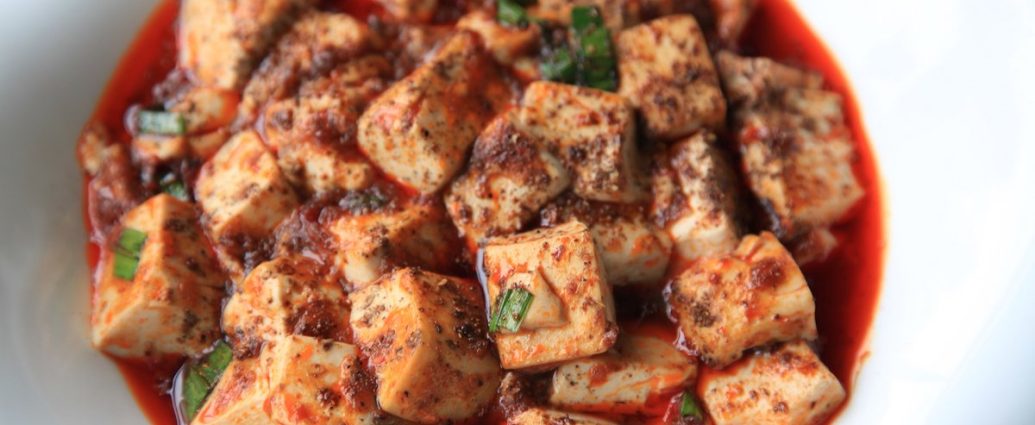
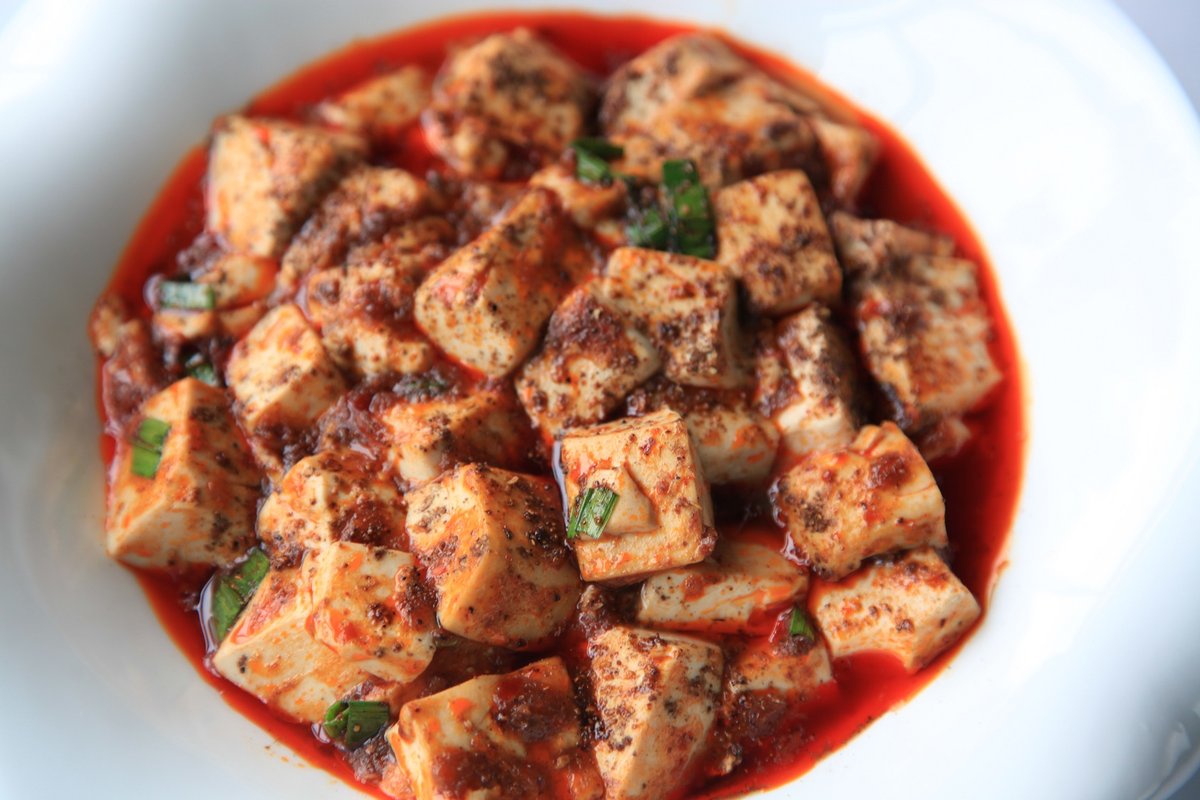
Mapo Tofu (麻婆豆腐) is the crown jewel of Sichuan cuisine — silky soft tofu bathed in a bold, fragrant sauce of fermented chili bean paste (doubanjiang), numbing Sichuan peppercorns, and ground pork. It is spicy, tingly, deeply savory, and ready in under 20 minutes. This version restores the dish to its rightful glory after the previous version was removed.
麻婆豆腐 is one of the very few Chinese dishes with a documented origin and a named creator. In 1862, a widow named Chen Liushi opened a small eatery near the Wanfu Bridge in Chengdu. Her husband had died young, and neighbors called her 陈麻婆 — “Grandmother Chen the pockmarked,” a nickname that in old Chengdu carried no cruelty, simply description. She served a cheap, filling dish of tofu with minced meat and chili bean paste to the laborers and porters who passed her door, and it became famous enough that the shop itself was renamed after her. Today 陈麻婆豆腐 is a chain, and the dish is a national standard.
This recipe comes from my time cooking with a family-run restaurant in Chengdu, where I learned that the key to authentic Mapo Tofu lies in three things: quality doubanjiang, freshly ground Sichuan peppercorns, and the signature wok hei that only high heat can deliver.
The Eight Characters
Sichuan cooks describe authentic mapo tofu with eight characters: 麻、辣、烫、香、酥、嫩、鲜、活 — numbing, spicy, hot, fragrant, crisp, tender, fresh, and alive. Each one is a technique:
- 麻 (numbing) — freshly ground Sichuan peppercorn, added at the very end so the tingle is bright
- 辣 (spicy) — doubanjiang fried in oil until it reddens, which is where the heat and color come from
- 烫 (hot) — served scalding, straight from the wok; the dish cools fast and is at its best in the first five minutes
- 香 (fragrant) — the aroma of fried chili bean paste and garlic, released before any liquid goes in
- 酥 (crisp) — the minced beef or pork fried until it is dry and slightly crunchy, not merely browned
- 嫩 (tender) — silken tofu, handled gently so the cubes stay whole
- 鲜 (fresh) — good stock rather than water, and a little soy for savoriness
- 活 (alive) — the dish should still be bubbling when it reaches the table
Blanching the Tofu — The Step Most Cooks Skip
Silken tofu is fragile and full of water. Dropped straight into a sauce, it releases that water, dilutes the seasoning, and breaks apart. The Sichuan solution is a 2-minute blanch in lightly salted water: the salt firms the surface of the cubes just enough to hold them together, while the heat drives out some of the excess water. The tofu comes out silky but structurally sound, and the sauce stays thick rather than turning soupy. It is a small step with an outsized effect.
Ingredients and Where to Find Them
- Silken or soft tofu — silken tofu, cut into 2cm cubes
- Pixian doubanjiang — Pixian doubanjiang, the aged chili-bean paste that defines the dish
- Sichuan peppercorns — whole Sichuan peppercorns, toasted and ground fresh
Also needed: ground beef or pork, garlic, ginger, scallions, fermented black beans (optional but traditional), light soy sauce, Shaoxing wine, cornstarch, and chicken stock. Chili oil is optional — the doubanjiang supplies most of the color.
How to Cook It
- Cut 450g (1 lb) silken tofu into 2cm cubes and blanch in salted water for 2 minutes; drain gently
- Heat a wok over high heat, add 2 tablespoons oil, and fry 150g (5 oz) ground beef until dry and crisp, about 3 minutes
- Push the meat aside, add 1.5 tablespoons doubanjiang to the oil, and fry 1 minute until it reddens and smells fragrant
- Add 3 minced garlic cloves, 1 tablespoon minced ginger, and 1 teaspoon fermented black beans; stir 30 seconds
- Pour in 200ml chicken stock with 1 tablespoon light soy and 1 teaspoon Shaoxing wine; bring to a simmer
- Slide in the tofu and simmer 3 minutes without stirring — push the cubes gently with the back of a ladle to move them
- Thicken with a cornstarch slurry, scatter with scallions and 1 teaspoon freshly ground Sichuan peppercorn, and serve immediately with rice
Variations
- Vegetarian — replace the meat with finely diced shiitake mushrooms; the doubanjiang carries the savory depth
- With more heat — add 1 teaspoon chili flakes with the doubanjiang, or a spoonful of chili oil at the end
- With beef instead of pork — the traditional protein; fry it until genuinely crisp
- Less numbing — halve the ground peppercorn; the dish remains authentic but gentler
Frequently Asked Questions
Why did my tofu fall apart?
You used the wrong tofu, skipped the blanch, or stirred instead of pushing. Use silken or soft tofu, blanch it in salted water for two minutes to firm the surface, and move the cubes by pushing them with the back of a ladle rather than stirring.
What is doubanjiang and can I substitute it?
Doubanjiang is a fermented chili-bean paste from Pixian, aged for years, and it is the soul of this dish. There is no true substitute. A generic chili bean paste will work in a pinch but lacks the fermented depth. Look for the words 郫县豆瓣 on the label.
Is mapo tofu very spicy?
It is moderately spicy and distinctly numbing, though the chili oil is aromatic rather than purely hot. You can reduce the doubanjiang and peppercorn, but the dish is defined by that balance — stripping it back too far leaves an ordinary tofu stir-fry.
Do I need fermented black beans?
They are traditional and add a deep, funky savoriness, but the dish works without them. If you have them, rinse and mash a teaspoon into the aromatics. If not, an extra half teaspoon of doubanjiang compensates.
More Sichuan Classics
Love Sichuan food? Try my Mao Xue Wang 毛血旺, the elegant Zhang Cha Duck 樟茶鸭, or the street-style Bo Bo Chicken 钵钵鸡.
As an Amazon Associate, I earn from qualifying purchases. These are affiliate links at no extra cost to you.
3 Comments