
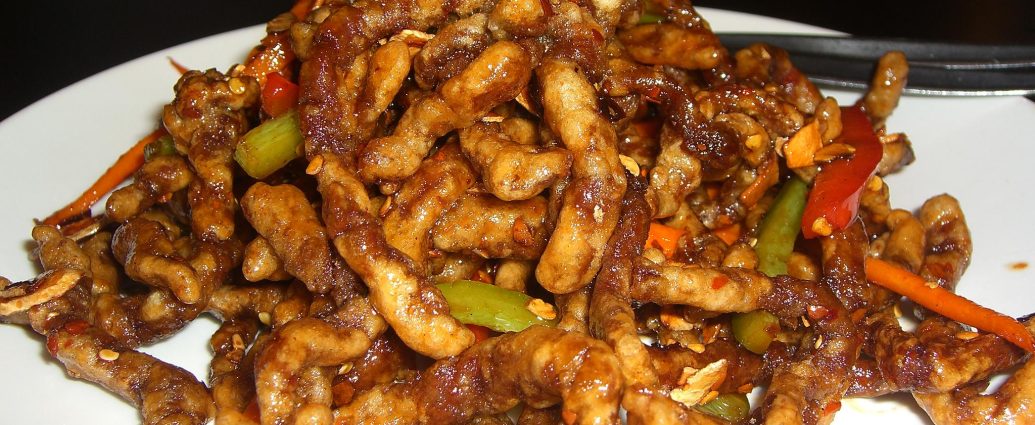
Dry-Fried Shredded Beef (干煸牛肉丝) is a Sichuan restaurant classic — thin beef strips stir-fried until chewy and crisp-edged, tossed with celery, scallions, and a fiery doubanjiang-chili sauce. The “dry-fry” (gan bian) technique removes moisture and concentrates flavor, creating beef with a wonderfully chewy, savory bite. Here is the authentic method.
Dry-fried shredded beef (干煸牛肉丝) is a Sichuan dish of thin beef strips stir-fried over high heat until chewy and crisp, then tossed with doubanjiang, chilies, celery, and scallions. The dry-fry technique concentrates the beef’s savory flavor.
干煸 (gān biān, “dry-fried”) is one of Sichuan cooking’s signature techniques, and it is almost the opposite of the quick sear most stir-fries use. Instead of sealing in juices, you cook the moisture out — patiently, over moderate heat — until the ingredient shrinks, darkens, and develops a dense, chewy texture with crisp edges. The result is intensely savory: the beef’s flavor concentrates rather than dilutes, which is why 干煸牛肉丝 tastes deeper than almost any other beef stir-fry. Sichuan cooks apply the same method to green beans, shredded pork, and even eel.
This recipe comes from a Chengdu chef who taught me the essential patience: the beef must be fried slowly over medium heat for 6-8 minutes until it shrinks, darkens, and turns chewy — rushing this step leaves watery, mushy beef.
The Patience Rule
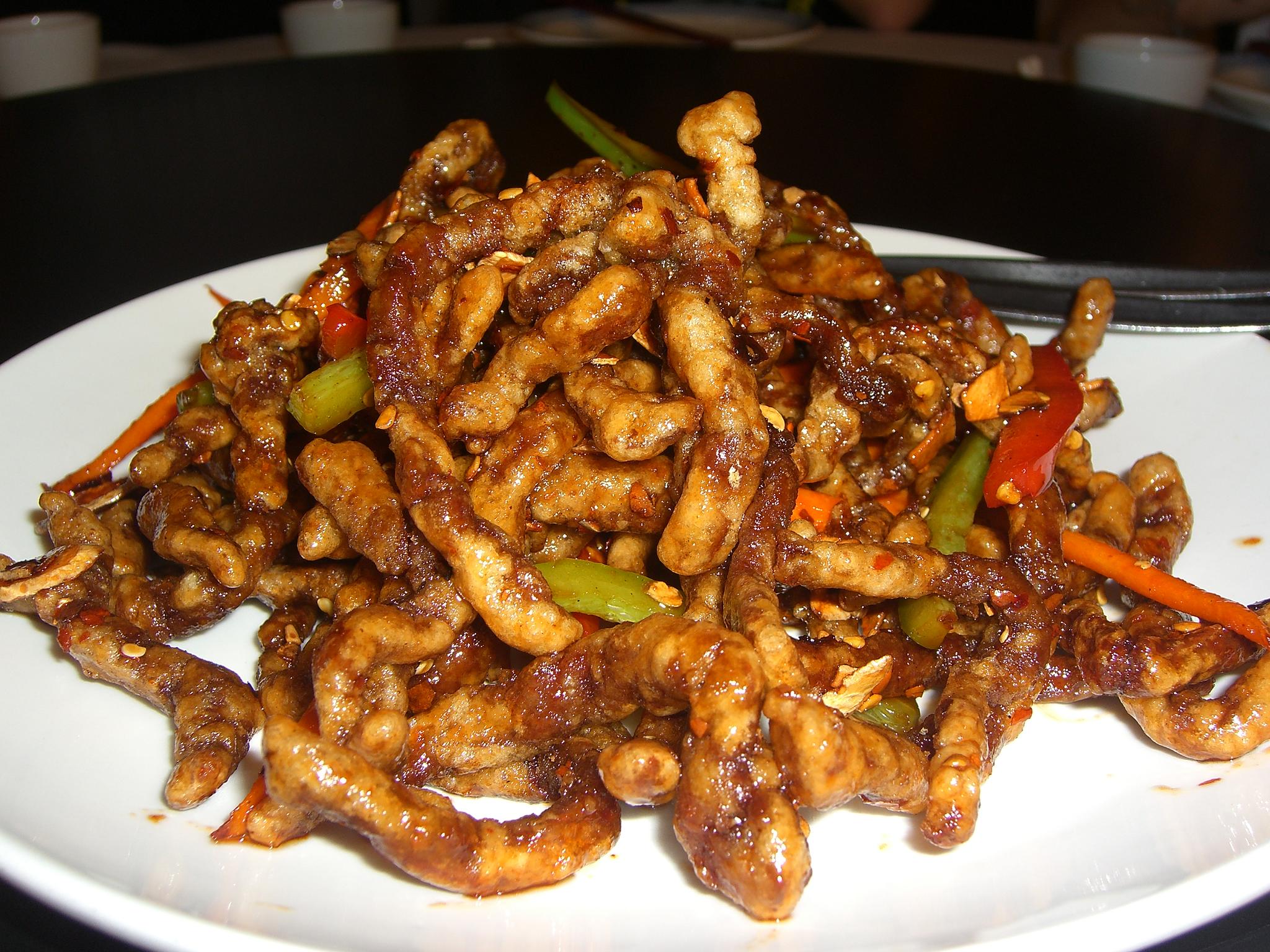
Everything in this dish depends on one thing: letting the beef fry long enough. You will be tempted to turn up the heat and finish faster — resist it. Over medium heat, the beef goes through three visible stages: it releases water and looks wet, then the water evaporates and the pan sizzles dry, then the strips darken, shrink, and their edges crisp. That third stage is where the flavor is. The whole process takes 6–8 minutes and cannot be hurried.
Choosing and Cutting the Beef
- Use a well-marbled cut — flank, skirt, or chuck. Lean cuts turn to leather when dried out
- Partially freeze the meat — 30 minutes in the freezer firms it so you can cut clean, even strips
- Slice against the grain into strips about 5cm long and 4mm thick
- Skip the marinade — unlike velveting for a quick stir-fry, dry-frying wants the beef’s own flavor, not a starch coating
- Pat the strips dry before they hit the pan so they start drying rather than steaming
Ingredients and Where to Find Them
- Beef flank or skirt — flank or skirt steak, sliced into thin strips
- Doubanjiang — Pixian doubanjiang, the fermented chili-bean paste at the heart of Sichuan cooking
- Dried chilies — dried red chilies, snipped into sections
From the supermarket: celery (the classic vegetable partner), scallions, ginger, garlic, light soy sauce, Shaoxing wine, sugar, and a little Chinkiang vinegar. Sichuan peppercorns are optional but traditional for the finishing tingle.
How to Cook It
- Heat 2 tablespoons oil in a wok over medium heat and add 400g (14 oz) beef strips in a single layer
- Fry without stirring for 2 minutes, then stir and continue for 6–8 minutes total, until the beef is dark, shrunken, and crisp-edged
- Push the beef to one side; add 1.5 tablespoons doubanjiang to the oil and fry 1 minute until it darkens and smells fragrant
- Add 8 dried chilies, 1 tablespoon minced ginger, and 3 minced garlic cloves; stir 30 seconds
- Add 3 celery stalks cut into matchsticks; stir-fry over high heat for 2 minutes so the celery stays crisp
- Season with 1 tablespoon light soy, 1 teaspoon Shaoxing wine, and 1/2 teaspoon sugar
- Add scallion batons, a splash of Chinkiang vinegar, and a pinch of ground Sichuan peppercorn; toss 20 seconds and serve
Variations
- With Sichuan peppercorn oil — a teaspoon of 藤椒油 at the end sharpens the numbing note
- Extra-crisp version — dry-fry the beef for 10 minutes; it becomes almost jerky-like, which some Sichuan cooks prefer
- Dry-fried green beans — the same technique applied to 四季豆 makes the famous 干煸四季豆
- Less heat — halve the doubanjiang and chilies, and add a little extra sugar to round the sauce out
Frequently Asked Questions
Why is my dry-fried beef tough?
Usually the cut, not the technique. Lean beef has no fat to protect it during the long dry-fry and turns to leather. Use flank, skirt, or chuck, slice against the grain, and don’t exceed 8 minutes unless you want an intentionally jerky-like texture.
What does 干煸 (dry-frying) mean?
干煸 literally means “dry-fried” — a Sichuan technique that cooks the moisture out of an ingredient over moderate heat until it shrinks and concentrates in flavor. It is different from stir-frying, which cooks quickly at high heat and preserves moisture.
Is this very spicy?
Moderately spicy. Reduce the dried chilies and doubanjiang for a milder version, or add extra chilies for the full Sichuan fire. The doubanjiang contributes fermented depth as much as heat, so don’t cut it entirely.
Can I make it ahead?
The dish is best fresh, but it reheats reasonably well because it contains little moisture — unlike saucy stir-fries. Reheat in a hot pan (not a microwave) for 2 minutes to bring back the crisp edges.
More Sichuan Favorites
Love Sichuan flavors? Try my Dry-Fried Green Beans 干煸豆角, the classic Twice-Cooked Pork 回锅肉, or the fiery La Zi Ji 辣子鸡.
As an Amazon Associate, I earn from qualifying purchases. These are affiliate links at no extra cost to you.
1 Comment