
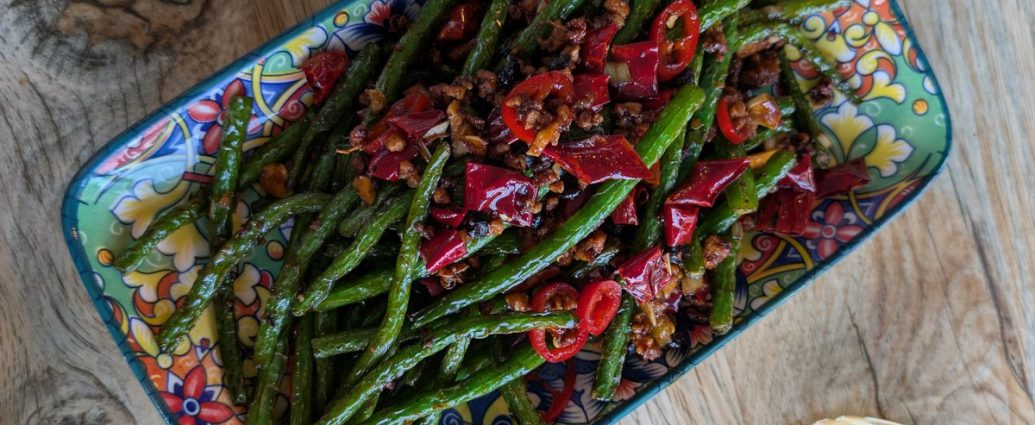
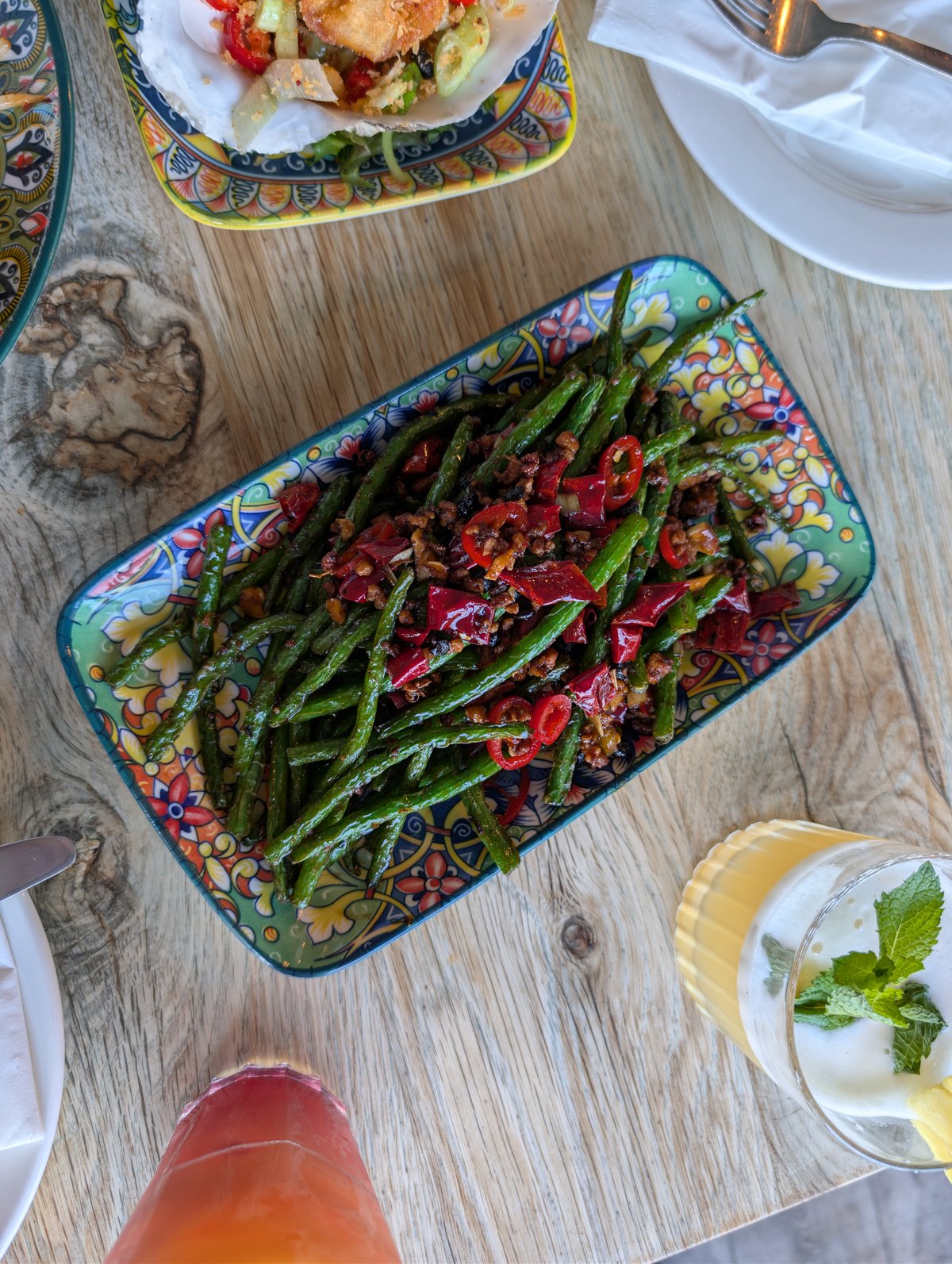
Dry-Fried Green Beans (干煸豆角) is a classic Sichuan home-style dish that transforms humble green beans into something utterly addictive — wrinkled, blistered, and intensely flavored from a dry-fry technique that concentrates their sweetness. Tossed with minced pork, dried chilies, and Sichuan peppercorns, this is the vegetable dish that even meat-lovers crave.
干煸 (gān biān) means “dry-fried” — a technique where the ingredient is cooked in a hot wok with little or no liquid until its moisture is driven out and its surface blisters. It is one of the defining methods of Sichuan home cooking, applied to beans, shredded beef, eel, and potatoes. What it does to a green bean is remarkable: the bean collapses slightly, its skin wrinkles, and its flavor concentrates into something sweet and faintly smoky. The dish is also known as 干煸四季豆; the names are used interchangeably, with 豆角 the more northern term for the long green bean.
This recipe comes from a street-side restaurant in Chengdu where the chef taught me that the key to perfect dry-fried beans is patience — the beans must be cooked over high heat until they blister and wrinkle, releasing their natural sugars, before any seasoning is added.
Why You Never Blanch the Beans
The most common shortcut in Western versions of this dish is to blanch or parboil the beans first. It is faster, but it changes the dish fundamentally. Blanching adds water, which then has to be cooked off before the beans can blister — and in the meantime they steam rather than fry, losing the concentrated sweetness that dry-frying creates. The authentic method is patient: beans go into a hot wok with a modest amount of oil, and they stay there, tossed periodically, for six to eight minutes until the skin wrinkles and darkens. The reward is a texture and depth that no shortcut reproduces.
The Order of the Wok
- Beans first, alone — they need the longest time and the full heat of the wok; crowding them with other ingredients means they steam instead of blistering
- Remove the beans, then fry the pork — the meat needs high heat and crispness, which it will not get in a wok full of beans
- Add the aromatics to the rendered pork fat — doubanjiang, garlic, chilies, and Sichuan peppercorns bloom in that fat
- Return the beans at the very end — just long enough to coat them in the seasoning, about 30 seconds
- Season with a little sugar and soy — the sugar rounds the doubanjiang’s salt and brings out the beans’ sweetness
Ingredients and Where to Find Them
- Long green beans — long green beans or standard string beans, trimmed
- Pixian doubanjiang — doubanjiang for the fermented chili depth
- Sichuan peppercorns — whole Sichuan peppercorns for the numbing note
Also needed: minced pork (or beef), dried red chilies, garlic, ginger, light soy sauce, sugar, and Shaoxing wine. For a vegetarian version, replace the pork with finely diced shiitake mushrooms.
How to Cook It
- Trim 500g (1.1 lb) green beans and pat completely dry — wet beans will not blister
- Heat a wok over high heat with 2 tablespoons oil and add the beans in a single layer
- Dry-fry 6–8 minutes, tossing every minute, until the skins wrinkle and darken in patches; remove
- Add 1 tablespoon oil and fry 120g (4 oz) minced pork until crisp and browned, about 3 minutes
- Push the meat aside, add 1 tablespoon doubanjiang, 6 snipped dried chilies, 1 teaspoon Sichuan peppercorns, garlic, and ginger; fry 1 minute until red and fragrant
- Return the beans and toss over high heat for 30 seconds
- Season with 1 teaspoon light soy, 1 teaspoon Shaoxing wine, and 1/2 teaspoon sugar; toss and serve with rice
Variations
- Vegetarian — swap the pork for finely diced shiitake or firm tofu; add an extra teaspoon of soy for savoriness
- With yardlong beans — the long bean variety is traditional in Sichuan and holds up even better to dry-frying
- With preserved vegetables — a spoonful of 芽菜 (preserved mustard greens) adds a deep, fermented note
- Less spicy — halve the chilies and peppercorns; the dish remains aromatic and the beans still shine
Frequently Asked Questions
Why are my beans soggy instead of wrinkled?
They were wet, crowded, or the wok was not hot enough. Dry the beans thoroughly after washing, fry them in a single layer in batches if needed, and keep the heat high. Blistering requires direct contact with hot metal — moisture and crowding both prevent it.
Can I use regular string beans?
Yes — standard green beans work well, though the longer Asian varieties hold their shape better. Trim the ends and use them whole or halved; do not cut them small, as they shrink considerably during the dry-fry.
How spicy is this dish?
Moderately spicy. The dried chilies provide aroma and mild heat; the Sichuan peppercorns add a numbing tingle. For less heat, remove all chili seeds. For more, add crushed chili flakes at the end.
Is this dish healthy?
It is a vegetable-forward dish, though it does use a fair amount of oil — that is inherent to dry-frying. Draining the beans briefly on a rack after frying removes excess oil without softening the crust.
More Sichuan Home Cooking
Love Sichuan flavors? Try my Mapo Tofu 麻婆豆腐, the twice-cooked Hui Guo Rou 回锅肉, or the spectacular Shui Zhu Yu 水煮鱼.
As an Amazon Associate, I earn from qualifying purchases. These are affiliate links at no extra cost to you.
2 Comments