
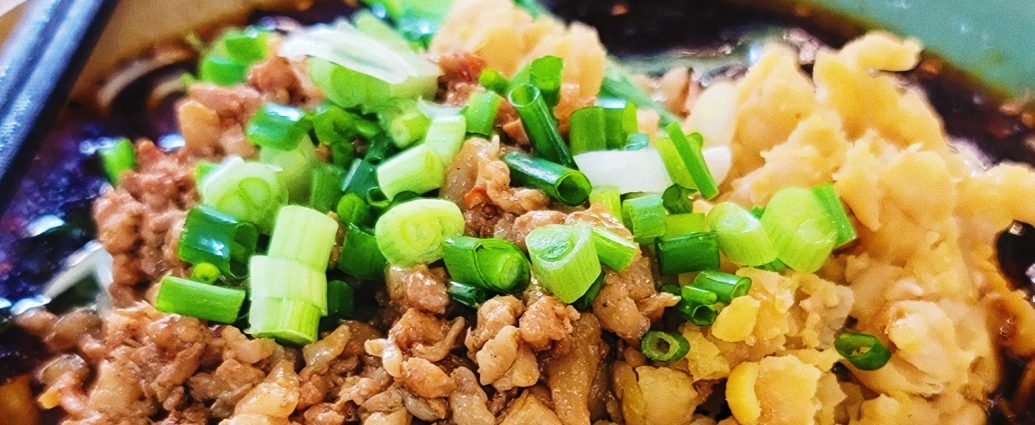
Chongqing Small Noodles (重庆小面) is the fiery heart of Chongqing street food — a humble bowl of wheat noodles drowned in a deeply flavored chili-oil sauce, topped with peanuts, scallions, and your choice of minced pork. Unlike noodle soups, the sauce is the star here: numbing, spicy, and intensely savory. This recipe includes the famous pea-and-pork (wan za) version, the most beloved topping in Chongqing.
Chongqing small noodles (重庆小面) are wheat noodles tossed in a bold chili oil and Sichuan peppercorn sauce with peanuts and scallions, often topped with braised peas and minced pork (wan za). They are known for their numbing-spicy (mala) flavor and are a signature street food of Chongqing.
重庆小面 is breakfast in Chongqing. The city wakes up to these bowls — small stalls, plastic stools, and a queue by seven in the morning. 小面 (“small noodles”) originally meant a bowl with nothing but noodles and sauce, the cheapest option on the menu; 豌杂面 (wān zá miàn), with braised yellow peas and minced pork, was the upgrade. The distinction still matters to locals: 小面 is the base, and the toppings are added on top of it. What makes the dish remarkable is that it contains almost no broth — the noodles are dressed, not souped, and every strand carries the sauce.
This recipe comes from a noodle stall owner in Chongqing who taught me the essential rule: the sauce is built in layers. Chili oil, Sichuan peppercorn powder, garlic water, soy sauce, and a splash of broth are mixed in a specific order to create a complex, balanced flavor that coats every strand.
The 佐料 (Seasoning) Ritual
Chongqing cooks call the seasoning 佐料, and the order matters as much as the ingredients. The bowl is built before the noodles are cooked:
- Chili oil (红油) first — the base of the bowl, and the largest component; the red oil coats the noodles and carries the heat
- Sichuan peppercorn powder — ground fresh, for the numbing note; added early so it blooms in the oil
- Garlic water (蒜水) — crushed garlic steeped in water, which distributes the pungency evenly instead of leaving sharp bits
- Light soy and a pinch of sugar — salt and balance
- A spoonful of noodle-cooking water or stock — loosens the sauce so it can coat every strand
- Toppings last — peanuts, scallions, pickled vegetables, and the wan za
豌豆 (Braised Peas) and 杂酱 (Minced Pork)
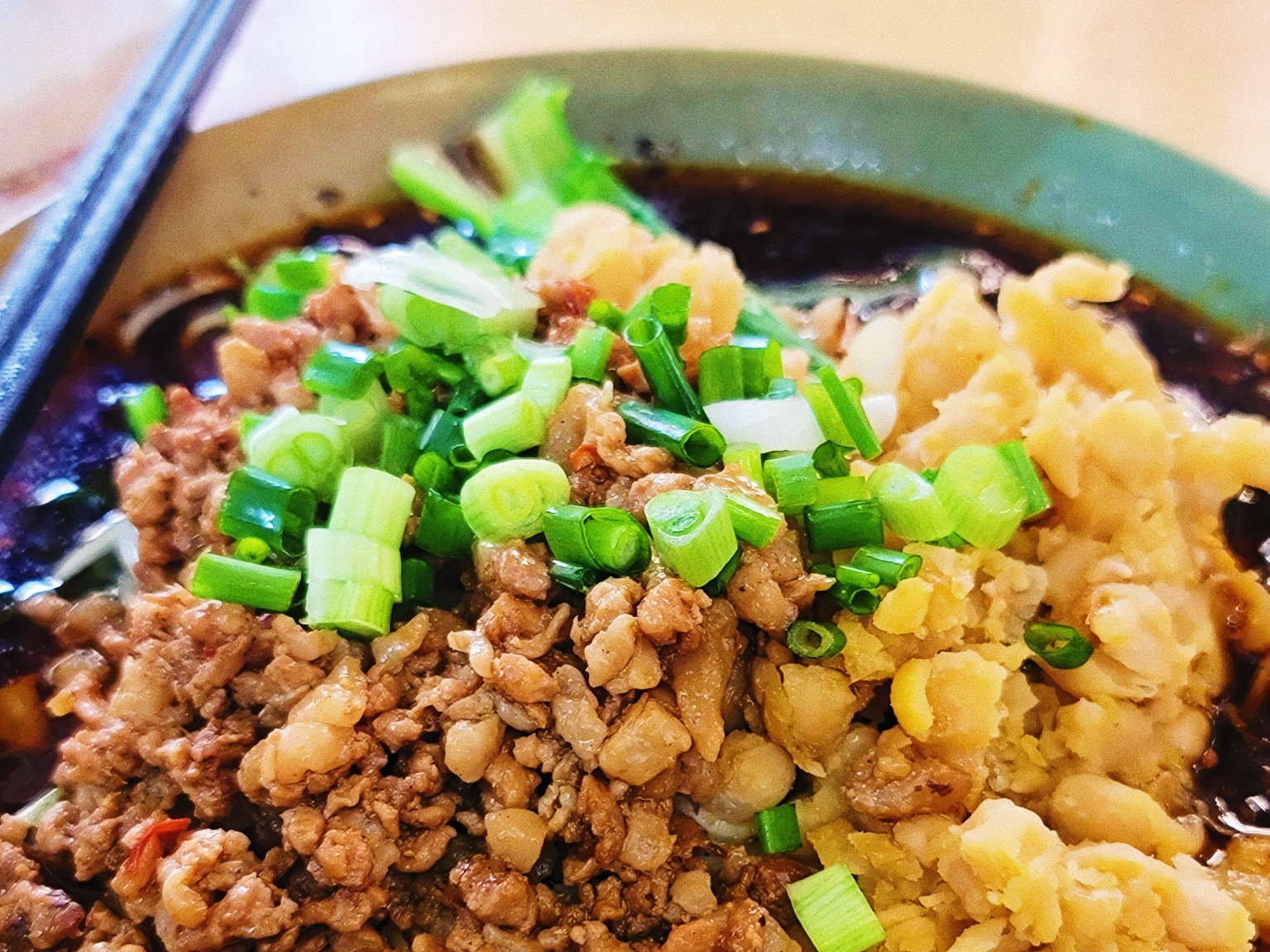
The 豌杂 topping is two components. The peas are yellow split peas, soaked and simmered until they are soft and slightly broken down — they add a creamy, starchy sweetness that balances the chili. The 杂酱 is minced pork fried with doubanjiang and sweet bean paste until dark and crumbly. Together they turn a simple bowl into a substantial meal, and they are the reason 豌杂面 outsells plain 小面 at most stalls.
Ingredients and Where to Find Them
- Wheat noodles — fresh wheat noodles; alkaline (碱水) noodles are traditional
- Sichuan chili oil — chili oil with sediment
- Yellow split peas — yellow split peas for the wan za topping
Also needed: minced pork, doubanjiang, sweet bean paste (甜面酱), Sichuan peppercorns, garlic, ginger, scallions, light soy sauce, Chinkiang vinegar, sugar, roasted peanuts, and pickled vegetables.
How to Make It
- Soak 100g (3.5 oz) yellow split peas 4 hours, then simmer 45 minutes until soft; drain
- Fry 200g (7 oz) minced pork until crisp, then add 1 tablespoon doubanjiang and 1 tablespoon sweet bean paste; cook 2 minutes until dark and crumbly
- Build each bowl: 2 tablespoons chili oil, 1/2 teaspoon ground Sichuan peppercorn, 1 tablespoon garlic water, 1 tablespoon light soy, 1/2 teaspoon vinegar, and 1/4 teaspoon sugar
- Add 3 tablespoons of hot noodle water or stock to each bowl and stir to combine
- Cook the noodles in boiling water until just tender, about 2 minutes for fresh noodles
- Lift the noodles directly into the bowls and toss to coat in the sauce
- Top with the peas, minced pork, crushed peanuts, scallions, and pickled vegetables; serve immediately and mix at the table
Variations
- Plain 小面 — just noodles and sauce, no toppings; the purest version
- With beef — braised beef chunks in place of the pork make a heartier bowl
- With extra vegetables — blanched bok choy or 空心菜 added with the noodles
- Milder version — reduce the chili oil and skip the peppercorn; the sauce is fully adjustable
Frequently Asked Questions
What does 重庆小面 mean?
重庆小面 literally means “Chongqing small noodles.” The 小 (“small”) originally referred to a bowl with nothing but noodles and sauce — the cheapest item on a street stall’s menu, as opposed to bowls with meat toppings. The name stuck, and it now refers to the whole category of dressed Chongqing noodles.
What is 豌杂面?
豌杂面 (wān zá miàn) is Chongqing small noodles topped with 豌豆 (braised yellow peas) and 杂酱 (fried minced pork in bean paste). It is the most popular version in Chongqing and turns the dish into a full meal.
Why is there so little broth?
Chongqing small noodles are a dressed noodle dish, not a soup. The sauce is built in the bowl and the noodles are tossed through it — just a few spoonfuls of noodle water loosen it. This is what makes the flavor so concentrated.
How do I control the spice?
Reduce the chili oil to 1 tsp and skip the peppercorn powder for a milder bowl. The sauce is fully customizable to your heat tolerance.
More Chongqing & Sichuan Noodles
Love Sichuan noodles? Try my Dan Dan Noodles 担担面, the hot-and-sour Suan La Fen 酸辣粉, or the build-your-own Mala Tang 麻辣烫.
As an Amazon Associate, I earn from qualifying purchases. These are affiliate links at no extra cost to you.
1 Comment