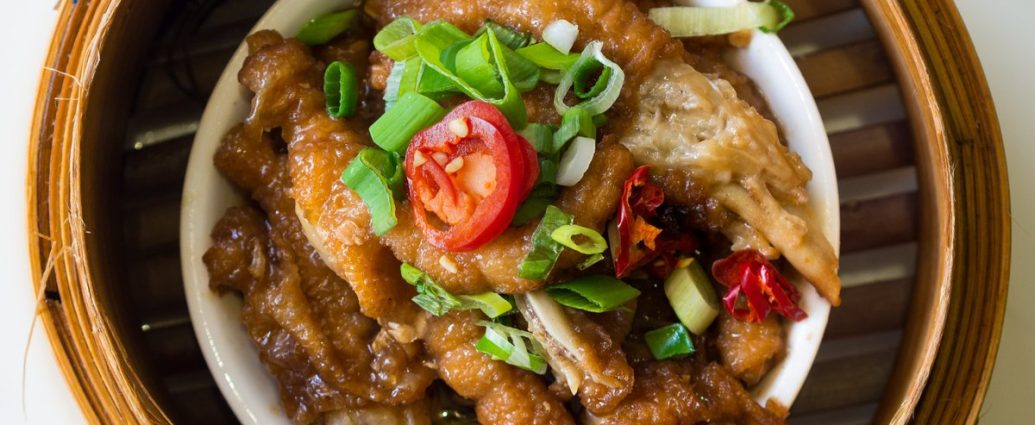
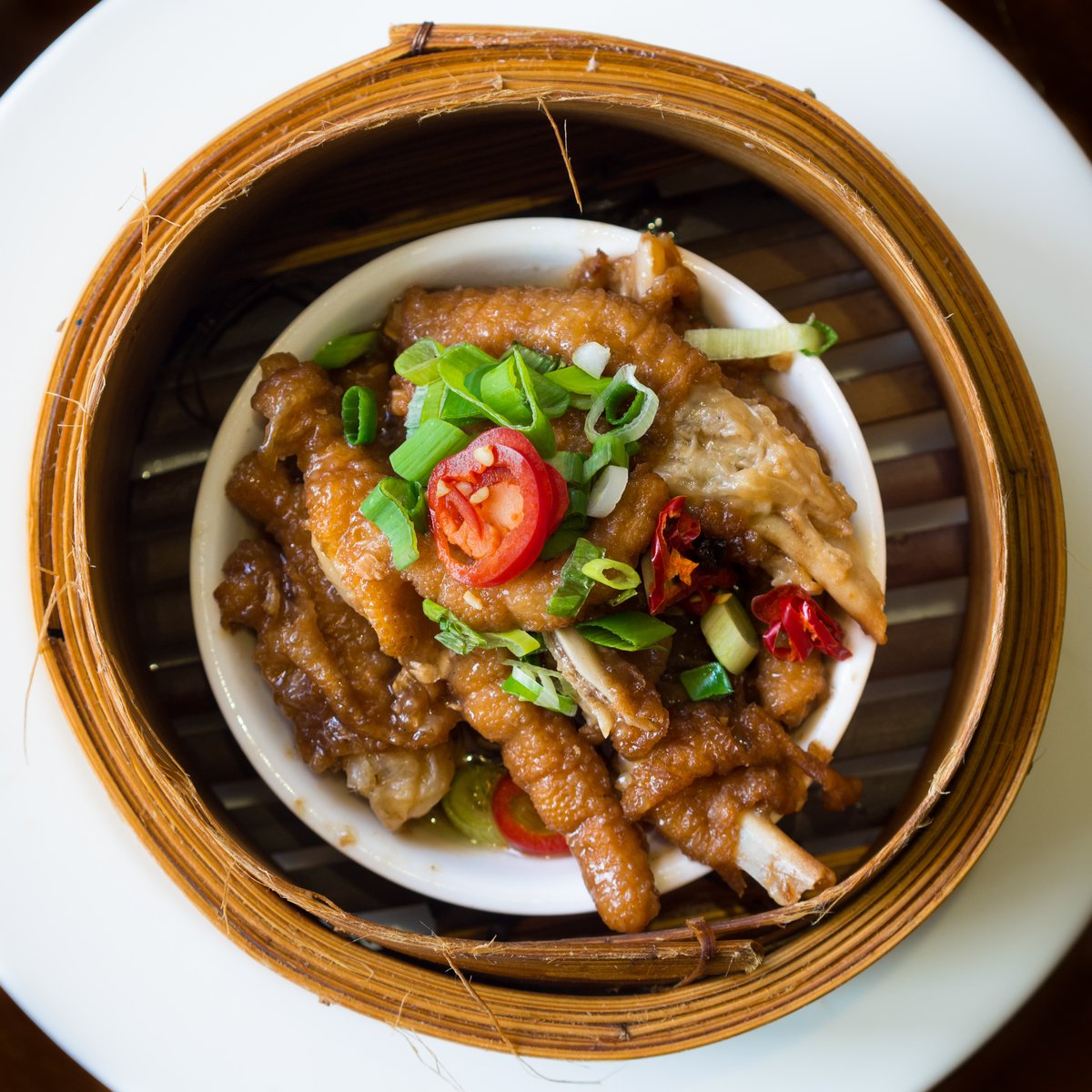
Chicken Feet (凤爪), also known as Phoenix Claws, is one of the most iconic dim sum dishes — tender, gelatinous chicken feet braised in a savory black bean sauce until the skin is practically falling off the bone. It is the dish that separates adventurous dim sum eaters from tourists, and once you try it, you will understand why it is so beloved.
凤爪 literally means “phoenix claws,” a poetic name that Chinese cooks gave the humble chicken foot to make it sound — and taste — like something special. The dish’s journey from kitchen scrap to dim sum royalty is a story of technique: cooks discovered that deep-frying the feet puffs the skin into a spongy, silky layer that then drinks up braising liquid like a sponge. Nothing else in Chinese cooking has quite that texture, which is why 凤爪 remains one of the most-ordered items on any dim sum trolley.
This recipe comes from a dim sum chef who taught me the three-step technique: deep-fry the feet first to puff the skin (crucial for that silky texture), then braise in a fermented black bean and oyster sauce mixture, and finally steam to order for an impossibly tender result.
The Three-Step Method (and Why Each Step Matters)
- Deep-fry. The feet go into hot oil until the skin blisters and puffs. This creates the spongy layer that later absorbs sauce — skip it and the skin stays tight and chewy.
- Ice bath, then braise. A plunge into ice water after frying sets the puffed skin, then a long braise in a black bean and soy base seasons it all the way through.
- Steam to order. The final steam is what makes them fall-off-the-bone tender, and it takes only minutes from the braised, chilled state.
From Kitchen Scrap to Phoenix Claw
The renaming is worth pausing on. Chicken feet were, for most of Chinese history, a by-product — cheap, bony, and of little interest to anyone who could afford better cuts. The name 凤爪 (“phoenix claws”) was a piece of marketing that worked so well it became the standard term, and the dish’s rise tracks the broader Cantonese genius for turning humble ingredients into delicacies. The transformation is entirely technical: deep-frying puffs the skin into a spongy layer, and braising fills that layer with savory liquid. What was once gristle becomes something silky and rich. In a Cantonese tea house, 凤爪 is ordered in the same breath as har gow and siu mai, and regulars have firm opinions about which shop does it best — a sign that a by-product has fully arrived as a delicacy.
Ingredients and Where to Find Them
- Chicken feet — chicken feet, ideally the meatier “drumstick” style; ask your butcher to trim the nails
- Fermented black beans — douchi (fermented black beans) are the backbone of the sauce
- Oyster sauce — premium oyster sauce for depth and gloss
The rest — ginger, garlic, Shaoxing wine, rock sugar, star anise, and cornstarch — you likely already have. A bamboo steamer helps for the final step but a metal steamer works just as well.
Preparing and Frying the Feet
- Rinse 700g (1.5 lb) chicken feet, trim the nails, and rub with salt and a splash of Shaoxing wine; rinse again
- Blanch in boiling water with 3 ginger slices for 3 minutes, then drain and pat completely dry — wet feet spit dangerously in oil
- Heat oil to 180°C (355°F) and fry the feet in batches for 4–5 minutes until the skin is golden and blistered
- Transfer straight into a bowl of ice water and soak 20–30 minutes; the skin will puff and wrinkle
- Drain and set aside — at this point the feet can be refrigerated for up to 2 days
Braising in Black Bean Sauce
- Rinse and mash 2 tablespoons fermented black beans with 3 minced garlic cloves and 15g minced ginger
- Heat 2 tablespoons oil and fry the black bean mixture for 30 seconds until fragrant
- Add 1 star anise, 1 tablespoon oyster sauce, 2 tablespoons light soy, 1 tablespoon Shaoxing wine, and 1 tablespoon rock sugar
- Add the feet and 1 liter water; bring to a boil, then simmer covered for 45 minutes
- Uncover and simmer 15 minutes more until the sauce is thick and glossy and the feet are tender
Steaming to Serve
- Spoon the braised feet into a shallow heatproof dish with a few spoonfuls of sauce
- Steam over rapidly boiling water for 8–10 minutes until heated through and meltingly soft
- Garnish with sliced red chili and scallion, and serve straight from the steamer with the sauce
Frequently Asked Questions
What do chicken feet taste like?
They taste like chicken — the braising sauce dominates — with a uniquely gelatinous, silky texture. There is very little meat; the pleasure is in the skin and collagen, which turn soft and yielding after the fry-and-braise treatment.
Can I skip the deep-frying?
You can, but the skin will not be as silky. The deep-fry is what gives dim sum chicken feet their signature texture. If you must skip it, braise the feet for an extra 45 minutes — they will be tender, but the skin will stay firmer and smoother rather than puffed.
How do I eat them?
Pick one up with chopsticks, hold it by the bony end, and nibble the skin and collagen off the small bones. Spit out the bones discreetly. In dim sum restaurants it is perfectly acceptable to use your fingers.
Can I make these ahead of time?
Yes — this is one of the best make-ahead dim sum dishes. Braise them up to 3 days ahead and refrigerate in the sauce; the flavor deepens. Steam to order for 10 minutes and they taste freshly made. They also freeze well for up to 2 months.
More Dim Sum Classics
Building a dim sum spread? Add my Har Gow 虾饺, the pork and shrimp Shu Mai 烧卖, or the crisp Woo Gok 蜂巢芋角.
As an Amazon Associate, I earn from qualifying purchases. These are affiliate links at no extra cost to you.