
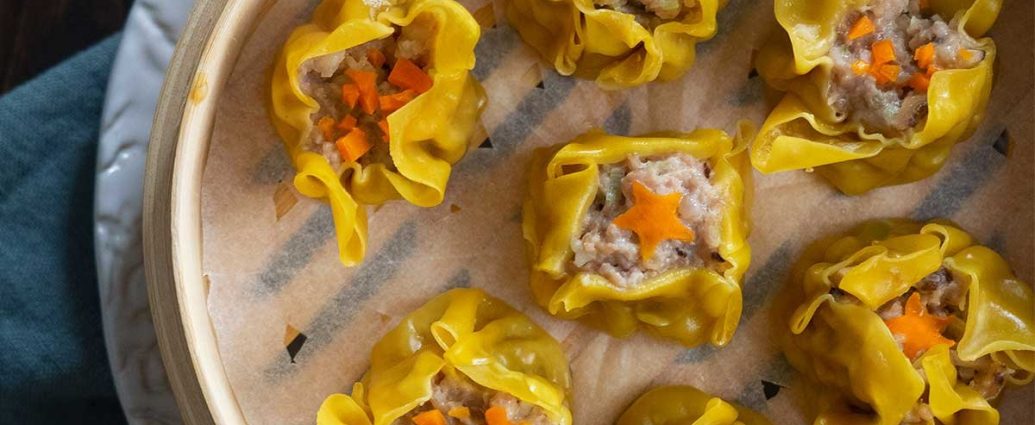
Shu Mai (烧卖), also spelled Siu Mai, is one of the most beloved dim sum classics — open-faced steamed dumplings filled with a bouncy pork and shrimp mixture, topped with a tiny crown of orange roe or diced carrot. Every dim sum cart carries them, and every table orders at least one basket. Learn how to make authentic siu mai at home with this step-by-step recipe.
烧卖 is one of the 四大天王 (“four heavenly kings”) of Cantonese dim sum, alongside har gow, char siu bao, and chicken feet — the four dishes that define a proper tea-house table. Its distinguishing feature is its openness: unlike most dumplings, siu mai is never sealed. The wrapper is pinched up around the filling and left open at the top, so the pork filling is visible and the steam reaches it directly. Cantonese siu mai is pork-and-shrimp based, but the name covers a wide family across China — from the sticky-rice siu mai of the south to the lamb-filled versions of the north.
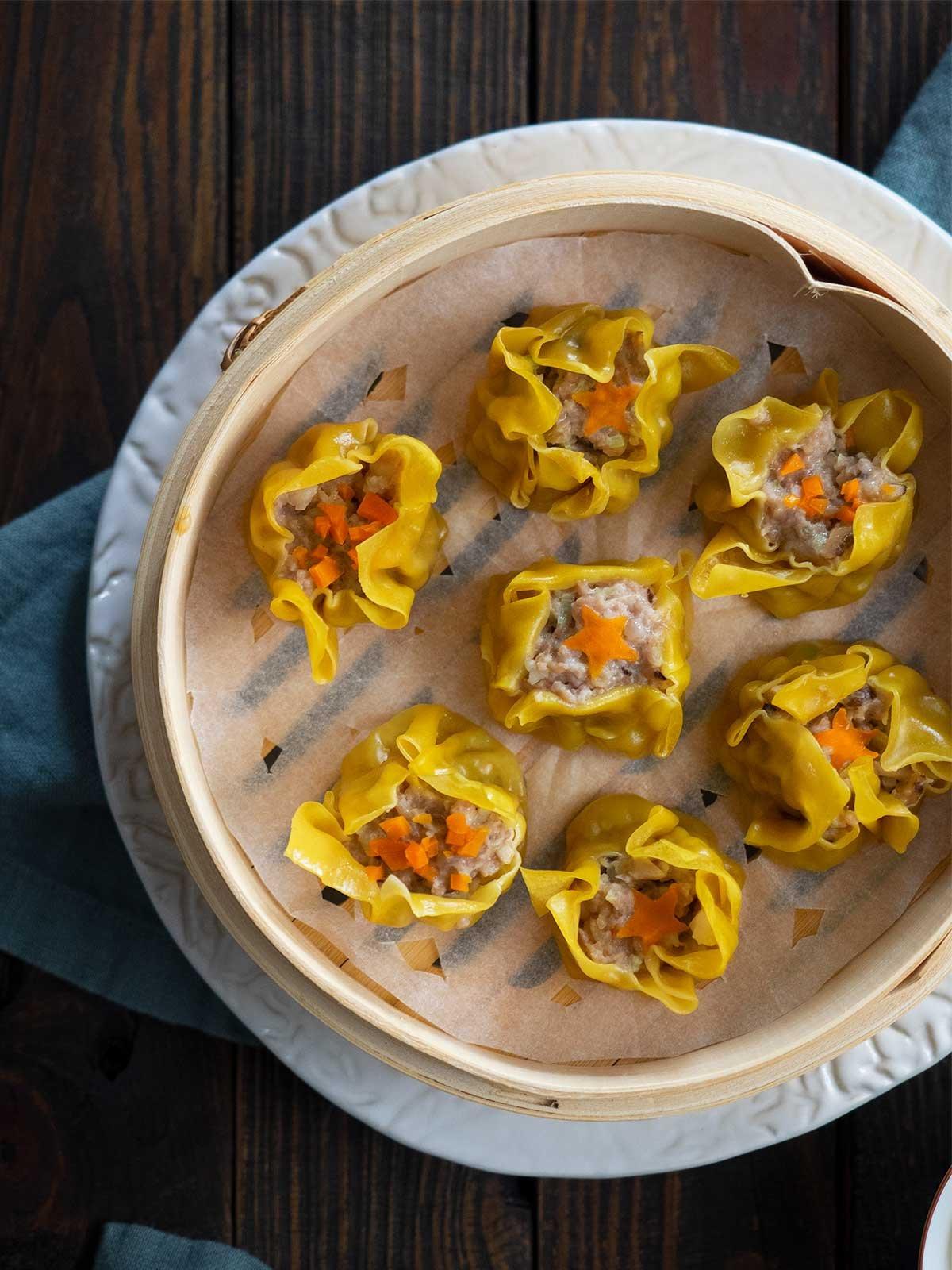
This recipe comes from a dim sum chef in Hong Kong who taught me that the key to great siu mai is the filling texture — the pork and shrimp must be chopped, not minced, so the filling retains a pleasant bouncy chew. The wrapper is not folded shut but pinched around the filling, leaving the top open like a flower.
Chop, Don’t Mince
The signature texture of good siu mai is 爽 — a bouncy, springy chew that resists the teeth slightly before yielding. That texture comes from the size of the pieces. Minced or machine-ground pork produces a dense, pasty filling that loses all bounce; coarsely chopped pork and roughly cut shrimp keep their structure, and the filling holds together just enough to stay in the wrapper. Some Cantonese kitchens take this further by kneading the filling in one direction until it becomes sticky and cohesive — a technique that creates an even springier bite.
The Open-Faced Pinch
- Use thin, square wonton wrappers — slightly thinner than dumpling wrappers; trim the corners if they are thick
- Place the wrapper in your cupped hand — the natural hollow shapes the dumpling
- Add a generous spoonful of filling — siu mai are meant to be full and slightly domed
- Gather the sides and pinch — four or five pleats around the edge, then squeeze gently to seal the sides while leaving the top open
- Tap the base flat — this gives a stable bottom so the dumpling stands upright in the steamer
- Crown with roe or carrot — the traditional orange garnish is flying fish roe; diced carrot is the everyday substitute
Ingredients and Where to Find Them
- Wonton wrappers — square wonton wrappers
- Ground pork — ground pork, ideally with some fat; chop it coarsely rather than using it as-is
- Flying fish roe or tobiko — fish roe for the traditional garnish
Also needed: raw shrimp, shiitake mushrooms, bamboo shoots, ginger, scallions, light soy sauce, oyster sauce, Shaoxing wine, sesame oil, sugar, cornstarch, and white pepper.
How to Make Them
- Coarsely chop 250g (9 oz) pork and 150g (5 oz) shrimp separately; keep some shrimp pieces whole
- Finely dice 4 rehydrated shiitake and 60g (2 oz) bamboo shoots
- Mix everything with 1 tablespoon light soy, 1 tablespoon oyster sauce, 1 tablespoon Shaoxing wine, 1 teaspoon sesame oil, 1 teaspoon sugar, 1 tablespoon cornstarch, and white pepper; stir in one direction until sticky
- Chill the filling 30 minutes so it firms up and is easier to shape
- Place a wrapper in your cupped hand, add a heaped tablespoon of filling, and pinch the sides up into 4–5 pleats, leaving the top open
- Tap the base flat and top with roe or diced carrot
- Steam over rapidly boiling water for 8–10 minutes until the filling is cooked through; serve immediately with vinegar or chili oil
Variations
- With sticky rice — 糯米烧卖 uses glutinous rice with pork and mushrooms; a Shanghai and Jiangnan favorite
- With lamb — 羊肉烧卖 from Inner Mongolia uses lamb and scallion with a thinner skin
- All-shrimp — replace the pork with extra shrimp for a lighter, sweeter dumpling
- Vegetarian — diced shiitake, bamboo shoots, carrot, and tofu with a little soy; add extra sesame oil for richness
Frequently Asked Questions
Why is my siu mai filling dense and pasty?
The pork was minced rather than chopped. Coarsely chop the pork and shrimp by hand — the pieces should be visibly distinct, roughly 5mm. That structure is what gives the filling its springy bite.
Why are my siu mai falling over in the steamer?
The base was not flattened. After pinching, press the bottom of the dumpling gently on the work surface to create a flat, stable base. Also avoid overfilling, which makes them top-heavy.
Can I make them ahead and freeze them?
Yes — freeze assembled uncooked siu mai on a tray, then bag them. Steam from frozen for 12–14 minutes. Cooked siu mai also freeze well and re-steam in 6 minutes.
What dipping sauce goes with siu mai?
Classic pairings are Chinkiang black vinegar, chili oil, or a light soy sauce with fresh ginger. Many dim sum restaurants serve siu mai with a simple mustard sauce.
More Dim Sum Classics
Build a dim sum basket with my Har Gow 虾饺, the classic Char Siu Bao 叉烧包, or the lotus-leaf parcel Lo Mai Gai 糯米鸡.
As an Amazon Associate, I earn from qualifying purchases. These are affiliate links at no extra cost to you.
2 Comments