
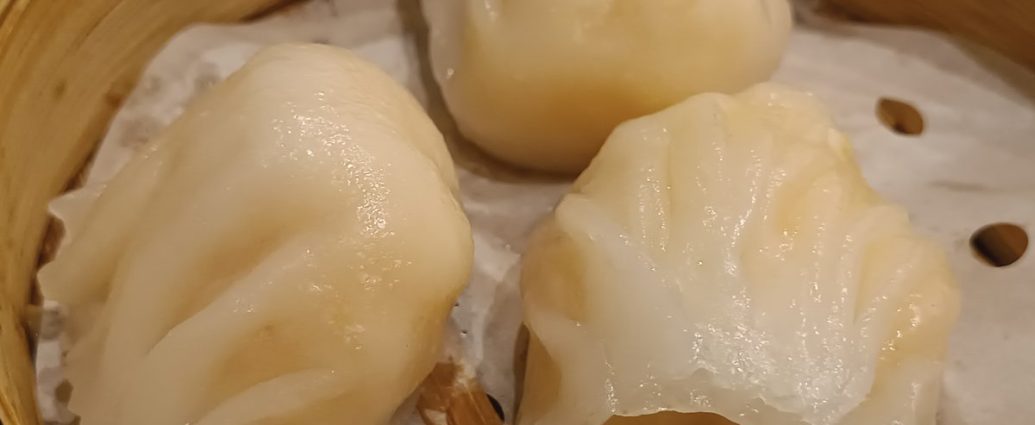
Har Gow (虾饺) is the crown jewel of the dim sum basket — delicate, translucent dumplings wrapped around a succulent filling of whole shrimp, bamboo shoots, and pork fat. A perfectly made har gow has a thin, pleated skin that reveals the pink shrimp within, and a texture that is simultaneously tender and bouncy.
虾饺 occupies a special place in Cantonese tea-house culture. Dim sum is built on the ritual of 一盅两件 — “one pot of tea, two dishes” — and har gow and siu mai are the two that define the meal: if a restaurant cannot make those two well, nothing else matters. The dish is a relatively modern invention, emerging in early-20th-century Guangzhou tea houses, but it became the benchmark by which dim sum kitchens are judged. The name means “shrimp dumpling,” and the defining feature is the skin: 水晶皮 (crystal wrapper), made from wheat starch rather than wheat flour, so it turns translucent when steamed and lets the filling show through.
This recipe comes from a dim sum master in Hong Kong who spent 10 years perfecting his har gow technique. The secret, he taught me, is in the dough: the precise ratio of wheat starch to tapioca starch that creates a skin thin enough to see through but strong enough to hold the filling.
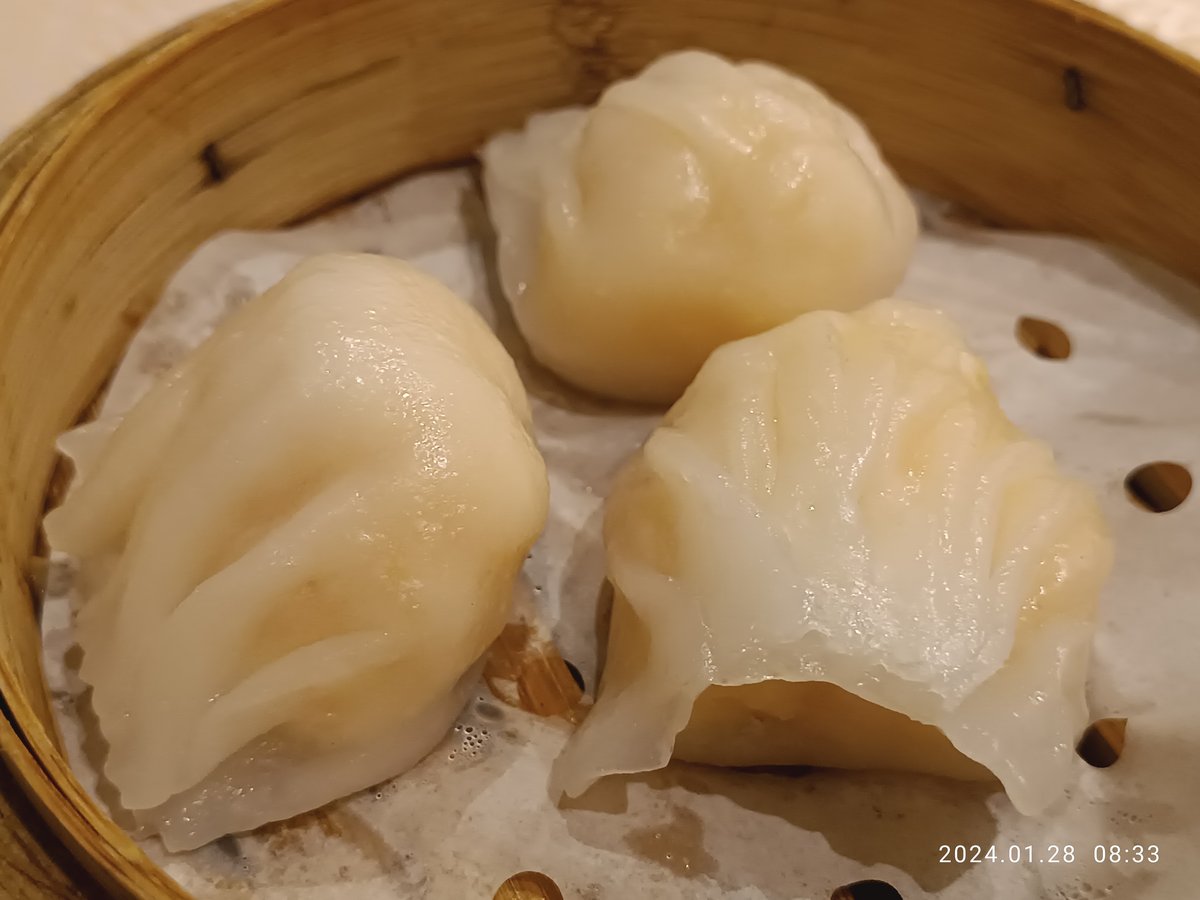
The Crystal Wrapper
Ordinary dumpling dough will not work here. Wheat flour contains gluten, which makes wrappers opaque and chewy. Har gow skin uses wheat starch (澄面) — the gluten-free starch washed out of wheat flour — combined with tapioca starch for elasticity. The starches must be scalded with boiling water, not mixed with cold: the heat gelatinizes them into a pliable, slightly translucent dough. Get the ratio right — roughly 2 parts wheat starch to 1 part tapioca — and the skin steams into a delicate crystal shell. Get it wrong and it either tears when pleated or turns to paste in the steamer.
Work Fast, Keep It Covered
- The dough dries out quickly — keep it under a damp cloth and work with small portions
- Roll thin, but not too thin — about 1.5mm; too thin and it splits at the pleats
- Use a cleaver or dough scraper to lift — the wrapper is delicate and tears easily with fingers
- Aim for 9–13 pleats — the classic standard; more pleats means a finer, more professional look
- Do not overfill — a teaspoon and a half of filling is plenty; a stuffed dumpling bursts
- Steam in a lined bamboo basket — cabbage leaves or parchment prevent sticking
Ingredients and Where to Find Them
- Wheat starch (澄面) — wheat starch; essential, and there is no substitute for the crystal effect
- Tapioca starch — tapioca starch for elasticity
- Raw shrimp — raw shrimp, peeled and deveined; freshness shows through the wrapper
Also needed: bamboo shoots (or water chestnuts), a little pork fat or lard, egg white, cornstarch, salt, sugar, white pepper, and sesame oil. Some recipes add a pinch of baking soda to the shrimp for extra bounce.
How to Make Them
- Chop 300g (10.5 oz) shrimp roughly, keeping some pieces whole; mix with 1 egg white, 2 teaspoons cornstarch, 1/2 teaspoon salt, 1/2 teaspoon sugar, and 1 teaspoon sesame oil; refrigerate 30 minutes
- Fold in 60g (2 oz) finely diced bamboo shoots and 1 tablespoon minced pork fat or lard
- Combine 200g wheat starch and 100g tapioca starch with 1/2 teaspoon salt; pour in 300ml boiling water and stir with chopsticks
- Knead in 2 tablespoons oil until smooth; keep covered with a damp cloth
- Roll small portions into 1.5mm rounds, working with one at a time
- Place a heaped teaspoon of filling in the center, pleat one side into 9–13 folds, and seal firmly
- Steam over rapidly boiling water for 6–7 minutes until the skin turns translucent; serve immediately
Variations
- With scallop — replace half the shrimp with diced scallop for a luxurious version
- With pea shoots — a vegetarian variation using blanched pea shoots and mushroom
- With water chestnut — adds a cleaner crunch than bamboo shoots and is easier to find
- Shrimp and chive — fold chopped Chinese chives into the filling for a bolder, greener dumpling
Frequently Asked Questions
Why did my har gow skin tear?
The dough was too dry, the wrapper was rolled too thin, or the filling was too wet. Keep the dough covered as you work, roll to about 1.5mm rather than paper-thin, and make sure the shrimp filling is well drained and chilled before wrapping.
What if I cannot find wheat starch?
Wheat starch is essential for the translucent effect. Cornstarch alone will not work. Look for it in Chinese grocery stores or online — it is inexpensive and keeps indefinitely.
Why is my har gow skin not translucent?
The starches were not scalded with boiling water, or the wrong starch was used. The water must be at a full rolling boil when it hits the starch — that is what gelatinizes it. If you used cornstarch or regular flour, the wrapper will stay opaque.
Can I make them ahead?
Assemble them and freeze on a tray, then transfer to a bag — steam from frozen for 9 minutes. Cooked har gow should be eaten within an hour; the skin tougens as it cools and does not reheat well.
More Dim Sum Classics
Build a dim sum basket with my Shu Mai 烧卖, the lotus-leaf parcel Lo Mai Gai 糯米鸡, or the crisp Ham Sui Gok 咸水角.
As an Amazon Associate, I earn from qualifying purchases. These are affiliate links at no extra cost to you.
7 Comments