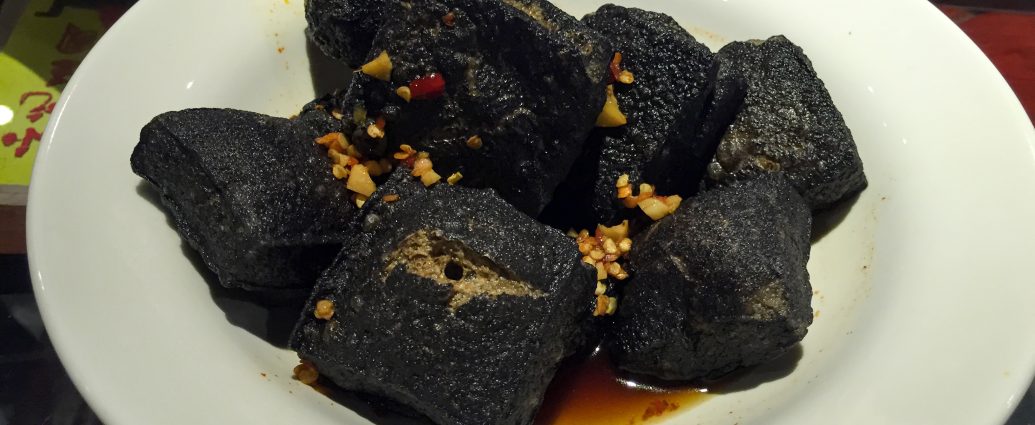
Stinky Tofu (臭豆腐) is China’s most notorious street food — deep-fried fermented tofu cubes with a pungent aroma that stops passersby in their tracks. But beneath that infamous smell lies a crispy, golden shell and a silky, savory interior that is genuinely delicious, especially the Changsha version served with pickled chilies and garlic sauce. Here is how to make it at home.
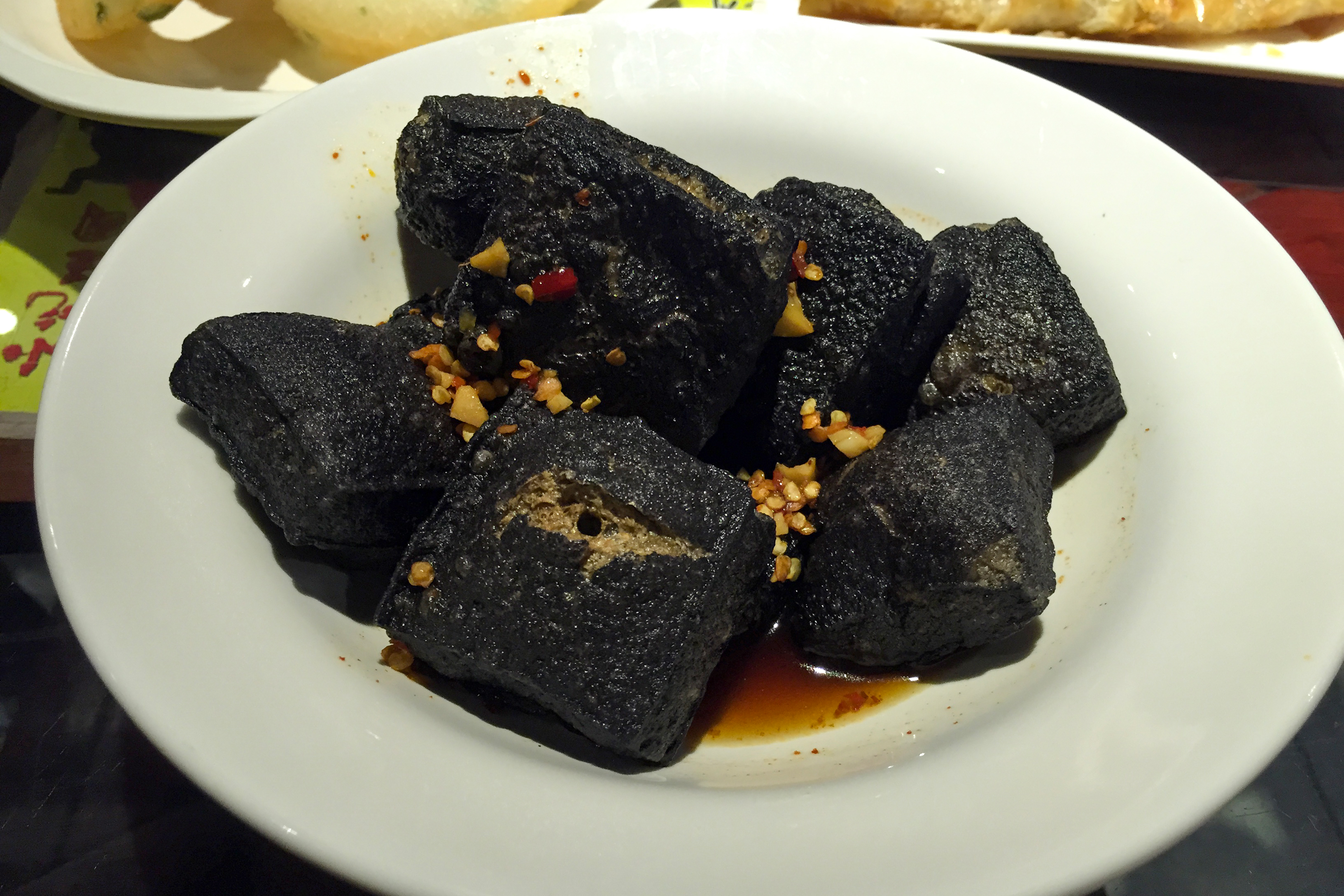
Stinky tofu (臭豆腐) is a Chinese fermented tofu dish that is deep-fried until crispy outside and creamy inside. It has a famously pungent odor but a mild, savory flavor. The Changsha style is black, extra crispy, and served with pickled chili and garlic sauce.
臭豆腐 is one of the great paradoxes of Chinese food: an aroma that clears a sidewalk and a flavor that inspires devotion. The fermentation is genuine — tofu is soaked in a brine where naturally occurring bacteria break down proteins and produce the sulfurous compounds responsible for the smell. The Changsha version is distinct from the pale, softer variants found elsewhere: it is fermented in a brine that includes fermented vegetables and sometimes 卤水 (a master brine kept for years), which turns the tofu dark grey-black. It is then fried until the crust shatters. Changsha’s most famous purveyor, 火宫殿, has been serving it for centuries, and the dish is a point of local pride.
This recipe comes from a night market vendor in Changsha who taught me the essential trick: the marinade is everything. Traditional fermentation takes weeks, but a home version uses fermented tofu (furu) mixed with spices to create the signature aroma in just 24 hours.
The Aroma Comes from Fermentation, Not Decay
It is worth understanding what you are eating. Stinky tofu is fermented, not rotten — the same family of processes that gives us cheese, miso, and kimchi. A brine of fermented vegetables, sometimes with herbs, bamboo shoots, or aged 卤水, hosts bacteria that break tofu’s proteins into amino acids and produce volatile sulfur compounds. Those compounds are the smell; the amino acids are the umami. Frying drives off most of the volatile aromatics while the interior becomes creamy and savory. This is why people who find the smell offensive often enjoy the taste — the two are barely related.
The Double Fry
- Dry the tofu thoroughly — surface moisture causes oil spatter and prevents crisping
- First fry at 160°C (320°F) — sets the crust and cooks the interior through, about 4 minutes
- Rest, then fry at 190°C (375°F) — 60–90 seconds for a hard, blistered shell
- Drain on a rack — paper traps steam and softens the crust from below
- Serve immediately — the crust softens within minutes; stinky tofu is not a make-ahead dish
Ingredients and Where to Find Them
- Firm tofu — firm tofu, pressed and cut into cubes
- Fermented tofu (furu) — fermented bean curd (腐乳); the white version for the marinade
- Chili oil — chili oil for the sauce
Also needed: garlic, pickled chilies or chopped fresh chili, light soy sauce, vinegar, sugar, cilantro, and scallions. Some marinades add Shaoxing wine, five-spice, or a little shrimp paste — but for a home version, keep it simple.
How to Make It
- Press 450g (1 lb) firm tofu for 30 minutes; cut into 3cm cubes
- Blend the marinade: 4 cubes white fermented tofu (furu) with 2 tablespoons of its liquid, 300ml water, 1 tablespoon Shaoxing wine, 1 teaspoon five-spice, and 1 teaspoon sugar
- Submerge the tofu cubes and refrigerate 24–48 hours; the aroma develops over time
- Drain and pat the cubes dry; discard the marinade
- Heat oil to 160°C (320°F) and fry the cubes 4 minutes until the crust sets; drain
- Raise the oil to 190°C (375°F) and fry again 60–90 seconds until dark and crisp; drain on a rack
- Toss with a sauce of 2 tablespoons chili oil, 1 tablespoon light soy, 1 teaspoon vinegar, 1 teaspoon sugar, and 3 minced garlic cloves; top with pickled chilies, cilantro, and scallions
Variations
- With 卤水 (master brine) — the traditional Changsha method, using a brine matured over time; far more complex and not practical for a first attempt
- With 剁椒 — a spoonful of Hunan chopped chili stirred into the sauce gives a brighter, tangier heat
- Steamed version — not fried; a soft, intensely aromatic dish popular in some regions
- With pickled vegetables — chopped pickled daikon alongside the tofu is a classic street-stall garnish
Frequently Asked Questions
Why does stinky tofu smell so strong but taste mild?
Fermentation produces volatile sulfur compounds that evaporate readily — those are the smell. The flavor comes from amino acids and other non-volatile compounds that stay in the tofu. Frying drives off much of the aroma, so the taste is savory and mild rather than pungent.
Can I make it without fermenting for weeks?
Yes — the fermented tofu (furu) marinade shortcut reproduces the signature aroma in 24–48 hours. It is not identical to a traditional brine, but it is a genuinely good home approximation.
Is stinky tofu vegetarian?
Yes — it is tofu fermented with plant-based ingredients. Just check that your fermented tofu (furu) does not contain fish sauce (most are vegan).
Is it safe to eat?
Fermented tofu made properly is safe and has been eaten for centuries. Use clean utensils, keep the marinade refrigerated, discard it after use, and do not extend fermentation beyond 48 hours at home. If the tofu smells of rot rather than fermentation, throw it out.
More Changsha Street Favorites
Explore Hunan flavor with my Hunan Rice Noodles 湖南米粉, the fiery Xiao Chao Rou 小炒肉, or the dramatic Steamed Fish Head with Chopped Chili 剁椒鱼头.
As an Amazon Associate, I earn from qualifying purchases. These are affiliate links at no extra cost to you.