
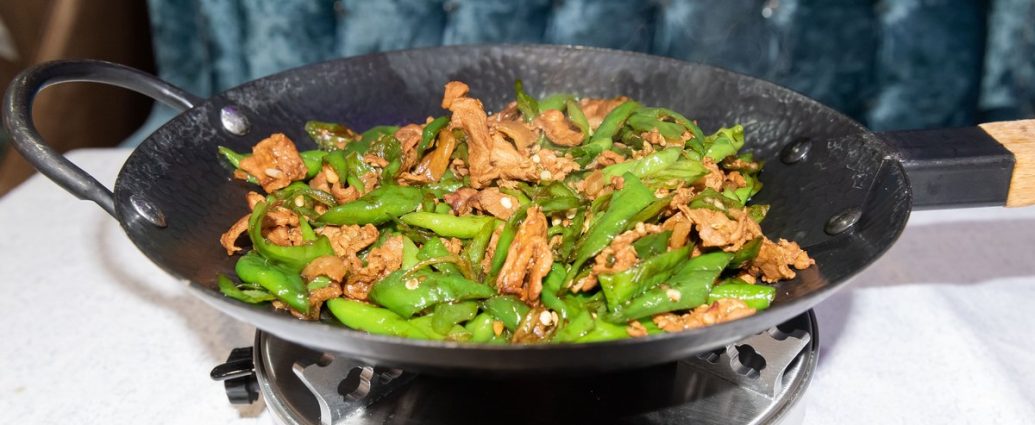
Stir-Fried Pork with Chili (小炒肉), known as Hunan’s signature home-cooking dish, is a simple yet explosive stir-fry of thinly sliced pork belly and fresh green chilies. The pork renders its fat to coat the chilies, while the chilies release their heat and fragrance into the meat. It is rustic, fiery, and the ultimate comfort food for anyone who loves bold flavors.
小炒肉 is the dish that defines Hunan home cooking. 小炒 means “small stir-fry” — a quick, high-heat toss of a few ingredients, as opposed to a banquet preparation — and it is the technique at the heart of 湘菜 (Hunan cuisine). Hunan cooking is famous for its directness: where Sichuan food layers numbing peppercorns and fermented pastes, Hunan food relies on fresh chilies, rendered pork fat, and salt. There is nowhere to hide. The dish is sometimes called 农家小炒肉 (“farmer’s stir-fried pork”) because it is exactly what a Hunan farming family would cook after a morning’s work: a handful of chilies, a piece of pork belly, and rice.
This recipe comes from a home cook in Changsha who taught me that the key to authentic xiao chao rou is to fry the pork first until it is slightly crispy and the fat has rendered, then use that rendered fat to blister the chilies. The result is a dish that tastes far greater than the sum of its simple ingredients.
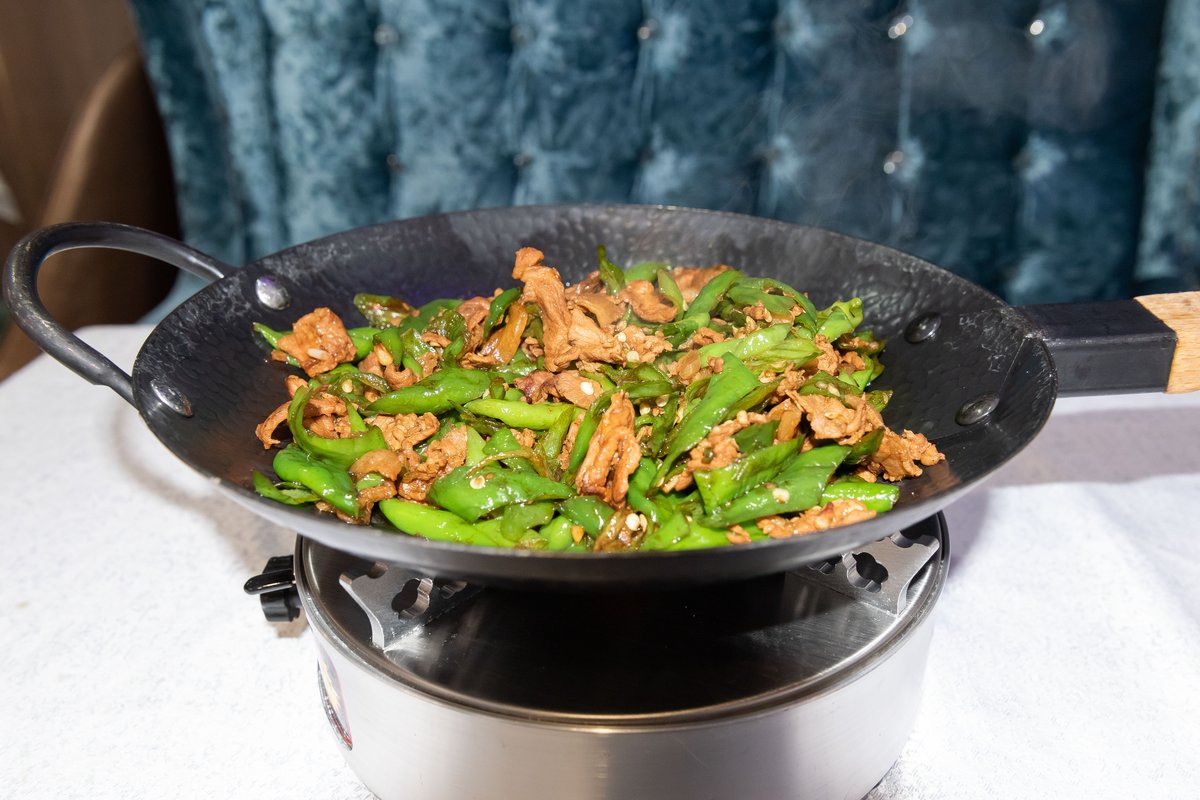
Render the Fat, Then Blister the Chilies
The entire dish hinges on the order of operations. Pork belly goes into a dry hot wok first, without oil, and is fried until the fat renders out and the edges turn golden and slightly crisp. That rendered fat — porky, rich, and now infused with the wok’s heat — becomes the cooking medium for everything that follows. The chilies go in next and blister in that fat, which is what makes them taste sweet and smoky rather than merely hot. Reverse the order and you get greasy pork and raw-tasting chilies. The technique is simple, but it is not optional.
Choosing the Pork and the Chilies
- Pork belly with skin on — the skin adds a pleasant chew and helps the slices hold their shape
- Slice paper-thin — 2mm; partially freeze the belly for 30 minutes to make this easier
- Separate the fat and lean portions if your piece has distinct layers, and start the fattier slices first
- Thin-skinned green chilies — Hunan 螺丝椒 or 杭椒 are ideal; jalapeño or serrano work well as substitutes
- Do not seed the chilies — the seeds and pith carry much of the heat, and this dish is meant to be fiery
Ingredients and Where to Find Them
- Pork belly — skin-on pork belly, sliced very thin
- Fresh green chilies — thin-skinned green chilies
- Light soy sauce — light soy sauce for seasoning without darkening the dish
Also needed: garlic, ginger, fermented black beans (optional), Shaoxing wine, salt, and a little dark soy for color. Some cooks add a teaspoon of doubanjiang or pickled chilies for extra depth.
How to Cook It
- Slice 300g (10.5 oz) pork belly paper-thin; slice 6–8 green chilies diagonally into thick pieces; mince 4 garlic cloves
- Heat a wok over high heat with 1 tablespoon oil and add the pork in a single layer
- Fry 2–3 minutes without stirring, letting the fat render, then toss until the edges are golden and slightly crisp
- Push the pork aside, add the garlic and ginger, and stir 15 seconds
- Add the chilies and stir-fry over maximum heat for 2 minutes, pressing them against the wok until blistered and softened
- Season with 1 tablespoon light soy, 1/2 teaspoon dark soy, 1 tablespoon Shaoxing wine, and salt to taste
- Toss everything together 30 seconds and serve immediately with steamed rice
Variations
- With fermented black beans — a teaspoon of mashed douchi adds a deep, savory note
- With pickled chilies — 剁椒 or pickled green chilies give a fermented tang that many Hunan cooks prefer
- Leaner version — use pork shoulder instead of belly; add an extra tablespoon of oil since it will not render as much fat
- With tofu — firm tofu slices added after the chilies make a satisfying meat-free version
Frequently Asked Questions
What is the difference between 小炒肉 and 青椒肉丝?
小炒肉 uses pork belly, thick-cut chilies, and a dry-fry that renders the fat — it is rustic and fiery. 青椒肉丝 uses lean pork loin cut into thin shreds, velveted with cornstarch, and cooked with a sauce — it is more refined and much milder. Different cuts, different techniques, different dishes.
What chilies should I use?
Hunan cooks use long green chilies (often called “facing heaven” chilies). Jalapeños or serrano peppers are excellent substitutes. The key is fresh, thin-skinned chilies that blister well.
How do I make it less spicy?
Remove the seeds and white pith, which carry most of the heat, or use a mix of green bell peppers and a few hot chilies. The dish will still be aromatic, just gentler.
Is this dish very oily?
It can be, because the flavor depends on rendered pork fat. To lighten it, pour off some of the rendered fat after frying the pork, keeping just enough to blister the chilies. Many Hunan cooks deliberately keep it rich — it is meant to be eaten with a lot of plain rice.
More Hunan Home Cooking
Explore Hunan flavor with my Hunan Rice Noodles 湖南米粉, the shredded Shredded Pork with Green Pepper 青椒肉丝, or the fiery Yongzhou Blood Duck 永州血鸭.
As an Amazon Associate, I earn from qualifying purchases. These are affiliate links at no extra cost to you.
6 Comments