
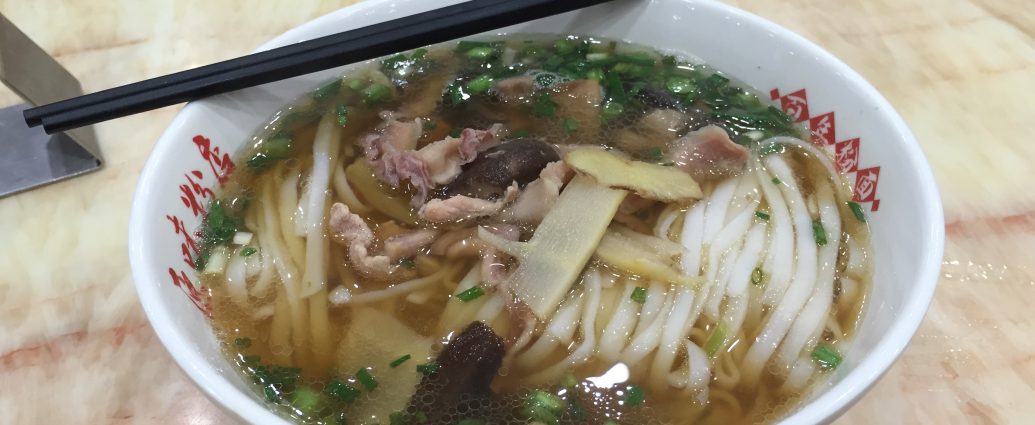
Hunan Rice Noodles (湖南米粉) is the breakfast of Changsha — a bowl of wide, chewy rice noodles in a rich, spicy pork bone broth, topped with braised beef or pork, pickled beans, and a generous spoonful of chili oil. Unlike the delicate noodle soups of the south, Hunan rice noodles are bold, fiery, and deeply comforting — the way Hunan people start their day. Here is the authentic recipe.
Hunan rice noodles (湖南米粉) are wide, chewy rice noodles served in a spicy pork bone broth with braised pork or beef, pickled vegetables, and chili oil. They are a signature breakfast dish of Changsha, known for their bold, fiery flavor.
In Changsha, breakfast is 嗦粉 — the verb 嗦 describes the slurping sound of drawing noodles into your mouth, and it is the sound of the city waking up. Rice noodle shops open before dawn and are packed by seven; customers stand at the counter, choose their 码子 (topping), and eat from a bowl in a few minutes flat. Hunan’s rice noodles are round and chewy (圆粉) or wide and flat (扁粉), and the broth is built on pork bones simmered for hours. What distinguishes a Hunan bowl from a Cantonese one is the chili oil: every shop guards its own blend, and it is added with a free hand. The bowl is meant to wake you up.
This recipe comes from a noodle shop owner in Changsha who taught me the essential element: the chili oil. Every shop has its own blend, but the base is always dried chilies steeped in hot oil with Sichuan peppercorns. It is the soul of the bowl — rich, red, and unapologetically spicy.
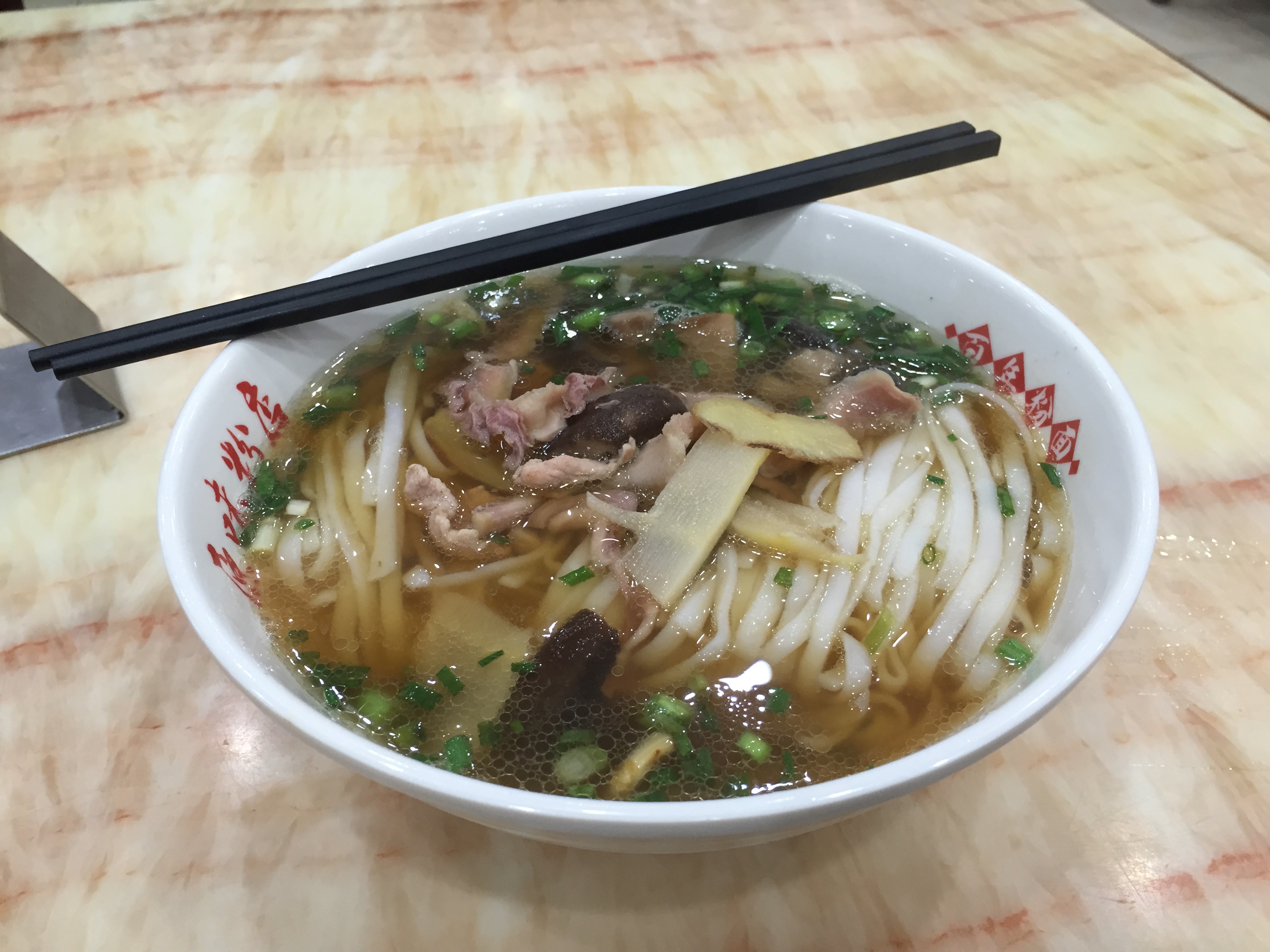
The Three Parts of a Hunan Bowl
- 汤 (the broth). Pork bones, sometimes with chicken, simmered with ginger and scallion for two hours or more. It should be savory and slightly cloudy, not clear — this is not a Cantonese 清汤.
- 粉 (the noodles). Fresh rice noodles, either round (圆粉) or flat and wide (扁粉). They are soft but springy, and they absorb the broth quickly, so the bowl is assembled at the last moment.
- 码子 (the topping). The word means “code,” and in a noodle shop it is the shorthand for your chosen topping — braised beef, braised pork, pork ribs, or a simple fried egg. 牛肉粉 (beef) and 肉丝粉 (shredded pork) are the classics.
Then the finishing layer: pickled beans or pickled radish for crunch and acidity, chopped scallions, and chili oil to taste. The chili oil is not optional — it is the identity of the bowl.
Making the Chili Oil
- Coarse chili flakes — not fine powder; coarse flakes give color and body without scorching
- Heat the oil to about 180°C (355°F) — hot enough to bloom the chilies, not so hot they burn black
- Add aromatics to the oil first — ginger, scallion, star anise, and Sichuan peppercorns infused for ten minutes, then strained out
- Pour over the chili flakes in stages — a little at a time, stirring, so the flakes toast evenly rather than scorching
- Let it mature overnight — the color deepens and the flavor rounds out; a fresh batch is harsh by comparison
Ingredients and Where to Find Them
- Fresh rice noodles — fresh wide rice noodles, or dried rice noodles rehydrated
- Pork bones — pork bones for the broth
- Chili flakes — coarse chili flakes for the chili oil
Also needed: beef shank or pork for the topping, pickled beans or pickled radish, scallions, ginger, garlic, star anise, Sichuan peppercorns, light soy sauce, dark soy sauce, Shaoxing wine, and rock sugar.
How to Make It
- Blanch 1kg (2.2 lb) pork bones, then simmer with ginger, scallion, and 1 tablespoon Shaoxing wine in 3 liters water for 2 hours; season with salt
- For the topping, braise 600g (1.3 lb) beef shank or pork with soy sauce, rock sugar, star anise, and ginger for 90 minutes; slice thinly
- Make the chili oil: infuse 300ml oil with ginger, scallion, star anise, and 1 tablespoon Sichuan peppercorns for 10 minutes, strain, then pour over 60g coarse chili flakes in stages
- Cook the rice noodles in boiling water for 1–2 minutes until just tender; drain
- Place the noodles in a bowl and ladle over the hot broth
- Top with sliced braised meat, pickled beans, and scallions
- Add 1–2 spoonfuls of chili oil and serve immediately, mixing at the table
Variations
- With pork ribs — 排骨粉 uses braised pork ribs; a popular Changsha variation
- With a fried egg — 煎蛋粉 is the simplest and cheapest topping, and one of the most satisfying
- Dry version (干拌粉) — noodles tossed with sauce and topping rather than served in broth
- With pickled chili — 剁椒 added alongside the chili oil for a fermented tang
Frequently Asked Questions
What is the difference between 圆粉 and 扁粉?
圆粉 are round and slightly thicker; 扁粉 are flat and wide. Both are rice noodles and both are used in Hunan, with personal preference deciding. Round noodles hold their chew longer; flat noodles absorb the broth faster.
What are 码子?
码子 is the Changsha term for the topping you choose — braised beef, pork ribs, shredded pork, or a fried egg. In a noodle shop you call out your 码子 when you order, and it is ladled over the noodles.
Can I use dried rice noodles?
Yes — soak them in warm water for 30 minutes, then blanch briefly. They are less springy than fresh noodles but entirely acceptable. Do not overcook them, as dried rice noodles turn mushy quickly.
How do I control the spice level?
The chili oil is added to taste — start with 1 spoonful and add more. You can also use milder dried chilies or remove the seeds for a gentler heat.
More Hunan Classics
Explore Hunan flavor with my Xiao Chao Rou 小炒肉, the steamed Fish Head with Chopped Chili 剁椒鱼头, or the bold Yongzhou Blood Duck 永州血鸭.
As an Amazon Associate, I earn from qualifying purchases. These are affiliate links at no extra cost to you.
5 Comments