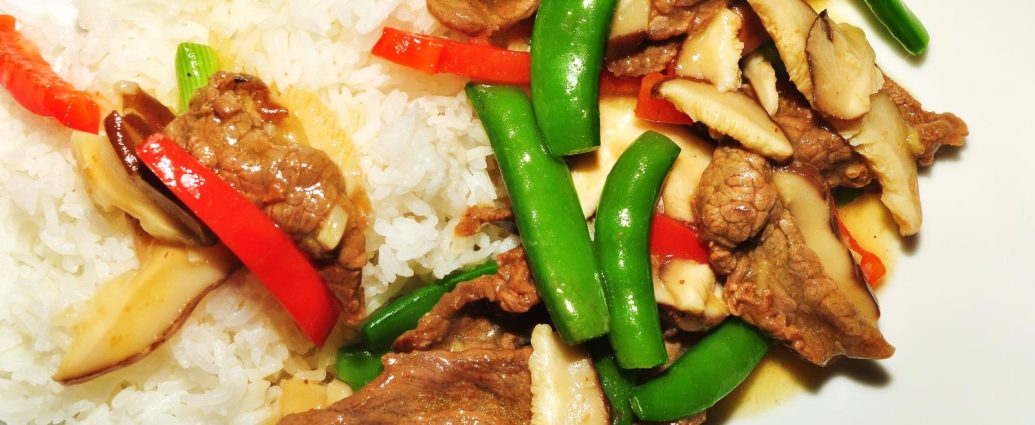
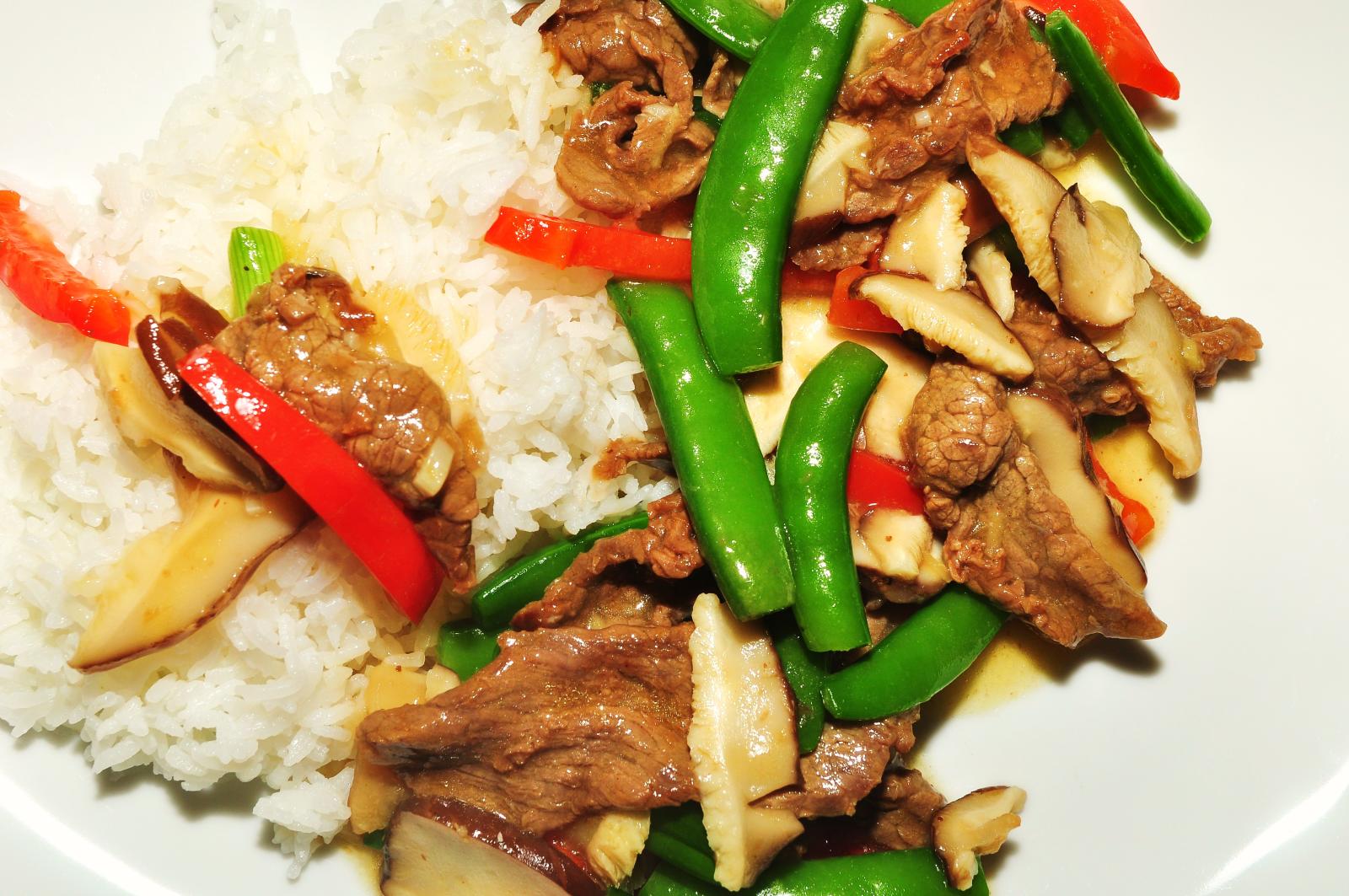
Beef and Snow Pea Stir Fry (牛肉炒荷兰豆) is a classic Cantonese-style home stir-fry — velvety tender beef strips tossed with crisp, sweet snow pea pods in a glossy garlic-oyster sauce. It is the kind of dish that comes together in 15 minutes and tastes like a restaurant meal, with the bright green crunch of the peas balancing the rich, savory beef. Here is the method.
Beef and snow pea stir fry (牛肉炒荷兰豆) is a Chinese dish of thinly sliced beef, velveted for tenderness, stir-fried with crisp snow pea pods in a garlic and oyster sauce. It is quick, colorful, and a weeknight favorite.
Snow peas — 荷兰豆 (literally “Holland pea”) — arrived in southern China via European trade and were quickly adopted into Cantonese home cooking, where their sweetness and snap made them a natural partner for beef. The dish belongs to the great family of Cantonese 炒牛肉 (beef stir-fries) alongside 蚝油牛肉 and 干炒牛河, and it follows the same logic: velvet the beef, cook it fast, keep the vegetables crisp, and let a simple oyster-based sauce tie everything together. It is the dish that shows how little Cantonese cooking needs when the ingredients are treated correctly.
This recipe comes from a Cantonese home cook who taught me the essential sequencing: velvet the beef, stir-fry it just until pink, remove it, then flash-cook the snow peas for no more than 60 seconds. This keeps the beef silky and the peas crunch-sweet.
Sequencing: The Whole Dish in Three Moves
This stir-fry has three components with three different ideal cooking times, and the only way to get all three right is to cook them in sequence rather than together. The beef needs about ninety seconds of high heat. The snow peas need sixty seconds — any longer and their sugars convert, their color dulls, and the snap disappears. The sauce needs thirty seconds to glaze. So: beef out, peas in, beef back, sauce, done. Crowding the wok and trying to do it all at once produces gray beef and limp peas.
Velveting the Beef
- Slice against the grain into thin 3mm strips — flank, sirloin, or skirt all work
- Partially freeze the beef for 30 minutes to slice it cleanly and evenly
- Marinate with cornstarch, soy, wine, and a little water for 15 minutes; the water is absorbed and keeps the beef juicy
- Add a teaspoon of oil last so the strips separate instead of clumping in the wok
- Do not add baking soda unless you want the springy, slightly spongy texture of some restaurant versions
Ingredients and Where to Find Them
- Beef flank or sirloin — flank or sirloin steak, sliced thin against the grain
- Oyster sauce — premium oyster sauce gives the glaze its savory depth
- Shaoxing wine — Shaoxing wine for the marinade and the finish
Also needed: snow peas, garlic, ginger, light soy sauce, cornstarch, sugar, sesame oil, and a high-smoke-point oil. A few slices of carrot or water chestnut add color and crunch.
How to Cook It
- Slice 300g (10.5 oz) beef thinly against the grain and marinate 15 minutes with 1 tablespoon light soy, 1 tablespoon Shaoxing wine, 1 tablespoon water, 2 teaspoons cornstarch, and 1 teaspoon oil
- Trim 250g (9 oz) snow peas and remove the strings; pat dry
- Mix the sauce: 1.5 tablespoons oyster sauce, 1 teaspoon light soy, 1 teaspoon sugar, 1 teaspoon cornstarch, and 3 tablespoons water
- Heat a wok until smoking, add 2 tablespoons oil, and sear the beef in a single layer for 45 seconds, then toss 45 seconds more; remove
- Add 1 tablespoon oil, then the garlic and ginger; stir 15 seconds
- Add the snow peas and stir-fry over maximum heat for 60 seconds — they should blister slightly but stay bright green
- Return the beef, pour the sauce down the side of the wok, and toss 30 seconds until glossy; finish with sesame oil and serve
Variations
- With black bean sauce — add 1 tablespoon mashed fermented black beans with the garlic for a deeper, funkier version
- With broccoli or gai lan — blanch the vegetables for 60 seconds first, then stir-fry; see my Oyster Sauce Beef 蚝油牛肉
- With noodles — toss the finished stir-fry through cooked egg noodles for a complete meal
- Spicier version — add a teaspoon of doubanjiang or chili oil with the aromatics
Frequently Asked Questions
Why is my beef tough?
Three common causes: slicing with the grain instead of across it, skipping the cornstarch marinade, or overcooking. Slice thin against the grain, velvet the beef for 15 minutes, and pull it from the wok the moment it loses its pink — it finishes cooking in the residual heat.
How do I keep the snow peas crisp?
Cook them for no more than 60 seconds over maximum heat, and do not crowd the wok. Snow peas are best when they are just barely blistered and still snapping. If you prefer them more tender, blanch them for 30 seconds first, then stir-fry for 30 seconds.
Do I need to string snow peas?
Yes — the fibrous string along the flat edge is tough and unpleasant. Snap off the stem end and pull the string down the length of the pod. Fresh, small pods have thinner strings; older, larger ones must be strung.
Is this dish gluten-free?
Not as written — soy sauce and oyster sauce contain gluten. Use gluten-free tamari and a gluten-free oyster sauce (mushroom-based) for a gluten-free version.
More Cantonese Beef & Vegetable Dishes
Love quick Cantonese stir-fries? Try my Oyster Sauce Beef 蚝油牛肉, the wok-tossed Beef Chow Fun 干炒牛河, or the homestyle Shredded Pork with Green Pepper 青椒肉丝.
As an Amazon Associate, I earn from qualifying purchases. These are affiliate links at no extra cost to you.