
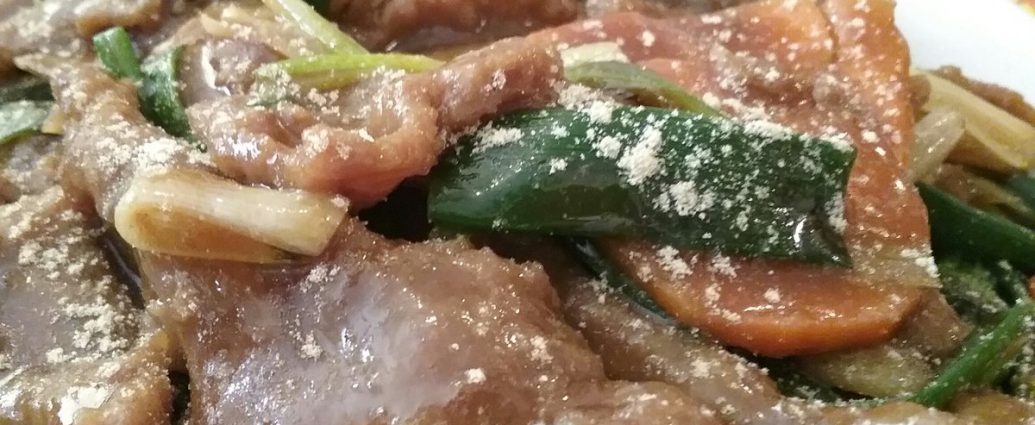
Oyster Sauce Beef (蚝油牛肉) is a beloved Cantonese stir-fry — tender, velvety beef slices glazed in a glossy, savory-sweet oyster sauce, often paired with crisp bok choy or broccoli. It is the dish that made Cantonese beef famous: silky from velveting, sweet from oyster sauce, and ready in under 15 minutes. Here is the restaurant-style method.
Oyster sauce beef is a Cantonese stir-fry of thinly sliced beef that is velveted (coated in cornstarch, egg white, and marinade) so it stays silky, then quickly wok-fried and tossed with a glossy oyster sauce glaze, often served over rice with greens.
蚝油 (oyster sauce) is a Cantonese invention with a pleasing origin story: in the late 19th century, a cook in Guangdong named Lee锦裳 accidentally left a pot of oysters simmering too long, and the resulting dark, savory reduction became the condiment that now sits in kitchens worldwide. Whether the story is precise or not, oyster sauce is now one of the fundamental seasonings of Cantonese cooking — sweet, briny, and deeply savory, and it does something remarkable to beef. Its sugars caramelize against the hot wok, its glutamates amplify the meat’s flavor, and its body gives the sauce a glossy cling that coats every slice.
This recipe comes from a Cantonese wok chef who taught me the essential velvet technique: the beef must be marinated with baking soda (just a pinch) and cornstarch, then “warmed” in oil before the final stir-fry. This two-step process is what gives Cantonese restaurants their impossibly tender beef.
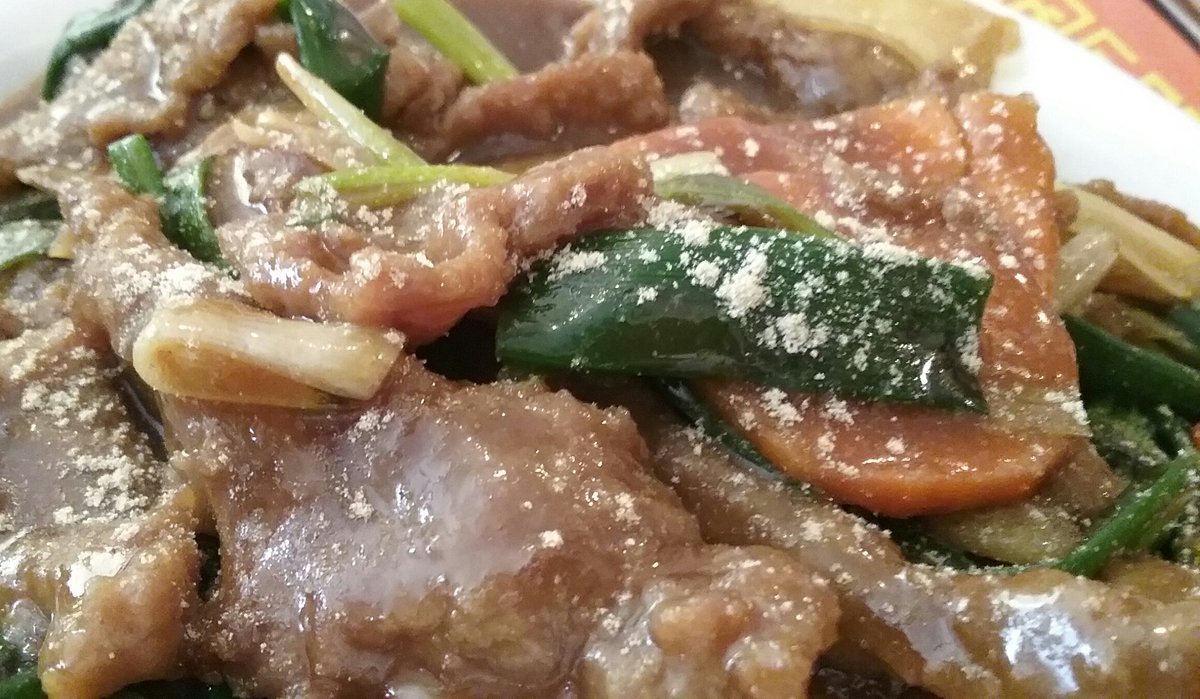
Velveting and the Oil-Warming Step
Two techniques make Cantonese beef tender, and both are worth understanding. Velveting is the marinade: cornstarch, egg white, soy, wine, and a pinch of baking soda. The cornstarch and egg white form a protective sheath; the baking soda raises the surface pH and stops the muscle fibers from tightening. Oil-warming (过油) is the second step: the marinated beef is briefly bathed in warm oil — not hot enough to fry, just hot enough to set the coating and cook the outside. Only then does it go into the hot wok for the final toss. Skip the oil-warming and the coating can slip off; do it properly and the beef comes out glossy, silky, and uniformly tender.
Getting the Sauce to Cling
- Oyster sauce is the base, not the whole sauce — add light soy for salt, a little sugar for balance, and Shaoxing wine for aroma
- A cornstarch slurry is essential — it thickens the sauce so it coats rather than pools
- Pour the sauce down the side of the wok — this lets it heat before it hits the beef, so the beef never boils
- Finish in 30 seconds — the beef is already cooked from the oil-warming; the wok toss is only to glaze
- A few drops of sesame oil at the end — added off the heat so the aroma stays bright
Ingredients and Where to Find Them
- Beef flank or sirloin — flank or sirloin, sliced thin against the grain
- Oyster sauce — premium oyster sauce; the quality of the brand shows in this dish
- Baking soda — baking soda, a pinch only, for the velveting
Also needed: cornstarch, egg white, Shaoxing wine, light soy sauce, sugar, garlic, ginger, scallions, and a high-smoke-point oil. Bok choy, gai lan, or broccoli are the classic vegetables.
How to Cook It
- Slice 400g (14 oz) beef thinly against the grain; marinate 20 minutes with 1/4 teaspoon baking soda, 1 tablespoon light soy, 1 tablespoon Shaoxing wine, 1 egg white, 2 teaspoons cornstarch, and 1 tablespoon water
- Mix the sauce: 2 tablespoons oyster sauce, 1 teaspoon light soy, 1 teaspoon sugar, 1 teaspoon cornstarch, and 4 tablespoons water
- Heat 200ml oil to 120°C (250°F) — warm, not frying — and slide in the beef for 45 seconds until the coating sets; remove and drain
- Pour off the oil, leaving 1 tablespoon; stir-fry garlic, ginger, and scallion whites for 15 seconds
- Add blanched bok choy or broccoli and toss 1 minute
- Return the beef, pour the sauce down the side of the wok, and toss over high heat 30 seconds until glossy
- Finish with a few drops of sesame oil and serve immediately over rice
Variations
- With broccoli — the most common pairing; blanch the broccoli 2 minutes first
- With snow peas — see my Beef and Snow Pea Stir Fry 牛肉炒荷兰豆
- With noodles — toss the finished beef through cooked egg noodles or over Beef Chow Fun 干炒牛河
- With mushrooms — sliced shiitake or oyster mushrooms give an earthy, vegetarian-friendly version of the same sauce
Frequently Asked Questions
Do I really need baking soda?
It is optional but makes a noticeable difference. A quarter teaspoon raises the beef’s surface pH and keeps the fibers from tightening, giving that characteristic Cantonese tenderness. Use only a pinch — too much leaves a soapy taste and a spongy texture.
Can I skip the oil-warming step?
You can, and many home cooks do — just stir-fry the beef directly over high heat and remove it before adding the vegetables. The result is slightly less uniform but still very good. The oil-warming step is what gives restaurant-grade silkiness.
What is the best cut of beef for stir-frying?
Flank, sirloin, or skirt — cuts with some fat and a clear grain that slices cleanly. Avoid stewing cuts like chuck unless you velvet them thoroughly, and avoid lean tenderloin, which dries out quickly.
Is this dish gluten-free?
Not as written — soy sauce and oyster sauce contain gluten. Use gluten-free tamari and a gluten-free oyster sauce substitute (mushroom sauce) for a gluten-free version.
More Cantonese Beef & Vegetable Dishes
Love Cantonese stir-fries? Try my Oyster Sauce Broccoli 蚝油西兰花, the wok-tossed Beef Chow Fun 干炒牛河, or the homestyle Shredded Pork with Green Pepper 青椒肉丝.
As an Amazon Associate, I earn from qualifying purchases. These are affiliate links at no extra cost to you.
2 Comments