
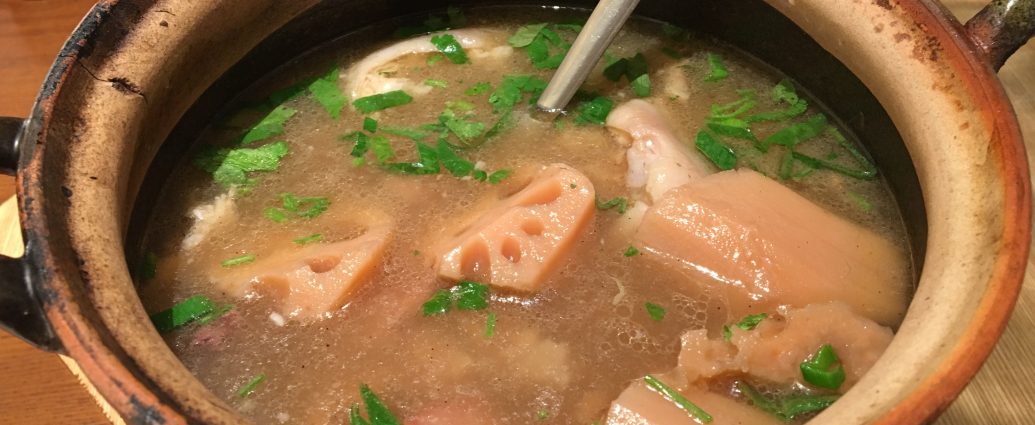
Lotus Root Pork Rib Soup (莲藕排骨汤) is one of Cantonese cuisine’s most nourishing slow soups — sweet, creamy lotus root simmered with pork ribs and peanuts until the broth turns milky and the lotus root becomes soft and powdery. It is the soup Cantonese mothers make for health and comfort, believed to strengthen the blood and calm the spirit. Here is the classic method.
Lotus root pork rib soup (莲藕排骨汤) is a Cantonese slow soup of pork ribs, lotus root, and peanuts simmered for 2+ hours until the broth is milky and sweet. It is a nourishing comfort soup with a soft, powdery lotus root texture.
In Cantonese households, 煲汤 (soup-making) is a discipline in its own right. The soup is set on the stove in the morning and simmered for hours, its purpose being as much restorative as culinary — a bowl of 老火汤 (“old fire soup”) is how a Cantonese family says “I am looking after you.” 莲藕排骨汤 is one of the most beloved of these, especially in autumn and winter when lotus root is in season. Traditionally, lotus root is regarded as warming and nourishing, and peanuts are valued for their protein and richness; whether or not one follows the traditional reasoning, the soup is genuinely delicious — naturally sweet, faintly nutty, and deeply comforting. These are traditional beliefs, not medical claims.
This recipe comes from a Cantonese home cook who taught me the essential trick: choose the DARK, sandy lotus root for soup — it cooks soft and powdery, while the pale, crisp variety is better for stir-frying. Simmering low and slow for at least 2 hours turns the broth milky and sweet.
Two Kinds of Lotus Root
This is the detail that determines whether the soup works. Lotus root comes in two broad types, and they behave completely differently:
- 粉藕 (powdery lotus root) — darker skin, shorter and thicker segments, often with a sandy or reddish tinge. Cooks soft, starchy, and slightly powdery. This is the one for soup.
- 脆藕 (crisp lotus root) — paler, longer, and more slender. Stays crunchy no matter how long you cook it. Better for stir-fries and cold dishes.
If you can only find the crisp type, the soup will still taste good, but the lotus root will stay firm rather than melting into the broth — which is a different, though still pleasant, dish.
Why the Broth Turns Milky
That opaque, pale broth is not cream — it is an emulsion. Pork ribs and bone contain fat and collagen, and a long, gentle simmer draws both into the water. The fat emulsifies into tiny droplets while the collagen melts into gelatin, and together they give the soup its body and its characteristic pale, cloudy look. Hard boiling breaks the emulsion and makes the broth greasy rather than creamy, which is why Cantonese cooks insist on 小火慢炖 — a low, patient flame. Two hours is the minimum; three is better.
Ingredients and Where to Find Them
- Pork ribs — meaty pork spare ribs, cut into pieces by your butcher
- Lotus root — fresh lotus root; look for the darker, thicker 粉藕 type for soup
- Raw peanuts — raw peanuts, soaked for an hour so they soften in the simmer
Also needed: ginger, scallions, Shaoxing wine, and salt. Dried tangerine peel, red dates, and a piece of dried cuttlefish are traditional additions in Cantonese home kitchens.
How to Make It
- Blanch 600g (1.3 lb) pork ribs in boiling water for 3 minutes; drain and rinse away the scum
- Peel 500g (1.1 lb) lotus root, cut into 1cm slices, and rinse; soak 80g (2.8 oz) raw peanuts for 1 hour
- Combine the ribs, lotus root, peanuts, 4 ginger slices, and 2 scallions in a large pot with 3 liters water
- Bring to a boil, then immediately reduce to the lowest simmer and skim the foam
- Simmer gently for 2–3 hours, skimming occasionally and topping up with hot water if needed
- Season with salt only at the end — salting early can toughen the meat
- Serve hot in bowls, with the lotus root and ribs alongside; a few goji berries in the last 10 minutes add color
Variations
- With corn and carrot — a popular addition that sweetens the broth further
- With dried cuttlefish — a traditional Cantonese touch that deepens the savory note
- With chicken instead of ribs — lighter and faster; simmer 90 minutes only
- With red dates and goji — a sweeter, more “tonic” version often made in winter
Frequently Asked Questions
Why is my lotus root still crunchy?
You bought the crisp variety (脆藕) rather than the powdery soup type (粉藕). Look for darker skin, shorter thicker segments, and a slightly sandy feel. The crisp type will not soften no matter how long you simmer it.
Why is my broth not milky?
The pot boiled too hard, or it did not simmer long enough. Keep it at the gentlest possible simmer — small bubbles only — for at least two hours. Hard boiling breaks the fat emulsion and produces a greasy, clearer broth instead.
Can I add other ingredients?
Carrots, corn, or dried scallops are common additions. Dried goji berries can be added in the last 10 minutes for extra sweetness and color.
How long does it keep?
Three to four days refrigerated, and it freezes well for up to a month. Reheat gently on the stove; the broth may gel in the fridge, which is normal and a sign of good collagen extraction. Note that this is a traditional nourishing soup, not a medical treatment — for health concerns, consult a qualified professional.
More Cantonese Slow Soups
Love slow-simmered soups? Try my Clear Pork Rib Soup 清炖排骨汤, the winter melon Winter Melon Pork Rib Soup 冬瓜排骨汤, or the traditional Pig Lung and Almond Soup 猪肺杏仁汤.
As an Amazon Associate, I earn from qualifying purchases. These are affiliate links at no extra cost to you.
3 Comments