
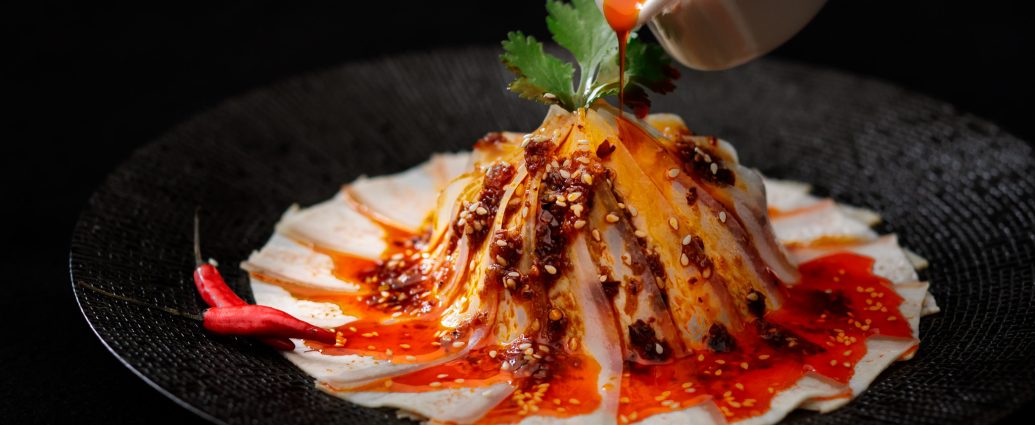
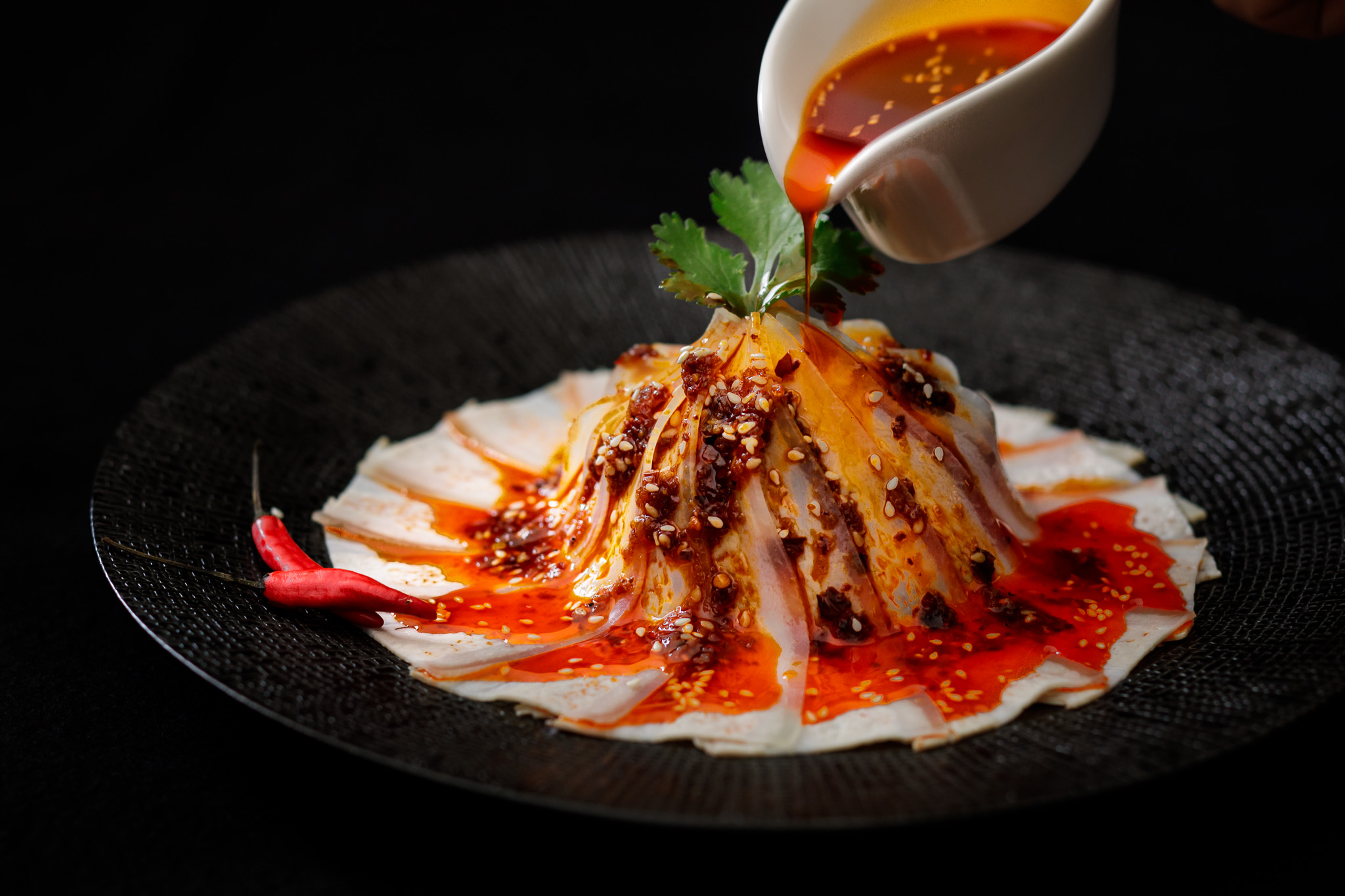
Garlic White Pork (蒜泥白肉) is a beloved Sichuan cold dish — paper-thin slices of tender pork belly served with a bold, garlicky red chili sauce. The pork is boiled whole, chilled, and sliced so thin you can almost see through it, then draped with a sauce of minced garlic, chili oil, and Sichuan peppercorns. It is simple, luxurious, and unmistakably Sichuan. Here is the authentic method.
Garlic white pork (蒜泥白肉) is a Sichuan cold dish of very thinly sliced boiled pork belly served with a garlicky chili oil sauce. The name comes from the pale, white appearance of the pork slices and the generous amount of minced garlic in the sauce.
The dish’s fame belongs to Li Zhuang, a riverside town in Sichuan where cooks slice pork belly so thin it can be read through — a knife skill that has become a local legend. 白肉 (“white meat”) refers to the cooking method: the pork is boiled plain rather than braised or fried, so it stays pale and clean-tasting, and the entire flavor of the dish lives in the sauce. That is the essence of Sichuan 凉菜 (cold dishes): the protein is a neutral canvas, and the seasoning is the performance. Alongside 夫妻肺片 and 口水鸡, 蒜泥白肉 completes the classic trio of Sichuan cold appetizers.
This recipe comes from a Chengdu chef who taught me the essential technique: boil the pork belly whole with ginger and scallion until just cooked, then chill it completely before slicing. Cold pork slices thin and cleanly; warm pork tears.
Why Cold Pork Slices Thin
This is a technique dish disguised as a simple one. Warm pork belly is soft and pliable — a knife drags through it, the fat smears, and the slices come out ragged and thick. Chilled pork belly firms up: the fat solidifies slightly and the meat holds its shape, so a sharp knife glides through and produces clean, translucent slices. The traditional approach is to chill the cooked belly in the refrigerator for several hours, or even overnight, then slice it as thin as you dare. Some cooks also weight the belly while chilling, which compresses it and makes uniform slicing even easier.
The Garlic Sauce
蒜泥 means “garlic paste,” and the sauce is where this dish is won or lost. It is built in layers:
- Garlic — a generous amount, minced or pounded to a paste; raw, not cooked, so it stays pungent
- Chili oil (红油) — with sediment, for color and body as much as heat
- Light soy sauce — the salty backbone
- Chinkiang vinegar — a little, for lift and to cut the pork’s richness
- Sugar — a pinch to round everything out
- Sichuan peppercorn — freshly ground, for the numbing edge
- Reserved poaching liquid — a spoonful loosens the sauce and returns the pork’s own flavor
Some cooks add a little sesame paste for body and a few drops of sesame oil for aroma. The sauce should be thick enough to cling to a slice but loose enough to spoon.
Ingredients and Where to Find Them
- Pork belly — skin-on pork belly, one even slab with clear layers of meat and fat
- Sichuan chili oil — chili oil with sediment (红油)
- Sichuan peppercorns — whole Sichuan peppercorns, toasted and ground fresh
Also needed: garlic (a lot), ginger, scallions, Shaoxing wine, light soy sauce, Chinkiang vinegar, sugar, and sesame oil. Cucumber slices are a traditional garnish and add a cooling contrast.
How to Make It
- Place 600g (1.3 lb) pork belly in a pot with cold water to cover, 4 ginger slices, 3 scallions, and 2 tablespoons Shaoxing wine
- Bring to a boil, then reduce to a bare simmer and cook 40–50 minutes until a skewer pierces the meat with no resistance
- Reserve 3 tablespoons of the poaching liquid; transfer the pork to a plate and refrigerate at least 3 hours (overnight is best)
- Slice the chilled pork as thinly as you can — 1–2mm if possible — and arrange overlapping on a plate
- Make the sauce: 2 tablespoons chili oil, 1.5 tablespoons light soy, 2 teaspoons Chinkiang vinegar, 1 teaspoon sugar, 1 teaspoon sesame oil, 3 tablespoons minced garlic, and the reserved poaching liquid
- Toast and grind 1 teaspoon Sichuan peppercorns; stir half into the sauce and reserve the rest
- Spoon the sauce generously over the pork, scatter with the remaining peppercorn and scallions, and serve with cucumber slices
Variations
- With cucumber — a bed of thin cucumber slices underneath lightens the dish and soaks up the sauce
- With wood ear — shredded blanched wood ear adds crunch and is common in Chengdu
- With noodles — serve the pork and sauce over cold wheat noodles for a complete cold meal
- Less rich — use pork loin or a leaner cut, poached the same way; the texture will be firmer but lighter
Frequently Asked Questions
How do I slice the pork so thin?
Chill it thoroughly — at least three hours, ideally overnight. A firm, cold slab slices cleanly where warm pork tears. Use a very sharp, long knife, draw it in one smooth stroke rather than sawing, and consider partially freezing the belly for 30 minutes before slicing.
What cut of pork should I use?
Skin-on pork belly with clear alternating layers of meat and fat is traditional. Look for a slab with even layering rather than a thick band of fat. Pork loin works for a leaner version but lacks the unctuous texture that defines the dish.
Can I serve it warm?
Traditionally it is served cold, but many home cooks serve it at room temperature. The sauce clings better to cold slices; warm pork releases more oil.
Is this dish very spicy?
It is aromatic rather than punishing. The chili oil provides fragrance and color, the garlic provides pungency, and the Sichuan peppercorn provides a citrusy numbness rather than fire. Adjust the chili oil to taste.
More Sichuan Cold Dishes
Build a Sichuan cold-dish platter with my Mouthwatering Chicken 口水鸡, the classic Fu Qi Fei Pian 夫妻肺片, or the street-style Bo Bo Chicken 钵钵鸡.
As an Amazon Associate, I earn from qualifying purchases. These are affiliate links at no extra cost to you.

1 Comment