
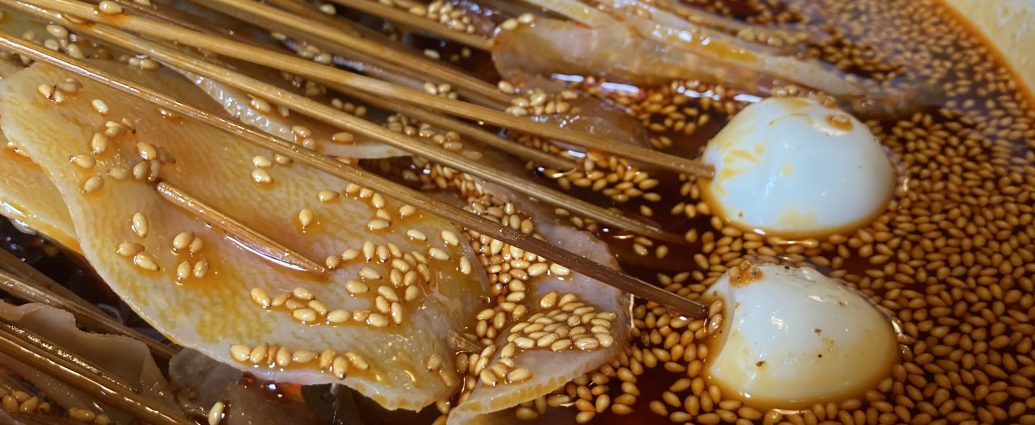
Bo Bo Chicken (钵钵鸡) is the street-food soul of Leshan, the small Sichuan city that also gave the world Qiao Qiao Beef and sweet water noodles. Bite-size pieces of poached chicken and vegetables are skewered on bamboo sticks, then soaked in a chilled, heady broth of chili oil, Sichuan peppercorn, sesame, and crushed peanuts. The name comes from the clay pots — 钵 (bō) — that vendors once carried on shoulder poles, and the jingle of the pots as they bumped together (bo, bo).
What makes Bo Bo Chicken irresistible is the contrast: cool, juicy chicken against an aromatic, tingly sauce that builds heat with every bite. It is the perfect make-ahead party dish — the skewers only get better after an hour in the sauce, and everything can be prepped a day in advance. This version recreates the classic Leshan flavors in your own kitchen.
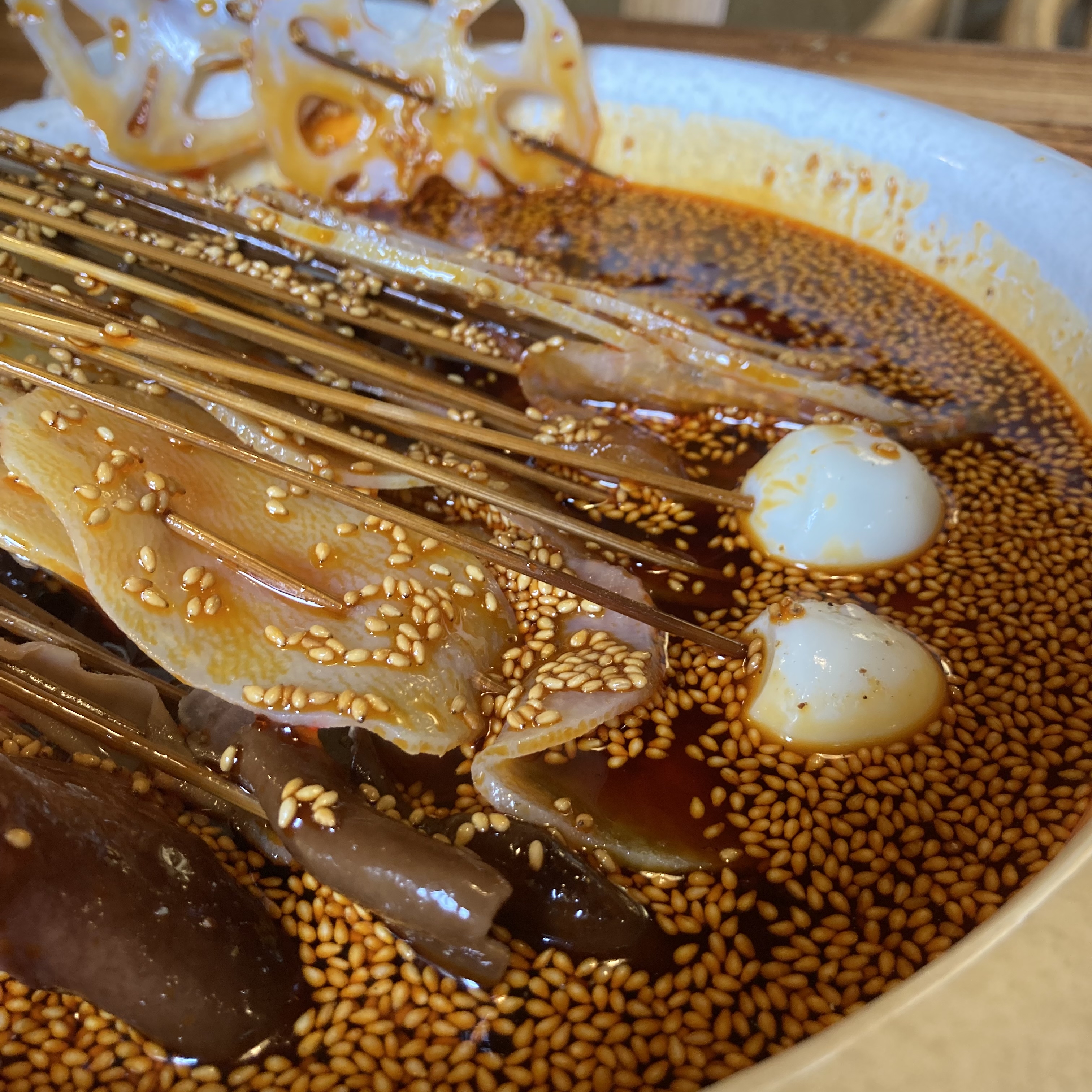
Photo: Coolli22 via Wikimedia Commons, CC BY-SA 4.0
Leshan and the Skewer Culture of Sichuan
Leshan, about two hours south of Chengdu, is a small city with an outsized reputation for food. It is the home of 钵钵鸡, of 跷脚牛肉 (a beef-and-offal soup), and of 甜皮鸭 (sweet-crusted duck), and its streets are full of stalls selling food on bamboo skewers. That format — 串串 (chuàn chuàn) — is fundamental to Sichuan snacking: ingredients are threaded onto sticks so they can be dipped, counted, and eaten standing up. 钵钵鸡 applies it to cold food. Where Sichuan hotpot and 麻辣烫 are served hot, 钵钵鸡 is served chilled, which makes it a summer dish, a drinking snack, and the ideal thing to make ahead for a gathering.
The 钵 and the Name
- 钵 (bō) — a deep ceramic pot or bowl; traditionally unglazed earthenware, which holds cold well
- The double name — 钵钵 is the reduplicated form, the affectionate or descriptive way of saying “the little pot”
- The sound — the name is often explained as imitating the clink of pots knocking together as a vendor walked with a shoulder pole
- The bamboo skewer — a practical invention: it lets the customer choose pieces, keeps fingers clean, and makes counting the bill easy
- Serve it cold — the whole point is the temperature contrast between the chilled chicken and the warm, numbing sauce
The Sauce Is the Dish
The chicken in 钵钵鸡 is deliberately plain — poached gently, chilled, and sliced — because the sauce is doing all the work. That sauce is built on 红油 (chili oil), Sichuan peppercorn, sesame paste or sesame oil, crushed roasted peanuts, garlic, vinegar, sugar, and often a splash of the chicken’s own poaching broth to loosen it. The result is a dressing that is simultaneously spicy, numbing, nutty, sour, and faintly sweet — the full Sichuan balance in a single bowl. The skewers soak in it, and the longer they soak, the better they get, which is why the dish is traditionally prepared ahead.
Ingredients and Where to Find Them
- Sichuan chili oil — chili oil with sediment
- Sichuan peppercorns — whole Sichuan peppercorns, toasted and ground fresh
- Bamboo skewers — bamboo skewers, soaked in water before use
Also needed: bone-in chicken or chicken thighs, ginger, scallions, sesame paste, roasted peanuts, garlic, light soy sauce, Chinkiang vinegar, sugar, sesame oil, and vegetables for skewering — cucumber, lotus root, wood ear, potato, or tofu skin.
How to Make It
- Poach 800g (1.75 lb) bone-in chicken with ginger and scallions in simmering water for 25 minutes; plunge into ice water for 10 minutes, then bone and slice
- Blanch and slice vegetables — lotus root, potato, wood ear — and cut cucumber into batons
- Thread the chicken and vegetables onto soaked bamboo skewers
- Make the sauce: whisk 4 tablespoons chili oil, 2 tablespoons sesame paste loosened with warm water, 2 tablespoons crushed roasted peanuts, 1 tablespoon light soy, 1 tablespoon Chinkiang vinegar, 2 teaspoons sugar, 1 teaspoon ground Sichuan peppercorn, minced garlic, and 4 tablespoons of the chicken poaching broth
- Pour the sauce over the skewers in a deep dish so they are mostly submerged
- Chill at least 1 hour, preferably 4, turning once so the sauce coats evenly
- Serve cold, scattered with toasted sesame seeds and scallions
Variations
- With 藤椒 (rattan pepper) — a fresh, green, more floral numbing oil instead of chili oil; a modern Leshan favorite
- With beef or offal — tripe, tendon, and beef slices work with the same sauce
- With seafood — blanched prawns or squid skewered and soaked
- All-vegetable — tofu skin, lotus root, potato, and mushrooms make a fine vegetarian version
Frequently Asked Questions
Why is my Bo Bo Chicken not numbing enough?
The Sichuan peppercorns were old or pre-ground. The numbing compound fades quickly, so toast whole peppercorns and grind them fresh, adding them to the sauce shortly before serving. Freshness matters more here than quantity.
Can I use chicken breast?
You can, but thigh or bone-in chicken stays juicier after poaching and chilling. Breast tends to dry out in the refrigerator, which is a problem for a cold dish where there is no heat to mask it.
How long can it sit in the sauce?
Up to 24 hours refrigerated, and it improves for the first several hours. Beyond a day the vegetables lose their crunch, though the chicken remains good. Skewer the vegetables separately if you plan to hold it longer.
Do I have to use skewers?
No — the skewers are traditional and fun, but the dish works just as well served in a bowl with the sauce poured over. The name refers to the pot, not the sticks.
More Sichuan Classics to Try
Love cold Sichuan dishes? Try my Kou Shui Ji 口水鸡 (Mouthwatering Chicken), the numbing Jiao Ma Ji 椒麻鸡 (Sichuan Pepper Chicken), or the fiery Mala Xiang Guo 麻辣香锅.
As an Amazon Associate, I earn from qualifying purchases. These are affiliate links at no extra cost to you.
1 Comment