
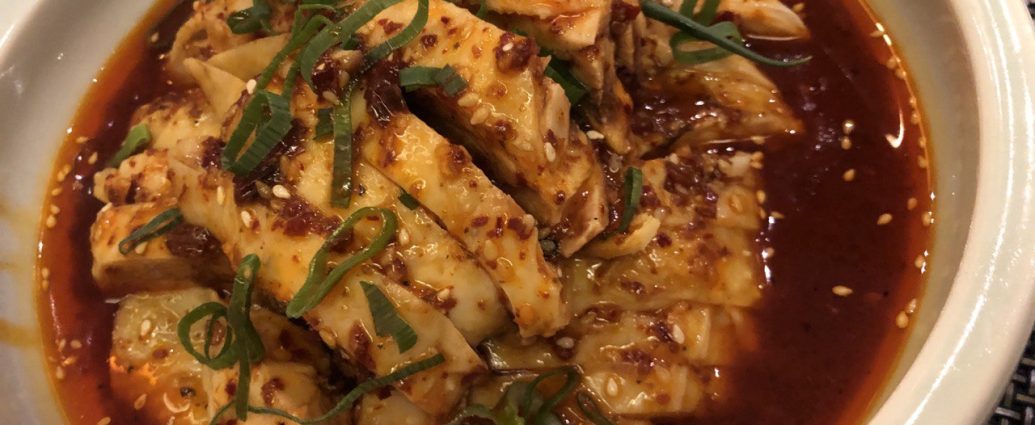
Mouthwatering Chicken (口水鸡), known as Kou Shui Ji, is one of Sichuan’s most beloved cold dishes — poached chicken with glossy, gelatinous skin, chopped and drenched in a fiery, numbing chili-oil sauce with peanuts and scallions. The name says it all: just looking at it makes your mouth water. Here is the classic recipe.
Mouthwatering chicken (口水鸡) is a Sichuan cold dish of poached chicken with gelatinous skin, served with a fiery chili oil, Sichuan peppercorn, and garlic sauce topped with peanuts and scallions. It is numbing, spicy, and famous for making your mouth water.
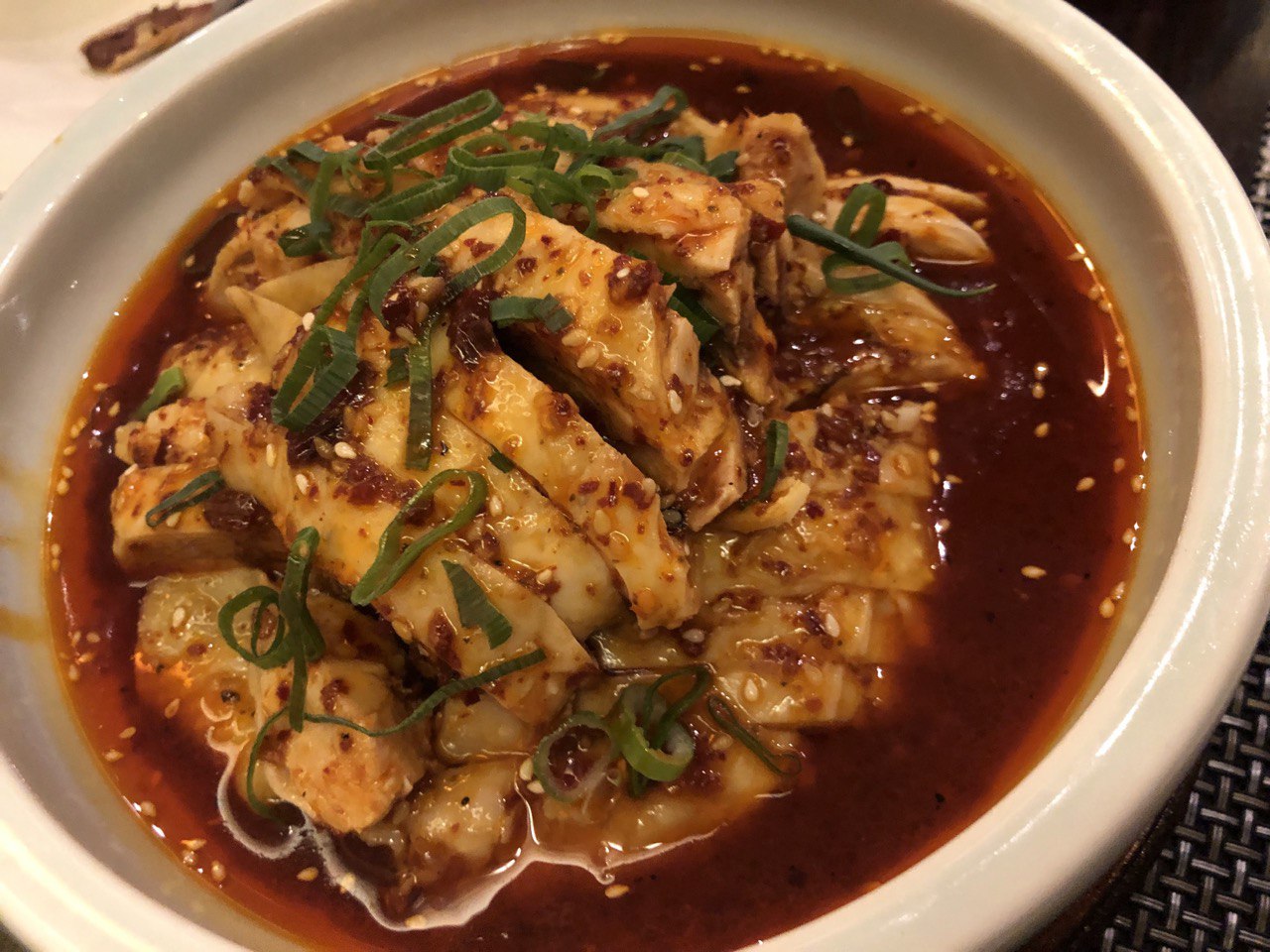
口水鸡 is a 凉菜 (cold dish), the kind that opens a Sichuan banquet and wakes up the palate before the heavier courses arrive. Its name — literally “saliva chicken” — comes from the poet Guo Moruo’s description of the dish as something that makes you salivate just at the sight of it. It is one of the “white-cut” (白切) chicken preparations, meaning the bird is poached rather than roasted so the meat stays pale, silky, and clean-tasting; all the drama lives in the sauce, a glossy red emulsion of chili oil, black vinegar, soy, sugar, garlic, and ground Sichuan peppercorn. What separates a great version from a merely spicy one is the skin: properly poached and shocked, it turns gelatinous and translucent, and it is the part everyone reaches for first.
This recipe comes from a Chengdu chef who taught me the essential trick: the chicken must be poached gently and then plunged into ICE water — the shock firms the skin into a glossy, gelatinous layer that is the dish’s signature. Never skip the ice bath.
The Ice Bath and the Poaching Temperature
Two temperature decisions define this dish. First, the poach: the chicken goes into cold water with aromatics, comes to a bare simmer, and stays there — never a rolling boil, which would toughen the meat and cloud the texture. Second, the shock: the moment the chicken is cooked through, it goes straight into ice water. That sudden drop firms the collagen just under the skin into a translucent, springy layer and stops the cooking dead. Skip it and you get ordinary poached chicken; do it and you get the gelatinous, glossy skin that defines 口水鸡. The poaching liquid is then skimmed and reserved — it is the secret ingredient in the sauce.
Building the Sauce
The sauce is an emulsion, and its balance is what makes the dish. The classic formula layers four sensations:
- 辣 (spicy) — Sichuan chili oil (红油), ideally with sediment for body and color
- 麻 (numbing) — freshly ground Sichuan peppercorn, added last so the tingle stays bright
- 酸 (sour) — Chinkiang black vinegar for depth, with a little white vinegar for lift if you like
- 甜 and 咸 (sweet and salty) — light soy, a spoonful of sugar, and a splash of the reserved poaching liquid to loosen everything into a glossy dressing
Garlic and sesame paste are common additions; the paste adds body and helps the sauce cling. Toasted peanuts and scallions go on top for crunch, and a few sprigs of cilantro brighten the finish.
Ingredients and Where to Find Them
- Whole chicken or bone-in legs — bone-in chicken legs or a small whole chicken; skin-on is essential
- Sichuan chili oil — chili oil with sediment (红油) is the heart of the sauce
- Sichuan peppercorns — whole Sichuan peppercorns, toasted and ground fresh
Also needed: Chinkiang vinegar, light soy sauce, sugar, garlic, ginger, scallions, sesame paste, roasted peanuts, and cilantro. Shaoxing wine and ginger go into the poaching liquid.
How to Make It
- Place 1kg (2.2 lb) chicken in a pot with cold water to cover, 4 ginger slices, 2 scallions, 1 tablespoon Shaoxing wine, and 1 teaspoon salt
- Bring to a bare simmer — small bubbles only — and poach 25–30 minutes until the juices run clear
- Transfer immediately to a bowl of ice water and chill 10–15 minutes; reserve 3 tablespoons of the poaching liquid
- Drain, pat dry, and chop the chicken into bite-sized pieces with the skin on; arrange on a serving plate
- Make the sauce: combine 3 tablespoons chili oil, 2 tablespoons light soy, 1.5 tablespoons Chinkiang vinegar, 1 teaspoon sugar, 1 tablespoon sesame paste, 3 minced garlic cloves, and the reserved poaching liquid
- Toast and grind 1 tablespoon Sichuan peppercorns; stir half into the sauce and reserve the rest
- Pour the sauce over the chicken, scatter with crushed peanuts, scallions, cilantro, and the remaining peppercorn; rest 20 minutes and serve at cool room temperature
Variations
- With cucumber — a layer of smacked cucumber underneath soaks up the sauce and adds a cooling crunch
- Extra numbing — finish with 1 teaspoon of 藤椒油 (green peppercorn oil) for a sharper, more floral tingle
- With chicken breast — poach 12 minutes only; the ice bath matters even more for lean cuts
- Noodle version — serve the chicken and sauce over cold wheat noodles for a Sichuan-style cold noodle salad
Frequently Asked Questions
What does 口水鸡 mean?
It literally means “mouthwatering chicken” or “saliva chicken” — the name comes from the idea that the dish makes you salivate at first sight. It is a Sichuan cold dish (凉菜) of poached chicken in a spicy, numbing chili-oil sauce.
Why is my chicken skin not gelatinous?
The ice bath was skipped or too short, or the poaching water boiled too hard. Keep the poach at a bare simmer, then plunge the chicken into ice water for at least 10 minutes. The sudden cold sets the collagen under the skin into that characteristic glossy layer.
Is it served hot or cold?
Cool — room temperature or slightly chilled. It is a cold dish by design, which makes it ideal for summer and for make-ahead entertaining. Bring it out of the fridge 20 minutes before serving so the aromatics bloom.
How long does it keep?
Two to three days covered in the refrigerator, and it improves overnight as the chicken absorbs the sauce. Taste before serving and adjust the salt and vinegar, since the seasoning mellows as it sits.
More Sichuan Classics to Try
Love Sichuan food? Try my Mao Xue Wang 毛血旺, the elegant Zhang Cha Duck 樟茶鸭, or the street-style Bo Bo Chicken 钵钵鸡.
As an Amazon Associate, I earn from qualifying purchases. These are affiliate links at no extra cost to you.
4 Comments