
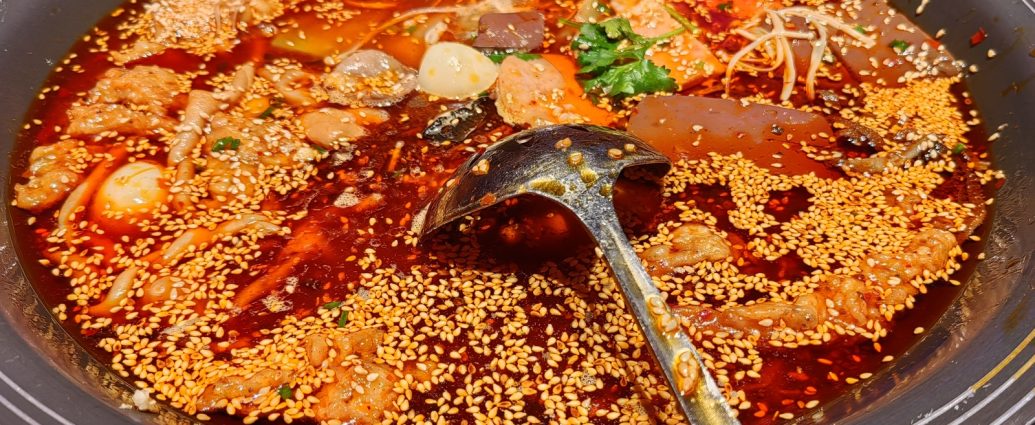
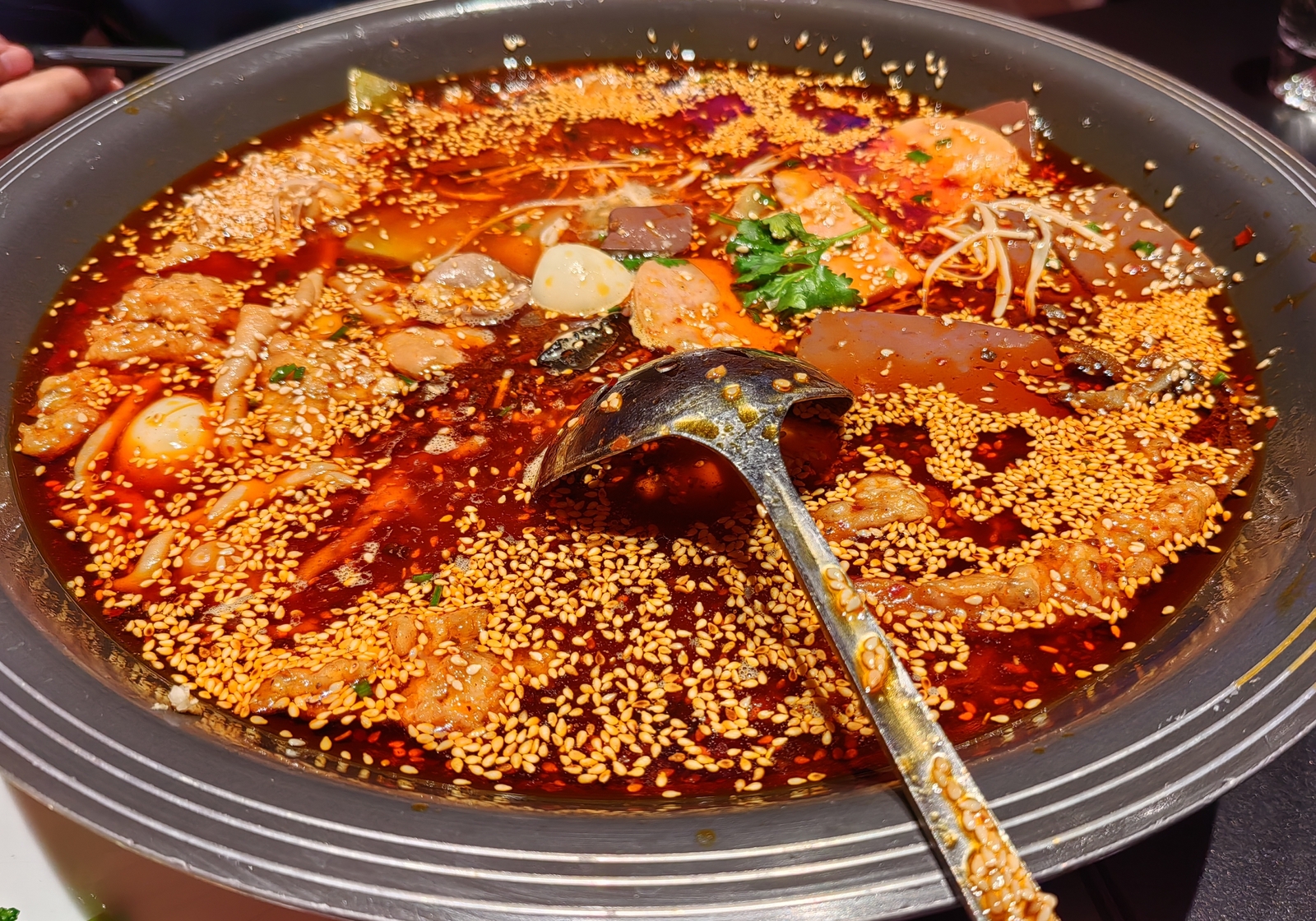
Mao Xue Wang (毛血旺) is the fiery soul of Chongqing hotpot culture — silky duck blood curd, tender beef tripe, and savory luncheon meat swimming in a crimson broth of fermented chili bean paste and chili oil, crowned with a cloud of numbing Sichuan peppercorn. It is the dish you order when you want the whole table to sweat, and it is far easier to make at home than most people think.
The name comes from Chongqing: 毛 (mao) means “coarse,” a nod to the affordable cuts and tripe once used by riverside laborers, 血 (xue) is the duck blood curd, and 旺 refers to the firm, bouncy blood jelly (xuè wāng) that holds everything together. What began as a cheap, warming meal for boatmen on the Yangtze is now one of Sichuan’s most iconic exports, served everywhere from street stalls to banquet halls.
From the Chaotianmen Wharves
毛血旺 is a 江湖菜 — a “rivers-and-lakes” dish, meaning one invented in the streets rather than the banquet hall. Its origin is usually placed at the Chaotianmen docks in Chongqing, where in the early twentieth century butchers sold cheap offal and fresh blood to the port workers. A vendor would simmer the blood curd and whatever scraps were available in a pot of spiced chili broth, selling bowls to men who needed a hot, cheap, filling meal. The format survived because it is genuinely good: the blood curd is silky and mild, the broth is intensely seasoned, and the contrast between the two is what makes the dish work. As Chongqing’s food culture grew in reputation, 毛血旺 moved from the wharves to restaurants, the ingredients improved, and it became a fixture of Sichuan menus everywhere.
Duck Blood Curd: The Defining Ingredient
- What it is — blood collected and gently heated until it sets into a firm, dark red jelly, then cut into blocks
- Texture — silky, smooth, and faintly bouncy; closer to soft tofu than to anything else
- Flavor — very mild, faintly mineral; it is a texture ingredient that absorbs the broth
- Blanch before adding — 2 minutes in lightly salted water firms the curd and removes any raw edge
- Handle gently — the blocks are fragile and break if stirred aggressively; push rather than stir
- Pork blood works too — 猪血 is a common substitute, slightly firmer and less delicate
The Mala Foundation
As with most Chongqing dishes, the flavor comes from a base of Pixian doubanjiang fried in oil until it turns deep red, followed by dried chilies, garlic, and ginger. The broth is built on that base with stock, then finished with a pour of hot oil over freshly ground Sichuan peppercorn and chili flakes — the same final flourish used in Shui Zhu Niu Rou. What distinguishes 毛血旺 is the breadth of ingredients: blood curd, tripe, luncheon meat, and vegetables all in one pot, each contributing a different texture to the same broth.
Ingredients and Where to Find Them
- Duck blood curd — duck blood curd, fresh or vacuum-packed
- Pixian doubanjiang — doubanjiang for the broth base
- Sichuan peppercorns — whole Sichuan peppercorns, ground fresh for the topping
Also needed: beef tripe, luncheon meat or Spam, bean sprouts, napa cabbage, wood ear, dried chilies, chili flakes, garlic, ginger, scallions, light soy sauce, Shaoxing wine, sugar, and a generous amount of oil.
How to Make It
- Blanch 300g (10.5 oz) duck blood curd in lightly salted water for 2 minutes; drain gently
- Clean and slice 200g (7 oz) beef tripe; blanch 30 seconds and set aside
- Blanch bean sprouts and napa cabbage for 1 minute and spread in the base of a deep heatproof bowl
- Heat 3 tablespoons oil and fry 3 tablespoons doubanjiang, 12 dried chilies, garlic, and ginger for 3 minutes until the oil turns deep red
- Add 900ml stock with 1 tablespoon light soy, 1 teaspoon sugar, and 1 tablespoon Shaoxing wine; simmer 5 minutes
- Add the blood curd and simmer 3 minutes, then add the tripe and sliced luncheon meat for 2 minutes; pour everything over the vegetables
- Top with 2 tablespoons chili flakes, 1 tablespoon ground Sichuan peppercorn, and minced garlic; heat 150ml oil until smoking and pour it over; scatter with scallions and serve
Variations
- With pork blood — 猪血旺, firmer and more widely available
- With eel or frog — regional Chongqing versions add river fish or frog legs
- Milder — reduce the chilies and doubanjiang, and use only half the final oil pour
- With noodles — ladle the pot over rice or noodles to make it a full meal
Frequently Asked Questions
What is duck blood curd and where do I buy it?
It is duck blood heated until it sets into a firm jelly, sold in blocks. Chinese groceries and online retailers carry it fresh or vacuum-packed. Pork blood curd is a widely available substitute with a slightly firmer texture.
Why did my blood curd turn rubbery?
It was overcooked or handled roughly. Blanch it briefly, then simmer it in the broth for only about three minutes. Stir by pushing gently with a ladle rather than stirring, and it will stay silky.
Do I need the final oil pour?
It is what blooms the chili flakes and ground peppercorn and gives the dish its signature aroma. You can reduce the quantity of oil, but skipping it entirely leaves the topping tasting raw and dusty rather than fragrant.
How spicy is Mao Xue Wang?
Very spicy by most standards — it is a Chongqing dish built on doubanjiang, dried chilies, chili flakes, and Sichuan peppercorn. You can dial it back by reducing the chilies and using a mild doubanjiang, but the dish is defined by its intensity.
More Sichuan Classics to Try
If you love the mala heat of Mao Xue Wang, try my Shui Zhu Niu Rou 水煮牛肉 (Sichuan Boiled Beef in Chili Oil), the essential Mapo Tofu 麻婆豆腐, or the beloved Hui Guo Rou 回锅肉 (Twice-Cooked Pork).
As an Amazon Associate, I earn from qualifying purchases. These are affiliate links at no extra cost to you.
8 Comments