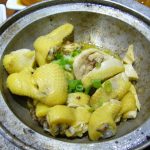
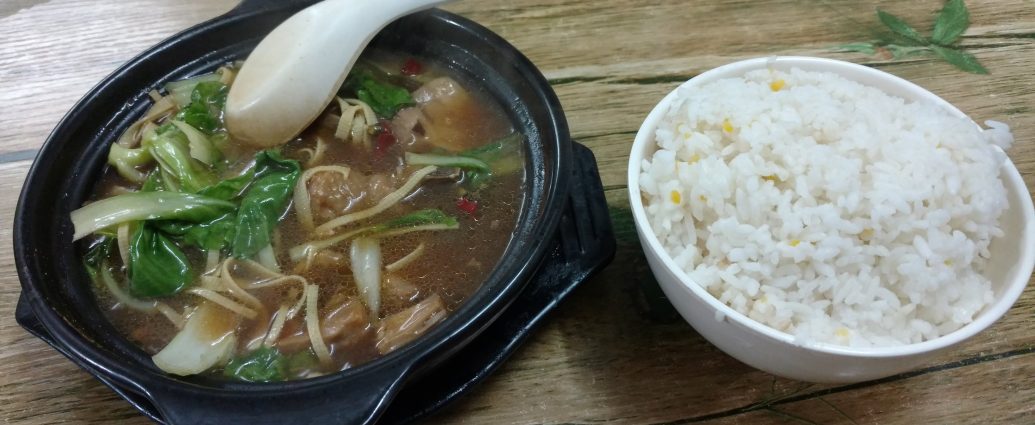
Huang Men Ji (黄焖鸡米饭) — “yellow braised chicken rice” — is one of China’s most successful fast-food dishes: a single clay pot of chicken, shiitake mushrooms, and green peppers braised in a rich, golden-brown sauce, served over steamed rice. It is the dish that turned a Shandong home classic into a national chain phenomenon, and for good reason — it is simple, saucy, and deeply satisfying.
The name comes from the cooking method: 黄焖 (huáng mèn) means “yellow braised,” referring to the golden color the sauce develops from caramelized sugar, soy, and the natural juices of the chicken. Unlike red-braised dishes that rely on heavy dark soy, Huang Men Ji keeps a lighter, glossier sauce that clings to the rice. This recipe recreates the restaurant bowl at home in under 45 minutes.
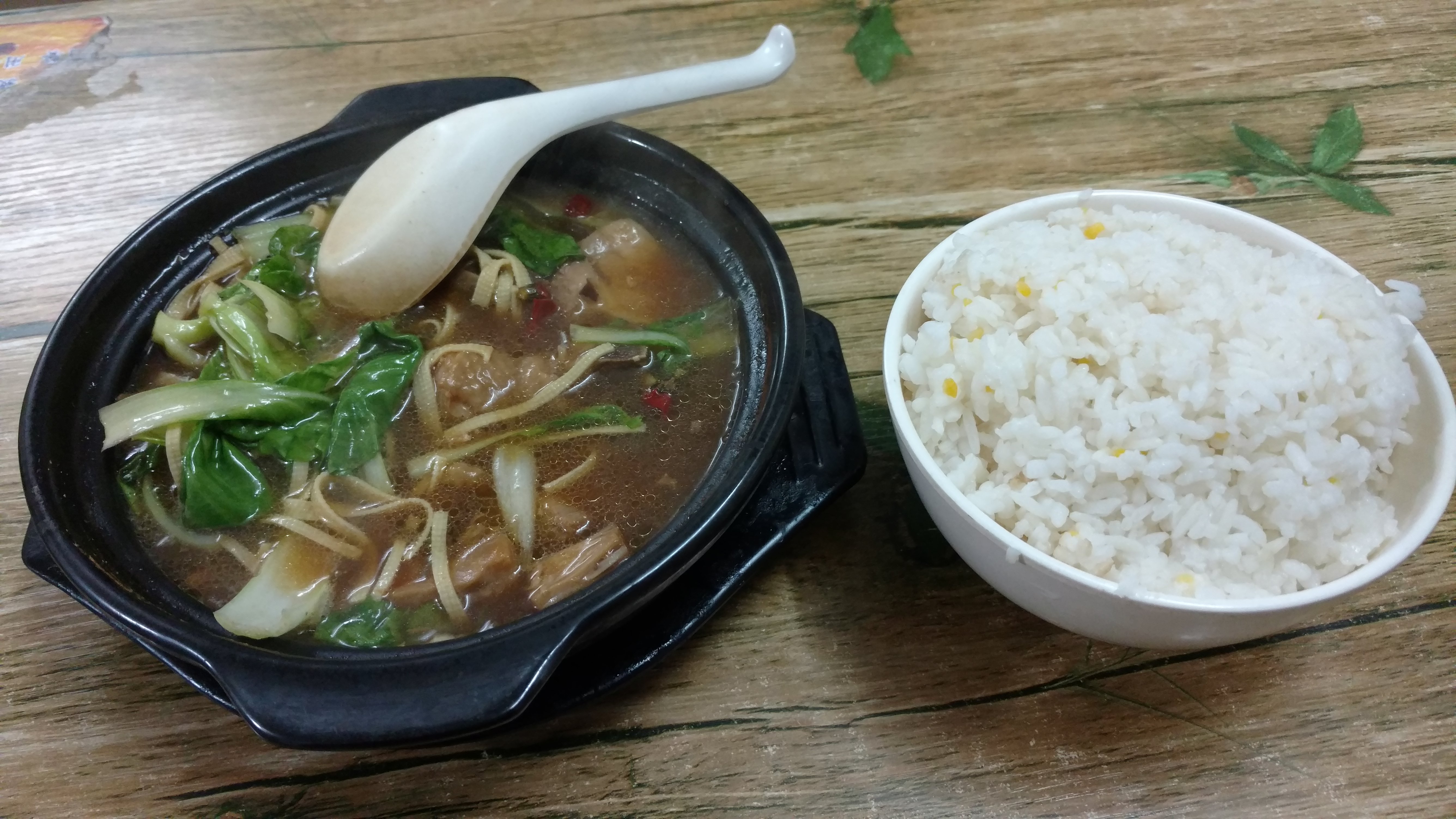
Photo via Wikimedia Commons, CC BY-SA 4.0
What 黄焖 Means
Chinese braising has a vocabulary of colors, and each describes a different technique. 红烧 (red-braised) uses dark soy and sugar for a deep mahogany sauce. 黄焖 (yellow-braised) is gentler: the meat is briefly fried, then simmered in a sauce built on light soy, a little caramelized sugar, and stock, without the dark soy that would darken it. The result is a sauce that is golden-amber rather than brown, glossy rather than thick, and bright enough to show the chicken’s own color. The 焖 part means “braised with the lid on” — a covered, low simmer that keeps the moisture in and lets the flavors concentrate. 黄焖鸡 is the most famous member of the 黄焖 family, which also includes 黄焖排骨 and 黄焖鱼.
From Shandong Kitchen to National Chain
- Shandong origin — the dish comes from 黄焖鸡, a traditional braised chicken of Shandong cuisine, the northern tradition known for braising and stock-based cooking
- The rice pairing is modern — serving it over rice in a single clay pot is a twentieth-century innovation that made it portable and affordable
- The chain phenomenon — from the 2010s, small 黄焖鸡米饭 restaurants spread across Chinese cities with a standardized menu of one dish
- Why it works commercially — one pot, one bowl, cheap ingredients, fast service, and a sauce that suits rice perfectly
- Dried shiitake is essential — it supplies the umami depth that makes the sauce taste slow-cooked
The Clay Pot and the One-Dish Menu
Part of what makes 黄焖鸡米饭 recognizable is the vessel. Restaurants serve it in a small clay or cast-iron pot, still bubbling, with a bowl of rice on the side. The pot is not just presentation: it holds heat, so the sauce keeps simmering at the table and thickens slightly as you eat, and it keeps the chicken warm to the last spoonful. That combination — a single pot, a bowl of rice, and nothing else on the menu — is the business model that let the dish spread so quickly. A 黄焖鸡米饭 shop needs one recipe, a few ingredients, and a few minutes per order, which is why thousands of them opened across China within a decade. If you have a small clay pot or a heavy enameled one, use it: pour the braised chicken in, bring it to the table, and spoon it over the rice there. It tastes better that way, and it is how the dish is meant to be eaten.
Ingredients and Where to Find Them
- Chicken thigh — bone-in chicken thighs, cut into pieces; thigh stays juicy
- Dried shiitake — dried shiitake; the soaking liquid is part of the sauce
- Light soy sauce — light soy sauce, plus a small amount of dark for color
Also needed: green bell peppers, ginger, garlic, scallions, rock sugar, Shaoxing wine, oyster sauce, cornstarch, and chicken stock. Some versions add potato or enoki mushrooms.
How to Make It
- Soak 6 dried shiitake in warm water for 30 minutes; reserve the soaking liquid and slice the mushrooms
- Cut 600g (1.3 lb) bone-in chicken thigh into pieces; pat dry and fry in 2 tablespoons oil over high heat for 5 minutes until golden
- Push the chicken aside, add 15g rock sugar to the oil, and let it melt and caramelize for 30 seconds
- Add 4 minced garlic cloves and 4 ginger slices; stir 30 seconds, then add 2 tablespoons light soy, 1/2 teaspoon dark soy, 1 tablespoon Shaoxing wine, and 1 tablespoon oyster sauce
- Add the shiitake and their strained soaking liquid plus 300ml chicken stock; bring to a boil, cover, and simmer 20 minutes
- Add 2 green bell peppers cut into squares and simmer uncovered 5 minutes until the sauce reduces and glosses
- Thicken with a cornstarch slurry if needed, scatter with scallions, and spoon over steamed rice
Variations
- With potato — chunks of potato added with the stock make it heartier; a common restaurant addition
- With enoki mushrooms — added in the last 5 minutes for extra texture
- With pork ribs (黄焖排骨) — the same sauce with ribs; braise 45 minutes
- Spicier — add dried chilies or a spoonful of doubanjiang with the aromatics
Frequently Asked Questions
Why is my sauce not golden?
You likely used too much dark soy, or the sugar was not caramelized properly. 黄焖 gets its color from caramelized rock sugar plus light soy — use only a small amount of dark soy for depth, and let the sugar melt and color in the oil before adding the liquid.
Can I use chicken breast?
You can, but thigh is much better for braising. The darker meat stays juicy through a 25-minute simmer, while breast tends to dry out. If using breast, reduce the braising time to 12 minutes.
Do I need dried shiitake?
They are strongly recommended. Dried shiitake and their soaking liquid provide the deep, savory base that makes the sauce taste slow-cooked. Fresh mushrooms work but give a lighter, less complex result.
What rice should I serve it with?
Steamed jasmine or medium-grain rice is perfect — the slightly sticky grains catch the glossy sauce. Serve the dish with the braising liquid spooned generously over the top.
More Rice & Noodle Bowls
Love a saucy rice bowl? Try my Chongqing Small Noodles 重庆小面, the classic Egg Fried Rice 蛋炒饭, or the smoky Claypot Rice 煲仔饭.
As an Amazon Associate, I earn from qualifying purchases. These are affiliate links at no extra cost to you.