
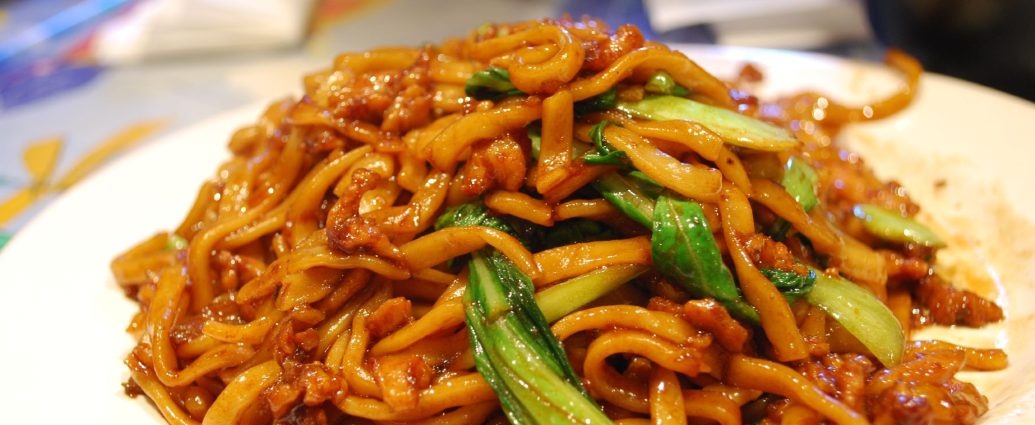
Shanghai Fried Noodles (上海炒面) is a beloved Shanghainese street-style dish — thick, chewy wheat noodles stir-fried with pork, bok choy, and scallions in a savory soy-based sauce. Unlike the delicate soup noodles of the south, these noodles are boldly seasoned, slightly caramelized, and satisfyingly chewy. Here is the authentic method.
Shanghai fried noodles (上海炒面) are thick, chewy wheat noodles stir-fried with pork, bok choy, and scallions in a savory soy sauce. They are a classic Shanghainese street food, known for their rich, caramelized flavor.
上海炒面 belongs to the family of Shanghainese noodle dishes that includes 粗炒 (thick fried noodles) and 两面黄 (crisp-fried noodles), all built on the city’s characteristic combination of dark soy, sugar, and high heat. Shanghai cooking is famous for its 浓油赤酱 — “heavy oil, red sauce” — an unapologetic style that favors deep color, glossy sheen, and a sweet-savory balance. These noodles are the street-food expression of that philosophy: nothing delicate, everything satisfying. Vendors fry them in small batches in a screaming wok, and the soy caramelizes onto each strand until the noodles are almost black.
This recipe comes from a night-market cook in Shanghai who taught me the essential rule: the noodles must be PRE-BOILED and drained well, then stir-fried over the highest heat so the soy sauce caramelizes on the noodle surface — that dark, glossy, slightly charred flavor is the soul of the dish.
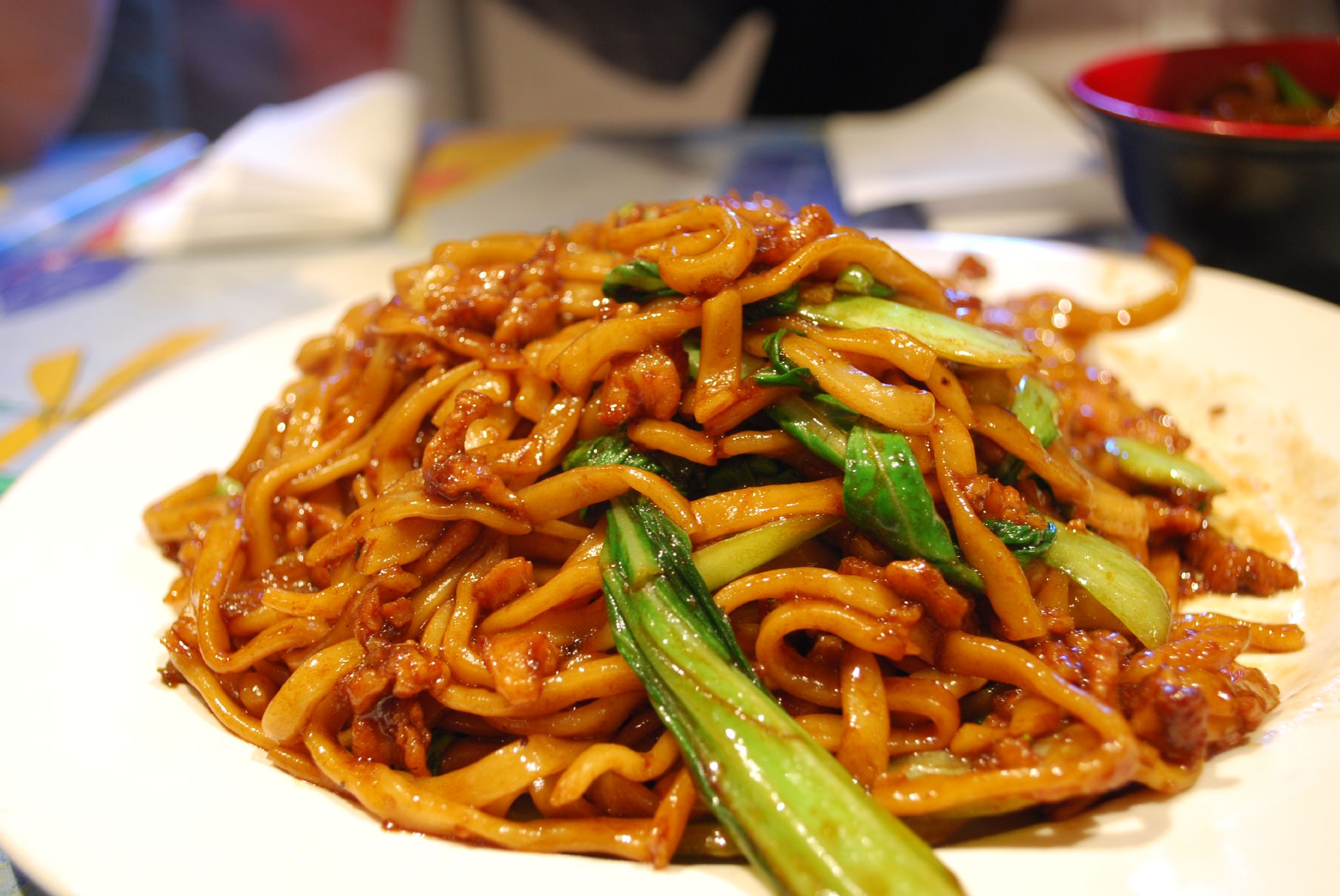
The Caramelization Is the Point
Two things separate Shanghai fried noodles from a generic stir-fried noodle: the noodles are par-boiled first, and the sauce is caramelized rather than merely mixed in. Par-boiling cooks the noodle through so it only needs a couple of minutes in the wok — enough time to char, not enough to turn to paste. Then the dark soy and sugar go in over maximum heat, where they reduce, thicken, and cling to the strands. That is where the deep mahogany color and the faintly bittersweet, roasted flavor come from. Add the sauce over low heat and you get brown noodles; add it over high heat and you get Shanghai noodles.
Choosing and Prepping the Noodles
- Fresh thick wheat noodles (粗面) — the traditional choice; look for Shanghai-style or Japanese udon-adjacent noodles
- Dried thick noodles work well — boil until just shy of al dente, then drain and toss with a little oil
- Drain thoroughly and dry — wet noodles steam and clump instead of frying
- Toss with 1 teaspoon oil after draining to keep strands separate
- Do not overcook before frying — the wok will finish them
Ingredients and Where to Find Them
- Thick wheat noodles — thick Chinese wheat noodles, fresh or dried
- Dark soy sauce — dark soy sauce is essential for the signature color and caramel depth
- Shaoxing wine — Shaoxing wine for the pork marinade
Also needed: pork loin or shoulder, bok choy, scallions, garlic, light soy sauce, sugar, cornstarch, and a high-smoke-point oil. A pinch of white pepper and a few drops of sesame oil finish it.
How to Cook It
- Slice 200g (7 oz) pork thinly and marinate 10 minutes with 1 teaspoon light soy, 1 teaspoon Shaoxing wine, and 1 teaspoon cornstarch
- Boil 400g (14 oz) thick noodles until just underdone; drain, toss with 1 teaspoon oil, and spread out to dry
- Mix the sauce: 2 tablespoons dark soy, 1 tablespoon light soy, 1 tablespoon Shaoxing wine, 2 teaspoons sugar, and 2 tablespoons water
- Heat a wok until smoking, add oil, and sear the pork 2 minutes; remove
- Add the garlic and scallion whites, stir 15 seconds, then add the bok choy and toss 1 minute
- Add the noodles and press them against the wok for 30 seconds to char, then toss; repeat once
- Pour the sauce down the side of the wok, return the pork, and toss over high heat 60–90 seconds until the noodles are glossy and dark; serve immediately
Variations
- With shrimp — swap the pork for prawns and reduce the searing to 90 seconds total
- With shredded chicken — chicken thigh works identically and takes on the soy beautifully
- Spicier version — add a teaspoon of doubanjiang or chili oil with the garlic
- Two-sided crisp (两面黄) — shallow-fry the boiled noodles into a cake until crisp on both sides, then pour the toppings over; a banquet version of the same dish
Frequently Asked Questions
What noodles should I use?
Thick, round wheat noodles — the kind sold fresh at Chinese grocers as 粗面 or Shanghai noodles. Japanese udon can stand in at a push, though the texture is softer. Thin noodles break apart under this much tossing and sauce.
Why did my noodles clump together?
They were too wet or the wok was not hot enough. Drain them thoroughly, toss with a teaspoon of oil, and let them dry on a tray for a few minutes. Then fry over the highest heat in a single layer, pressing them against the wok rather than stirring constantly.
What is the difference from lo mein?
Shanghai fried noodles use thick, round noodles and rely on caramelized soy flavor; lo mein typically uses thinner noodles with a more sauce-forward finish. Both are delicious but distinct.
Can I make it vegetarian?
Yes — omit the pork, use mushroom or vegetable stock in the sauce, and add shiitake mushrooms and extra bok choy. A teaspoon of mushroom-flavored dark soy deepens the flavor nicely.
More Chinese Noodle Dishes
Love noodles? Try my Wonton Noodle Soup 云吞面, the Cantonese Beef Chow Fun 干炒牛河, or the Hunan classic Hunan Rice Noodles 湖南米粉.
As an Amazon Associate, I earn from qualifying purchases. These are affiliate links at no extra cost to you.
1 Comment