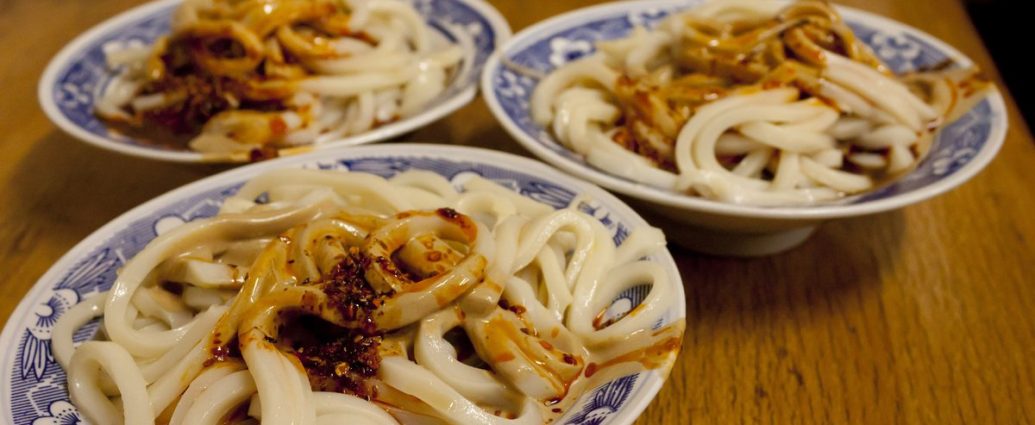
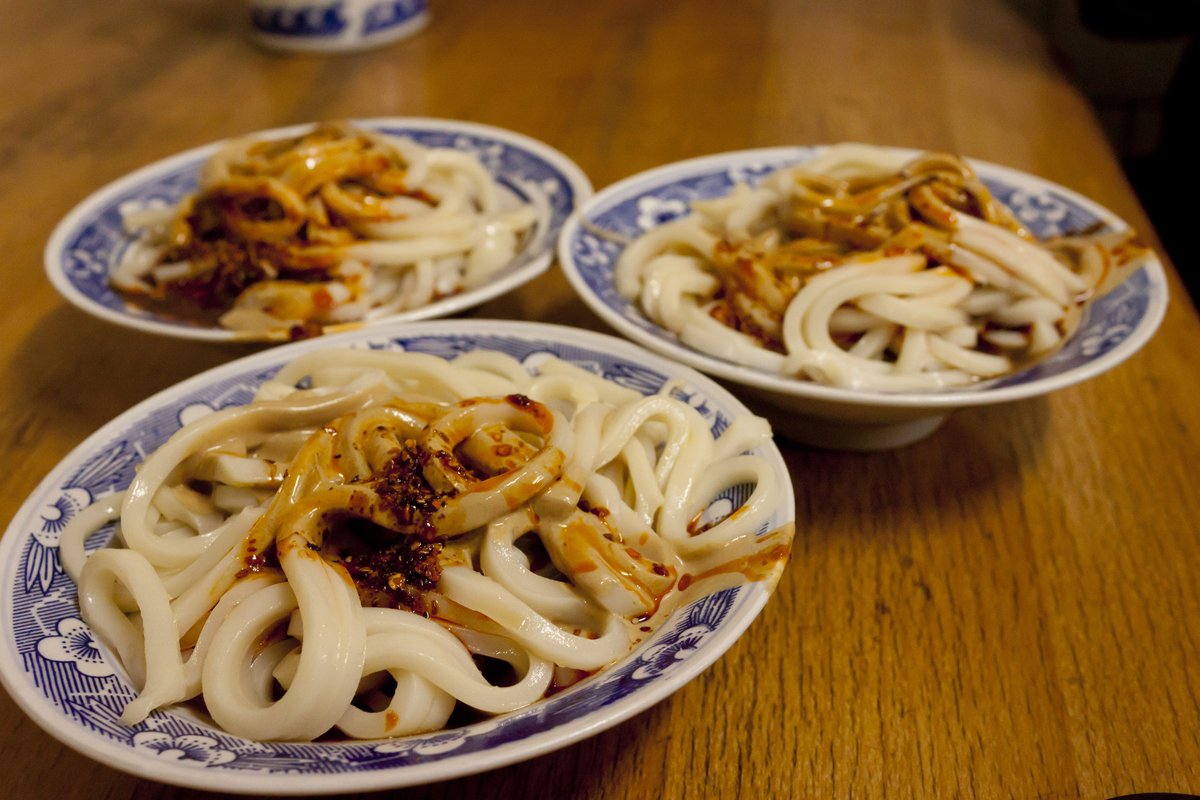
Liang Pi (凉皮), also known as Cold Skin Noodles, is the ultimate summer street food of northwest China — chewy, translucent sheets of wheat starch noodles tossed with cucumber, bean sprouts, garlic water, and a bold chili-vinegar sauce. It is served cold, refreshing, and addictive, and it is one of the most popular snacks sold from Xi’an to Xinjiang.
Liang pi is a Chinese cold noodle dish made by steaming a wheat flour batter into thin, chewy sheets, cutting them into ribbons, and tossing them with cucumbers, bean sprouts, garlic water, chili oil, and vinegar. It is a signature street food of northwest China, especially Xi’an and Shaanxi.
凉皮 means “cold skin,” and the name describes both the temperature and the texture — thin, translucent sheets with a springy chew that gives them their character. It is a Shaanxi specialty and one of the region’s 三秦套餐, the classic Xi’an street trio of liang pi, a rou jia mo, and a bottle of local soda. The dish is sold from small shops and carts across the northwest, and in summer it is the food of choice when the heat makes anything hot unappealing. Its genius is economy: flour, water, and time produce something with real structure and a complex dressing.
This recipe comes from a street vendor in Xi’an who taught me that the true secret of liang pi is the “washing” step — kneading the wheat flour dough under water to separate the gluten from the starch. The starch settles and is steamed into the noodle sheets, while the gluten is steamed separately and served as chewy gluten bites on top.
Washing the Dough: The Whole Technique
凉皮 is unusual among noodle dishes in that it is made by separating flour into its components. A stiff dough of flour and water is kneaded, then worked under water in a bowl. The starch dissolves out into the water while the gluten stays behind as a springy, elastic mass. The starchy water is left to settle for several hours, then the clear water on top is poured off, leaving a thick starch slurry at the bottom. That slurry is ladled into an oiled tray and steamed into thin sheets. The gluten, meanwhile, is steamed separately and cut into cubes — 面筋 — served on top of the noodles as chewy bites that many consider the best part.
The Dressing Is Half the Dish
- Chili oil (油泼辣子) — the defining element of Shaanxi cooking; aromatic, red, and generous
- Garlic water — crushed garlic steeped in water, which distributes the pungency evenly
- Black vinegar — Chinkiang vinegar for a mellow, malty tang
- Light soy and a pinch of sugar — salt and balance
- Sesame paste — optional but traditional in some regional versions; adds body
- Cucumber and bean sprouts — for crunch and freshness against the chewy noodles
- Toasted sesame and cilantro — for aroma and finish
Ingredients and Where to Find Them
- Bread flour — high-protein bread flour, which gives more gluten to separate
- Sichuan chili oil — chili oil with sediment
- Chinkiang black vinegar — Chinkiang vinegar
Also needed: cucumber, bean sprouts, garlic, light soy sauce, sugar, sesame oil, toasted sesame seeds, and cilantro. Salt and oil for the steaming trays.
How to Make It
- Mix 400g (3.3 cups) bread flour with 220ml water and 1 teaspoon salt; knead 10 minutes into a stiff dough, cover, and rest 30 minutes
- Place the dough in a bowl of water and knead and squeeze it for 10 minutes until the water turns milky; strain into a large container and repeat with fresh water until the water stays nearly clear
- Let the starchy water settle for 4 hours or overnight; pour off the clear water, leaving a thick slurry
- Steam the reserved gluten mass for 20 minutes, then cut into 2cm cubes
- Ladle the slurry into an oiled metal tray, about 2mm deep, and steam over high heat for 2–3 minutes until the sheet turns translucent and bubbles; cool the tray in cold water and peel off the sheet
- Repeat with the remaining slurry, brushing the tray with oil each time; stack the sheets with oil between them
- Cut the sheets into 1cm ribbons, toss with the dressing, cucumber, bean sprouts, and gluten cubes, and serve cold
Variations
- With sesame paste (麻酱凉皮) — a Beijing and northern variation with a sesame-forward dressing
- With rice flour (米皮) — 汉中米皮 uses rice instead of wheat and skips the washing step
- With more heat — extra chili oil and a spoonful of chili flakes bloomed in hot oil
- With shredded chicken — a popular addition that makes it a fuller meal
Frequently Asked Questions
Can I skip the washing step?
You can make a shortcut version by mixing flour and water into a thin batter and steaming it directly, but the texture will be softer and less chewy. The washing step is what produces authentic 凉皮, and it also gives you the gluten to serve on top.
Why did my liang pi sheets crack or tear?
The slurry was too thin, or the tray was not oiled enough. Pour off as much clear water as you can so the slurry is thick — like heavy cream — and brush the tray with oil before each sheet.
Can I make it gluten-free?
Traditional liang pi requires wheat gluten for structure. For a gluten-free version, use rice flour blended with a small amount of tapioca starch and skip the washing step.
How long does it keep?
Steamed sheets keep 2–3 days in the refrigerator, stacked with oil between them and wrapped tightly. The dressing should be added just before serving. Bring the sheets to room temperature before tossing, as they stiffen when cold.
More Northwest & Cold Dishes
Explore northwest flavors: my Rou Jia Mo 肉夹馍, the hand-pulled Lanzhou Beef Noodles 兰州拉面, or the cold Garlic White Pork 蒜泥白肉.
As an Amazon Associate, I earn from qualifying purchases. These are affiliate links at no extra cost to you.