
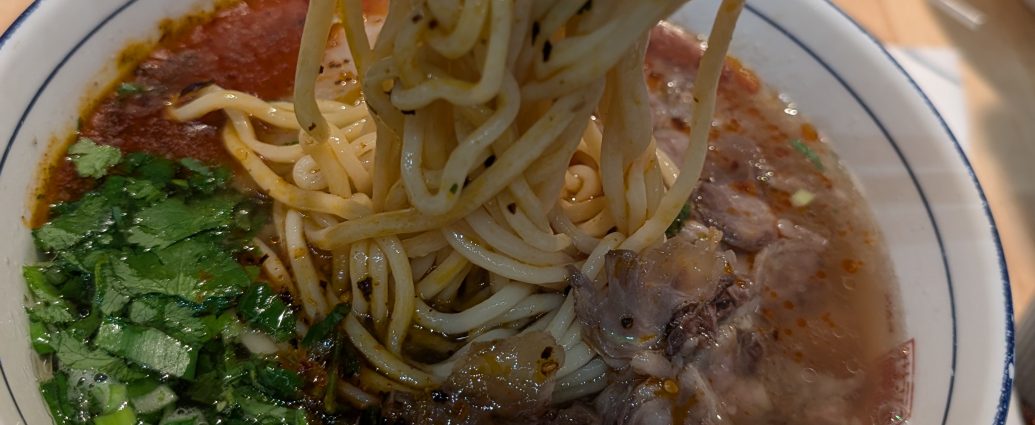
Lanzhou Beef Noodles (兰州拉面), known as Lanzhou Lamian, is one of China’s most beloved noodle soups — hand-pulled wheat noodles in a clear, beefy broth, topped with tender beef slices, fresh coriander, and chili oil. The bowl is famous for its “one clear, two white, three red, four green” appearance: clear broth, white radish, red chili oil, and green coriander. Here is the home version.
Lanzhou beef noodles (兰州拉面) are hand-pulled wheat noodles served in a clear, savory beef broth with tender beef, white radish, chili oil, and coriander. They are famous for the “one clear, two white, three red, four green” appearance and the dramatic hand-pulling technique.
The dish was created in Lanzhou, Gansu province, in the early 20th century by Ma Baozi, a cook from the Hui Muslim community, who refined a soup of beef, radish, and hand-pulled noodles into the formula that spread across China. Today it is arguably the country’s most ubiquitous restaurant — Lanzhou lamian shops appear in nearly every Chinese city, recognizable by the glass window where a noodle master stretches a single rope of dough into hundreds of strands in under a minute. The 一清二白三红四绿 (one clear, two white, three red, four green) formula is a mnemonic for the bowl’s ideal appearance: crystal-clear broth, white radish slices, red chili oil, and green herbs.
This recipe comes from a noodle master in Lanzhou who taught me the essential rule: the broth must be CLEAR. Simmer the beef gently, skim the foam constantly, and never let it boil hard — a cloudy broth is a failed Lanzhou bowl.
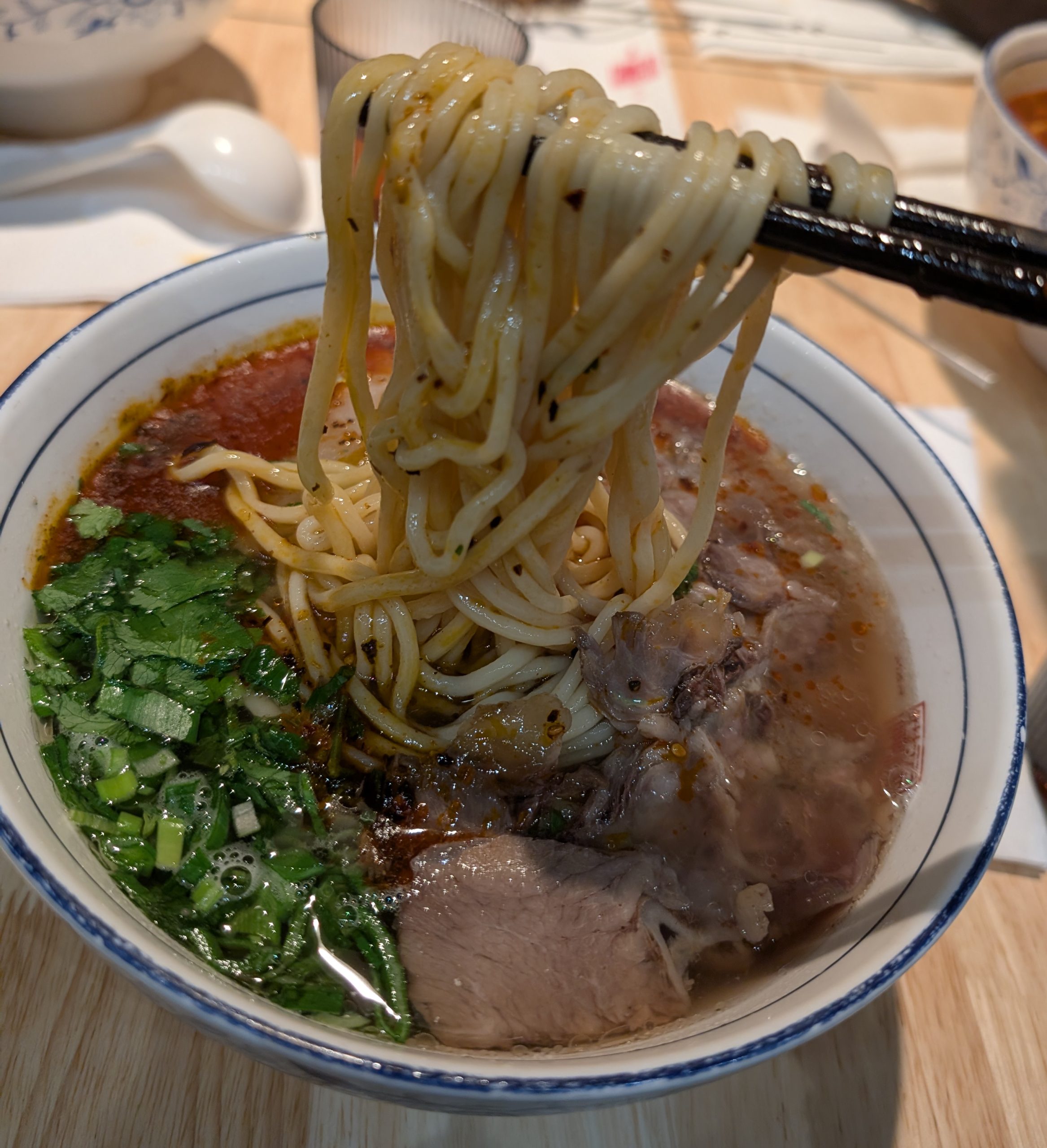
Clarity Is the Standard
Most beef noodle soups are judged on richness. Lanzhou lamian is judged on clarity — a translucent amber broth that tastes deeply of beef without a trace of cloudiness. That clarity comes from technique, not luck: the beef is soaked to remove blood, brought up to temperature slowly, skimmed relentlessly in the first hour, and never allowed to boil hard. A rolling boil emulsifies fat and protein into the liquid and turns the broth opaque and rough. Lanzhou cooks also add the radish at the right moment, since it sweetens the broth while staying white and translucent itself.
The Five Elements of a Lanzhou Bowl
- 清 — Clear broth. Beef and bone simmered gently for hours, skimmed until it shines.
- 白 — White radish. Sliced thin and simmered until translucent; it sweetens the broth.
- 红 — Red chili oil. Ladled on top at the table; the heat is added, not cooked in.
- 绿 — Green coriander and scallion. Added raw at the last second for freshness.
- 黄 — Yellow noodles. Hand-pulled wheat noodles, springy and slightly alkaline.
Ingredients and Where to Find Them
- Beef shank — beef shank with some marbling is ideal — it flavors the broth and slices beautifully
- Daikon radish — daikon radish, sliced thin
- Sichuan chili oil — chili oil with sediment for the red element
Also needed: fresh wheat noodles (or hand-pulled dough if you are ambitious), ginger, scallions, star anise, cinnamon bark, fennel seeds, Sichuan peppercorns, bay leaves, cilantro, and salt. Some cooks add a little beef bone for extra body.
How to Make It
- Soak 1kg (2.2 lb) beef shank in cold water for 2 hours, changing the water twice to draw out blood
- Place in a pot with 3 liters cold water, bring slowly to a bare simmer, and skim the foam for 20 minutes until no more rises
- Add a spice bag (2 star anise, 1 cinnamon stick, 1 teaspoon fennel, 1 teaspoon Sichuan peppercorns, 2 bay leaves), plus ginger and scallions
- Simmer gently 2 hours, skimming occasionally; never let it boil hard
- Remove the beef, strain the broth, and season with salt; slice the beef thinly across the grain
- Simmer the sliced daikon in the broth for 10 minutes until translucent
- Cook the noodles in a separate pot of water (never in the broth, which would cloud it), then place in bowls
- Ladle over the clear broth and beef, top with radish, cilantro, scallions, and a spoonful of chili oil; serve immediately
Variations
- With hand-pulled noodles — the traditional method; the dough needs alkaline water (蓬灰) and considerable practice
- With extra tendon — simmered beef tendon adds a gelatinous luxury; add it in the last hour
- Spicier version — add a second spoonful of chili oil, or a teaspoon of doubanjiang to the broth
- With lamb — a northwestern variation that swaps beef for lamb and adjusts the spices accordingly
Frequently Asked Questions
Why is my broth cloudy?
It boiled too hard, or the beef was not soaked and skimmed. Keep the pot at a bare simmer with only occasional bubbles, and skim the foam diligently during the first 20 minutes. Never cook the noodles in the broth — their starch clouds it instantly.
Do I have to hand-pull the noodles?
No. Fresh wheat noodles from a Chinese grocer give an excellent result, and dried wheat noodles work fine. Hand-pulling is a spectacular skill but not a requirement for a delicious bowl — the broth and toppings carry most of the flavor.
What cuts of beef work?
Beef shank with some marbling is ideal — it stays tender and flavors the broth. Brisket or chuck also work well.
How do I get the chili oil right?
Lanzhou chili oil is aromatic rather than searing, made by pouring hot oil over coarsely ground chilies with a little sesame and spice. Add it at the table so each diner controls the heat, and stir it in only slightly — the visual contrast of red oil on clear broth is part of the dish.
More Chinese Noodle Soups
Love noodle soups? Try my Changde Beef Noodles 常德牛肉面, the Cantonese Wonton Noodle Soup 云吞面, or the Changsha classic Hunan Rice Noodles 湖南米粉.
As an Amazon Associate, I earn from qualifying purchases. These are affiliate links at no extra cost to you.
2 Comments