
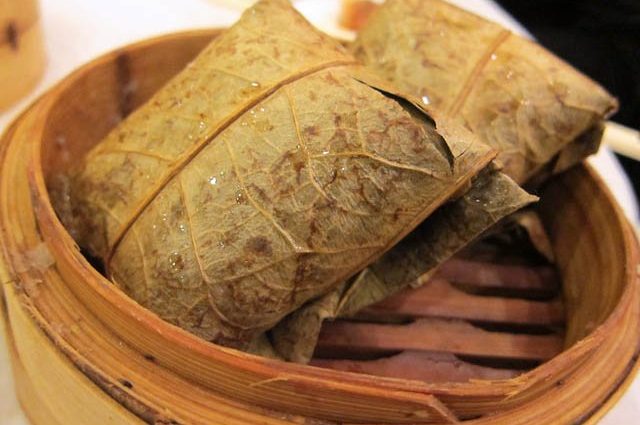
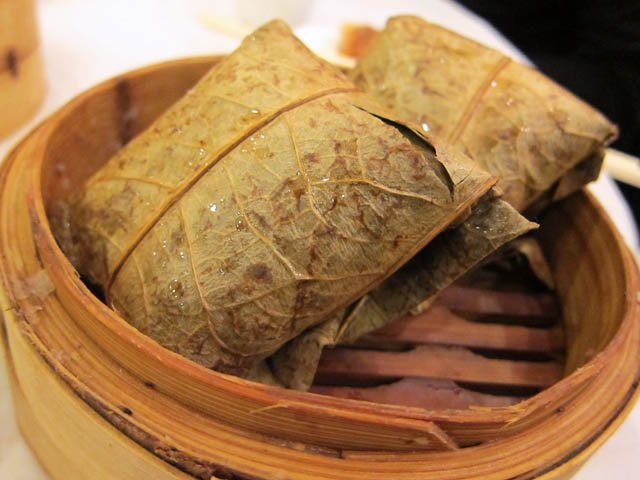
Lo Mai Gai (糯米鸡), or Sticky Rice in Lotus Leaf, is one of the most satisfying dim sum offerings — a fragrant parcel of glutinous rice steamed with Chinese sausage, chicken, shiitake mushrooms, and dried shrimp, all wrapped in a lotus leaf that infuses every grain with its unmistakable earthy aroma.
The name tells you the two components: 糯米 (glutinous rice) and 鸡 (chicken). The dish is a Cantonese dim sum institution, and its genius is the lotus leaf — a natural wrapper that steams the rice while perfuming it, so the parcel arrives at the table smelling of the leaf before you even open it. Traditional versions vary widely: some use chicken and sausage, others add salted egg yolk, dried scallop, or chestnut. The constant is the technique: rice soaked, seasoned, and steamed twice, with a savory filling folded into the middle.
This recipe comes from a dim sum master who showed me that the key to perfect lo mai gai is soaking the rice overnight and steaming it twice — once to cook the rice, and again after wrapping, to marry all the flavors together in the lotus leaf.
Why the Rice Is Steamed Twice
Glutinous rice behaves nothing like ordinary rice. It needs a long soak — ideally overnight — to hydrate fully, and it cooks best by steaming rather than boiling, which keeps the grains distinct and chewy instead of turning them into porridge. The first steam cooks the rice through with its seasoning; the second steam, after wrapping, does something different: it drives the lotus leaf’s aroma into the grains and lets the filling’s juices soak downward into the rice. Skipping the second steam gives you rice and filling sitting side by side rather than a single perfumed parcel.
Soaking, Seasoning, and Wrapping
- Soak the rice 6–8 hours (or overnight) in plenty of cold water; the grains should crush easily between your fingers
- Drain thoroughly and toss with light soy, dark soy, oyster sauce, sesame oil, and a pinch of sugar before the first steam
- Season the filling separately and let it cool — hot filling will steam the rice unevenly
- Soften the lotus leaves in warm water for 30 minutes, then wipe dry; brittle leaves crack when folded
- Wrap tight and seam-down so the parcel holds its shape and no steam escapes
Ingredients and Where to Find Them
- Dried lotus leaves — dried lotus leaves; look for large, unbroken ones
- Glutinous rice — glutinous (sticky) rice, long-grain variety
- Chinese sausage (lap cheong) — lap cheong, diced
Also needed: chicken thigh, dried shiitake, dried shrimp, garlic, ginger, oyster sauce, light and dark soy, Shaoxing wine, sesame oil, and sugar. Salted egg yolk is a luxurious optional addition.
How to Make It
- Soak 400g (14 oz) glutinous rice overnight; drain and mix with 1 tablespoon light soy, 1 teaspoon dark soy, 1 tablespoon oyster sauce, and 1 teaspoon sesame oil
- Steam the rice over boiling water for 25 minutes until just cooked; set aside
- Soak and dice 6 dried shiitake and 20g dried shrimp; dice 2 lap cheong links
- Stir-fry the sausage, shrimp, and shiitake with garlic and ginger; add 250g diced chicken thigh and season with oyster sauce, soy, Shaoxing wine, and sugar; cook through and cool
- Soften 8 lotus leaves in warm water 30 minutes; pat dry and trim the hard stems
- Place a layer of rice on each leaf, add filling in the center, top with more rice, and fold into a tight parcel
- Steam the parcels 20–25 minutes so the leaf aroma permeates the rice; serve hot, opening the leaf at the table
Variations
- With salted egg yolk — a quarter yolk in the center adds richness and is common in banquet versions
- With chestnut — diced cooked chestnut adds sweetness and a starchy bite
- With dried scallop — a few soaked scallops shredded into the filling push the umami much higher
- Without lotus leaves — steam the rice and filling in a heatproof bowl for a homestyle “lo mai gai bowl”; you lose the leaf aroma but save the wrapping time
Frequently Asked Questions
Can I use regular rice instead of glutinous rice?
No — this dish depends on glutinous (sticky) rice for its chewy, cohesive texture. Regular long-grain rice will not hold the parcel together and tastes entirely different. Look for rice labeled 糯米, sweet rice, or sticky rice.
Do I have to soak the rice overnight?
At least 6 hours is strongly recommended. A shorter soak leaves the grains hard in the center, and they will not cook evenly during steaming. If you are short on time, soak in warm water for 3 hours as a compromise.
How long do these keep?
Assembled (uncooked) parcels freeze beautifully for up to 3 months. Steam from frozen for 25 minutes. Cooked parcels keep 3 days in the fridge — re-steam for 10 minutes.
Where can I buy lotus leaves?
Dried lotus leaves are sold at Chinese grocers, often near the dried mushrooms, and online. They keep for a year or more in a sealed bag in a cool, dry place. Frozen fresh leaves are sometimes available and need no soaking.
More Dim Sum Classics
Build a full dim sum table with my Shu Mai 烧卖, the delicate Har Gow 虾饺, or the crisp Woo Gok 蜂巢芋角.
As an Amazon Associate, I earn from qualifying purchases. These are affiliate links at no extra cost to you.

1 Comment