
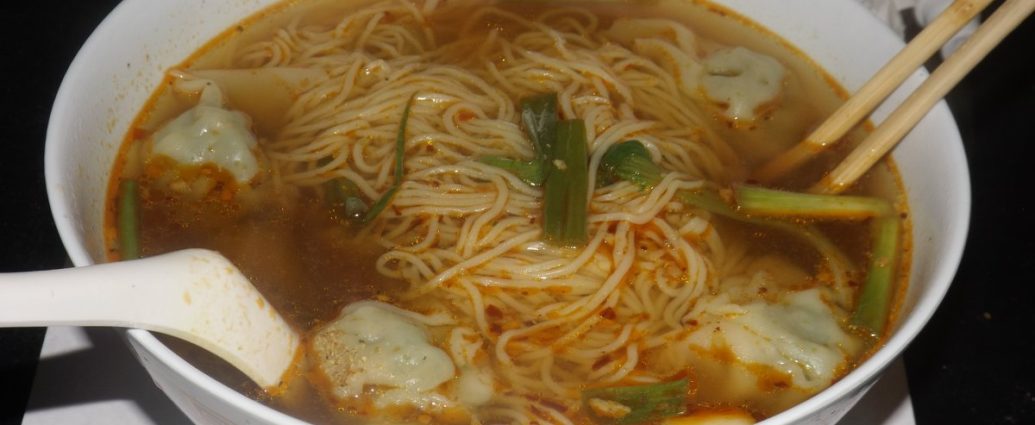
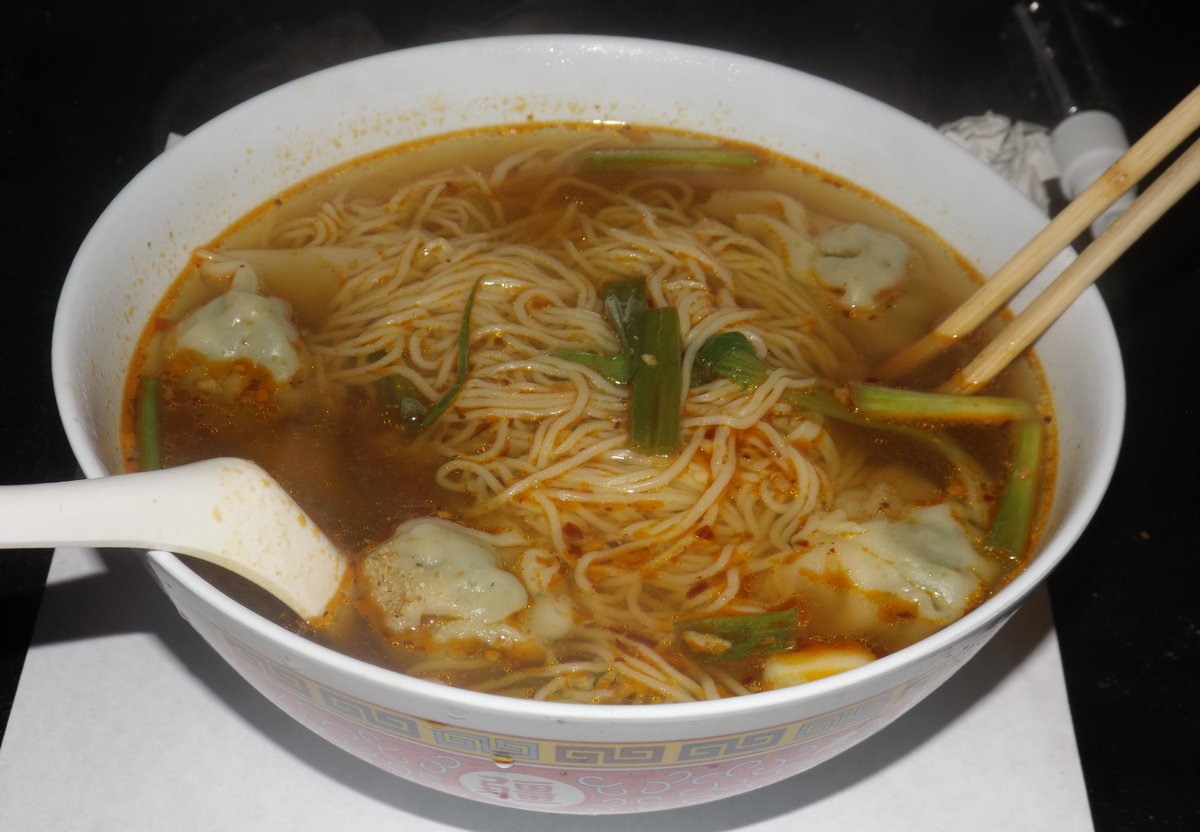
Wonton Noodle Soup (云吞面) is Cantonese cuisine’s most iconic noodle dish — springy egg noodles in a clear, golden broth topped with delicate shrimp-and-pork wontons. The three pillars of a great wonton noodle soup are: bouncy noodles, silky wontons, and a clean, sweet broth. Here is how to make it authentically at home.
Wonton noodle soup is a Cantonese dish of thin egg noodles served in a clear broth with wonton dumplings (shrimp and pork), typically garnished with chives and served with a small bowl of soy or chili for dipping the wontons.
云吞面 is a dish with a firm sense of regional identity. It originated in Guangzhou and matured in Hong Kong, where it became a fixture of the city’s 面家 — small noodle shops, often family-run, that serve little else. A traditional bowl follows a strict formula: a small portion of thin egg noodles, four or five wontons, a clear broth, and a scattering of yellow chives (韭黄). Regulars judge a shop on the broth first, the noodles second, and the wontons third — and they will notice if the noodles were not rinsed in cold water before serving, since that step is what makes them springy.
This recipe comes from a noodle master in Hong Kong’s Yau Ma Tei district, who taught me that the broth is the heart of the dish — a simple combination of dried shrimp, dried scallops, and pork bones simmered for 2 hours to create a sweet, crystal-clear elixir that needs almost no seasoning.
The Broth: Clear, Sweet, and Barely Seasoned
The broth is where a good 云吞面 distinguishes itself, and its defining quality is clarity — a Cantonese broth should be golden and transparent, not cloudy. That is achieved by skimming carefully, keeping the pot at a bare simmer rather than a boil, and using ingredients that add sweetness without clouding: dried shrimp (虾米), dried scallops (瑶柱), and pork bones, sometimes with a piece of dried flounder (大地鱼) for depth. The result needs almost no seasoning — a pinch of salt at the end, and that is all. If your broth requires soy sauce to taste good, something went wrong earlier.
The Noodles: Alkaline and Brief
- Fresh wonton noodles contain lye water — the alkaline agent gives them their yellow color and springy bite; they are not interchangeable with ordinary egg noodles
- Cook them for 1–2 minutes only — fresh thin noodles overcook almost instantly
- Rinse in cold water — this stops the cooking and removes surface starch, which is what keeps the noodles bouncy
- Reheat in the hot broth for 5 seconds — the traditional method: the noodles are served warm, not hot, so they do not continue cooking at the table
- Portion small — a proper bowl has a modest nest of noodles; this is a snack, not a pasta course
- Serve immediately — alkaline noodles soften within minutes
The Wontons
The classic Cantonese wonton is filled with whole or roughly chopped shrimp rather than ground meat, mixed with a little minced pork for richness, plus white pepper, sesame oil, and a pinch of sugar. The wrapper is thin and square, and the traditional fold is a loose pouch rather than a tight parcel — the goal is a wonton with a flowing, delicate tail that catches the broth. Cooked wontons are poached separately from the noodles and added to the bowl at the end, so the noodles do not cloud the broth.
Ingredients and Where to Find Them
- Fresh wonton noodles — fresh alkaline wonton noodles
- Dried scallops and shrimp — dried scallops and dried shrimp for the broth
- Wonton wrappers — thin square wonton wrappers
Also needed: raw shrimp, ground pork, pork bones, ginger, scallions, yellow chives (韭黄), light soy sauce, sesame oil, white pepper, sugar, cornstarch, and Shaoxing wine.
How to Make It
- Simmer 1kg (2.2 lb) pork bones with 30g dried shrimp, 20g dried scallops, and ginger in 3 liters water for 2 hours, skimming often; strain and season lightly with salt
- Chop 300g (10.5 oz) shrimp roughly and mix with 150g (5 oz) ground pork, 1 egg white, 1 tablespoon cornstarch, 1 teaspoon sesame oil, 1 teaspoon sugar, and white pepper; chill 30 minutes
- Fill and fold 30 wontons into loose pouches, sealing the edges with water
- Bring a pot of water to a boil and cook the wontons for 4–5 minutes until they float; lift out and set aside
- Cook 300g (10.5 oz) fresh noodles in boiling water for 1–2 minutes, then drain and rinse under cold water
- Divide the noodles between bowls, add the wontons, and ladle over the hot broth
- Top with yellow chives and a drizzle of sesame oil; serve with a small dish of soy or chili for dipping the wontons
Variations
- With 捞面 (dry-tossed) — noodles tossed in soy and sesame oil with the broth served on the side
- With beef brisket — 牛腩面 adds braised brisket, a common Hong Kong combination
- With shrimp only — 鲜虾云吞 uses all shrimp for a lighter, sweeter wonton
- With wontons in chili oil — the same wontons served Sichuan-style with chili oil and vinegar
Frequently Asked Questions
How do I get the noodles bouncy and springy?
Use fresh wonton noodles (they contain a little lye water, which gives the bounce), cook them very briefly (1-2 minutes), and rinse under cold water immediately to stop cooking. Reheat by dunking in the hot broth for 5 seconds just before serving.
Why is my broth cloudy?
The pot boiled rather than simmered, or the bones were not skimmed. Keep the broth at a bare simmer and skim the foam regularly for the first 30 minutes — a rolling boil emulsifies fat and protein into the liquid and makes it opaque.
Can I use dried noodles?
Yes, but the texture differs. Dried wonton noodles take 3–4 minutes to cook and are less springy than fresh ones. If using dried, still rinse them in cold water after cooking.
What are yellow chives and can I substitute them?
韭黄 are chives grown without light, which makes them pale yellow and milder than green chives. They are the traditional garnish for wonton noodle soup. Scallions are an acceptable substitute, though the flavor is sharper.
More Cantonese Classics
Explore more Cantonese favorites: my Har Gow 虾饺, the open-topped Shu Mai 烧卖, or the poached White Cut Chicken 白切鸡.
As an Amazon Associate, I earn from qualifying purchases. These are affiliate links at no extra cost to you.