
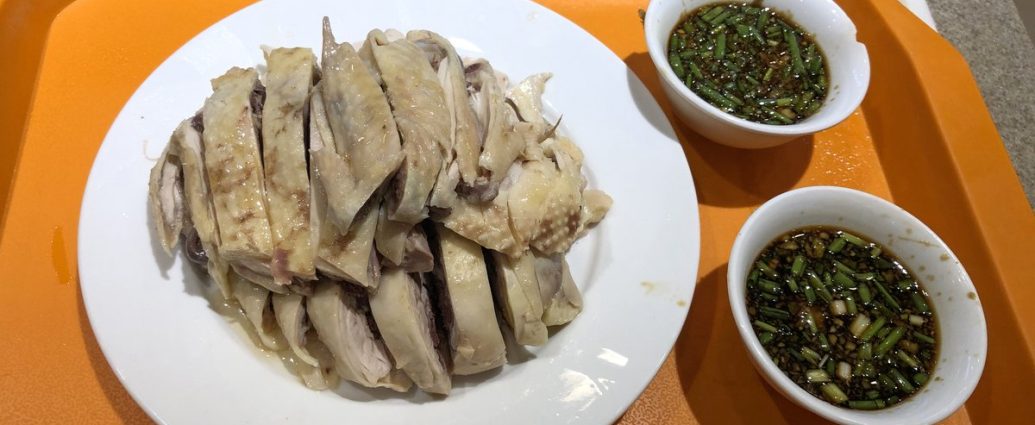
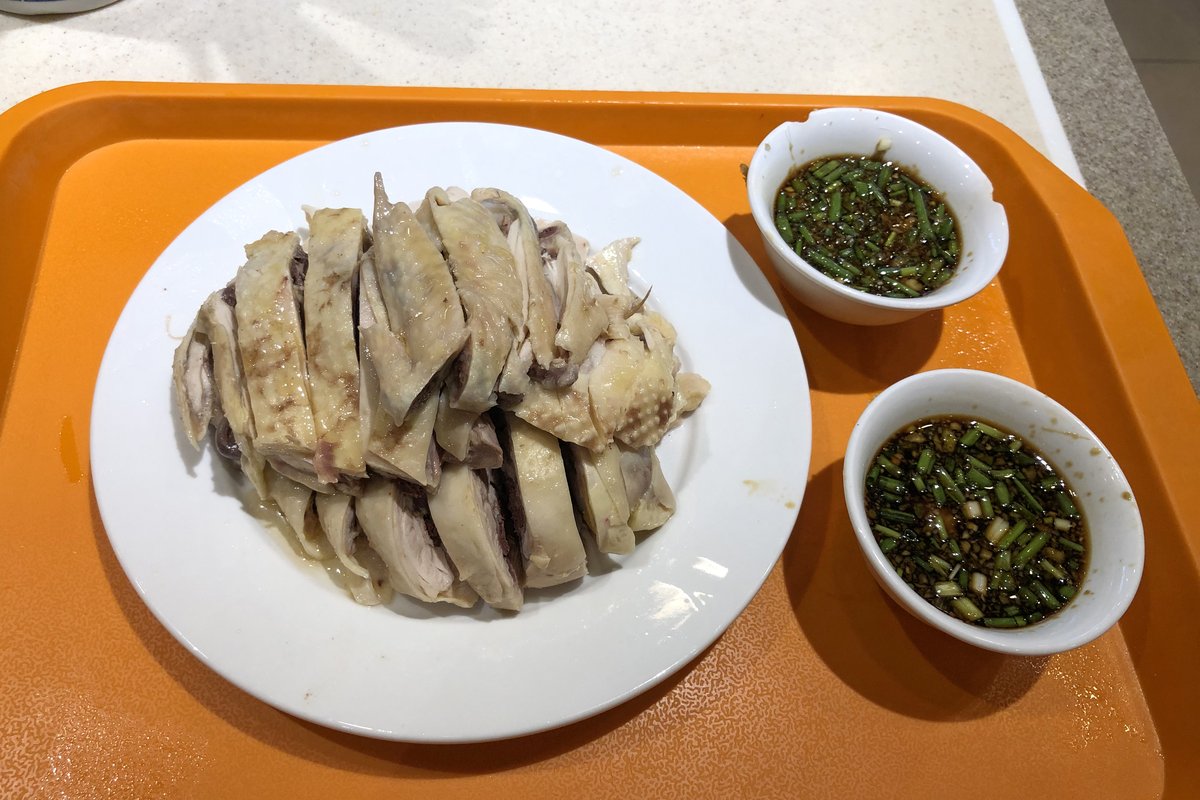
White Cut Chicken (白切鸡) is the ultimate test of a Cantonese chef’s skill — a whole chicken poached to silky perfection, served at room temperature with ginger-scallion oil and soy dipping sauce. The skin is jelly-like and smooth, the meat impossibly tender and juicy, and the flavor pure and clean. It is the most elegant and simplest of all Cantonese chicken dishes.
There is a Cantonese saying: 无鸡不成宴 — “no banquet is complete without chicken.” And 白切鸡 is the form it most often takes, because it is the dish that hides nothing. There is no sauce to mask a dry breast, no crust to distract from the texture. The chicken is poached, chilled, chopped, and served; everything depends on the bird and the cook’s timing. It is also why Cantonese diners are so particular about breeds — 清远鸡, 湛江鸡, and 文昌鸡 are prized for their flavor and texture, and a proper 白切鸡 is judged on the skin’s gelatinous bounce and the meat’s juiciness at the bone.
This recipe comes from a veteran chef in Guangzhou who taught me that the secret to perfect white cut chicken is the three-dip method: dip the chicken in boiling broth, lift it out to let the cavity drain, then dip again. This ensures the inside cooks at the same rate as the outside.
The Three-Dip Method and the Ice Bath
Two techniques define the texture. The three-dip (三提三浸) solves a physics problem: a whole chicken has a thick breast and a dense cavity, and simply dropping it into hot water means the outside overcooks while the inside stays raw. Lifting the bird and letting the cavity drain and refill equalizes the temperature throughout, so the whole chicken reaches doneness at the same moment. The ice bath does the rest — plunging the cooked chicken into ice water stops the cooking instantly and contracts the skin against the meat, producing the signature bouncy, jelly-like texture that 白切鸡 is famous for. Skip it and the skin turns soft and flabby.
Judging Doneness
- Bare simmer, never a boil — a rolling boil toughens the meat; small bubbles only
- About 25–30 minutes for a 1.5kg bird — timing depends on size, so check rather than guess
- Test the thigh — pierce the thickest part; the juices should run clear, not pink
- Slightly pink at the bone is traditional — Cantonese diners prize the meat just barely set, moist and faintly rosy near the bone
- Rest in ice water 10 minutes — then drain and air-dry before chopping
- Chop, don’t carve — a cleaver through the bone gives the traditional pieces with skin and bone attached
Ingredients and Where to Find Them
- Whole chicken — a good whole chicken, ideally free-range; the quality of the bird is the dish
- Peanut oil — peanut oil for the ginger-scallion sauce; its aroma is traditional
- Light soy sauce — light soy sauce for the dipping sauce
Also needed: ginger, scallions, Shaoxing wine, salt, and ice. A little sesame oil and sugar round out the dipping sauces.
How to Make It
- Bring a large pot of water with 5 ginger slices, 4 scallions, and 2 tablespoons Shaoxing wine to a bare simmer
- Lower the whole chicken in, lift it out to drain the cavity, and repeat three times (三提三浸)
- Submerge the chicken, cover, and poach at a bare simmer for 25–30 minutes, keeping the water just below boiling
- Test the thigh — the juices should run clear; if not, poach 5 minutes more
- Plunge the chicken into ice water for 10 minutes, then drain and air-dry 15 minutes
- Chop into pieces with a cleaver, keeping the skin attached, and arrange on a plate
- Make the ginger-scallion oil: mince 40g ginger and 4 scallions, add 1 teaspoon salt, and pour over 4 tablespoons of smoking hot peanut oil; serve alongside with light soy sauce
Variations
- With 盐焗鸡 — the same bird cooked in a salt crust instead of poached; see my Salt Baked Chicken 盐焗鸡
- With Shaoxing wine — a splash in the poaching water adds aroma; traditional in some Guangzhou kitchens
- With a chili dip — a third sauce of chili oil and vinegar alongside the ginger and soy
- With 沙姜 (sand ginger) — a Hakka-leaning dipping sauce with a sharper, more aromatic ginger
Frequently Asked Questions
Why did my chicken turn out dry?
The water boiled instead of simmered, or the chicken cooked too long. Keep the pot at a bare simmer with only occasional bubbles, and check doneness by piercing the thigh rather than relying on time alone. The ice bath also helps retain moisture by stopping the cooking immediately.
Why is the skin not jelly-like?
The ice bath is what creates that texture — plunging the hot chicken into ice water contracts the skin and sets the collagen beneath it. If you skipped it or used cool rather than iced water, the skin will be soft instead of bouncy.
What is the best dipping sauce?
The classic pairing is ginger-scallion oil (minced ginger + scallions + salt, drizzled with hot peanut oil) and a simple soy dipping sauce (light soy sauce + a dash of vinegar). Some also serve with chili oil on the side.
Can I make it ahead?
Yes — poach and ice-bath the chicken, then refrigerate it whole for up to a day. Chop it just before serving, and bring it to room temperature for 20 minutes; 白切鸡 is traditionally served cool or at room temperature, never hot.
More Cantonese Classics
Love Cantonese cooking? Try my Honey Char Siu 蜜汁叉烧, the crisp Siu Yuk 脆皮烧肉, or the lacquered Roast Duck 烧鸭.
As an Amazon Associate, I earn from qualifying purchases. These are affiliate links at no extra cost to you.
1 Comment