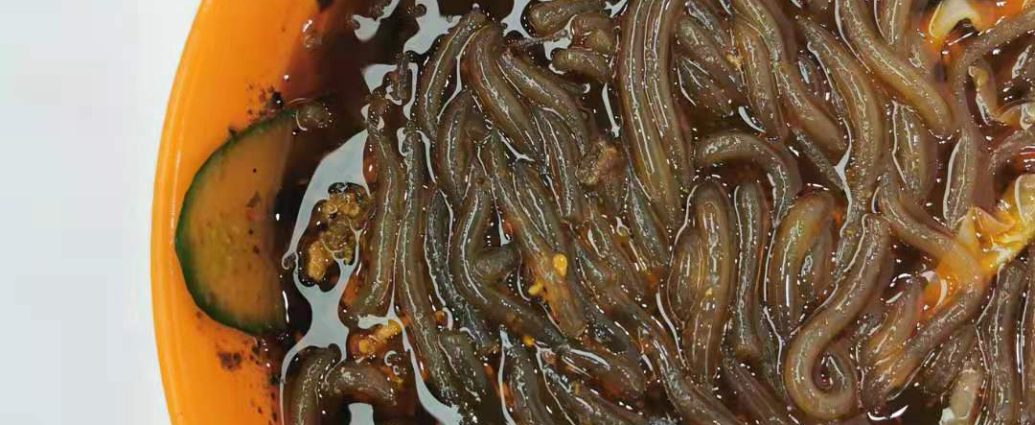
Hot and Sour Rice Noodles (酸辣粉) is the fiery street snack of Chongqing and Sichuan — springy sweet potato vermicelli in a mouth-numbing, tongue-tingling broth of chili oil, black vinegar, and Sichuan peppercorns, topped with peanuts and preserved vegetables. It is sour, spicy, numbing, and completely addictive. Here is the authentic street-stall recipe.
Suan la fen (酸辣粉) is a Chongqing street noodle dish made with sweet potato vermicelli in a hot and sour broth of chili oil, black vinegar, and Sichuan peppercorns, topped with peanuts, scallions, and preserved vegetables.
酸辣粉 is the taste of a Chongqing night market: a paper bowl of translucent noodles, a slick of red chili oil on top, and a scent that arrives before the bowl does — vinegar sharpness, toasted chili, and the citrus-like edge of Sichuan peppercorn. The dish belongs to the same 酸辣 family as 酸辣汤 and 酸辣土豆丝, but where those are built on a broth or a stir-fry, 酸辣粉 is a study in seasoning balance: the noodles themselves are almost neutral, and everything depends on how the bowl is built. In Chongqing, the vendor’s reputation rests on that ratio, and every stall guards its own.
This recipe comes from a night market vendor in Chongqing who taught me the essential balance: the broth must be equal parts numbing, spicy, and sour — with the vinegar added LAST so its bright tang hits the nose. The sweet potato noodles are the key: they stay chewy and never turn mushy.
Building the Bowl, Not Just the Broth
Most noodle soups are made in a pot; 酸辣粉 is made in a bowl. The seasoning goes in first — chili oil, vinegar, soy, garlic water, ground Sichuan peppercorn, a pinch of sugar and MSG if you use it — and the hot broth is poured over it, blooming the aromatics. Only then do the cooked noodles go in. This is why two bowls made from the same pot can taste completely different: the balance is set per bowl, at the last moment, by hand. It also means you can adjust each serving to the eater, which is exactly what street vendors do.
Why Sweet Potato Vermicelli
- Chewy, springy texture — sweet potato starch noodles stay resilient in hot broth where wheat noodles soften
- Naturally gluten-free — a bonus for anyone avoiding wheat
- Absorbs seasoning without going limp — the noodles carry the sauce instead of dissolving into it
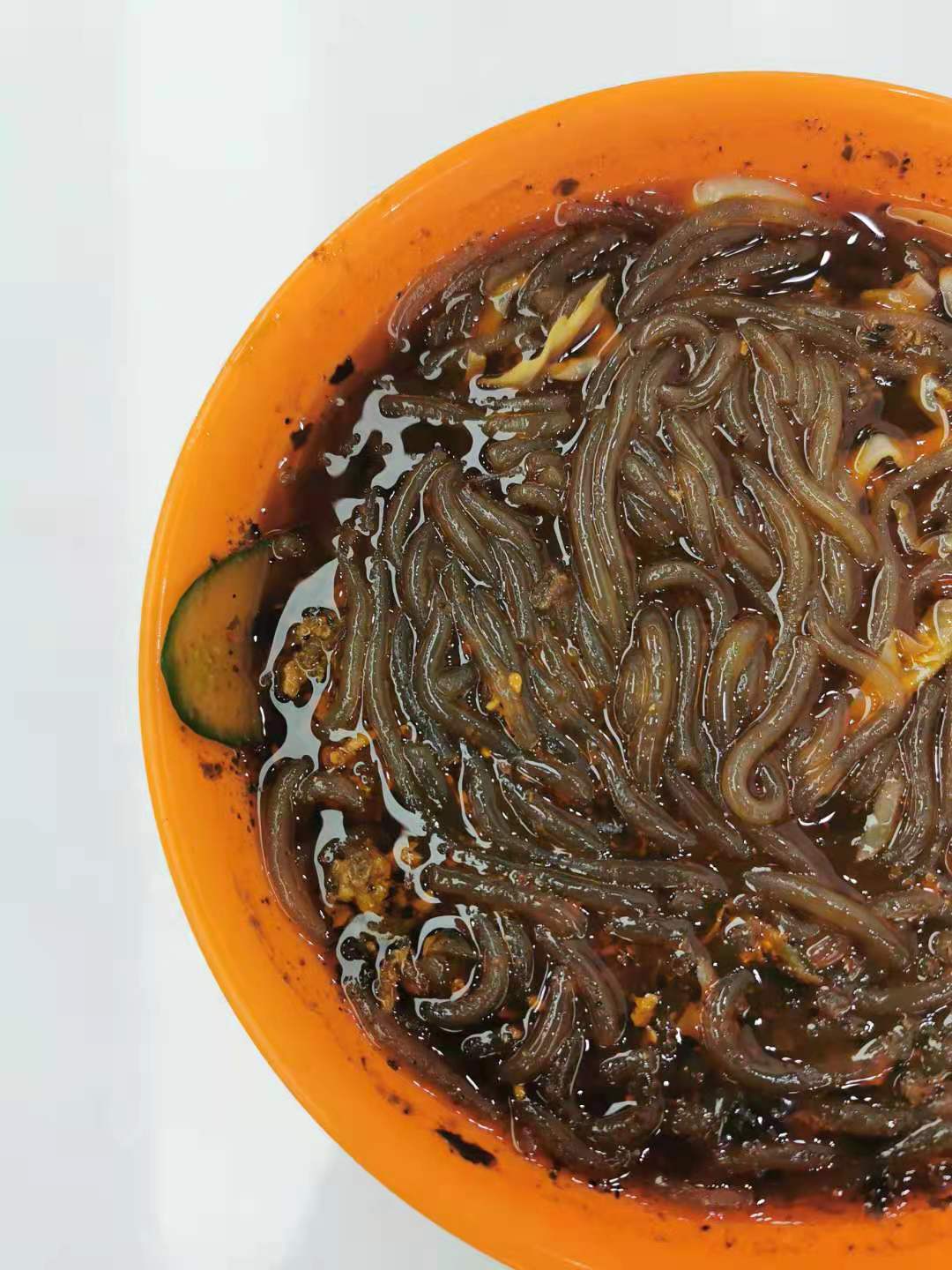
- Look for 红薯粉条 — thick, grayish, slightly irregular strands; thin glass noodles are a different ingredient
Ingredients and Where to Find Them
- Sweet potato vermicelli — sweet potato starch noodles, soaked until pliable
- Chinkiang black vinegar — Chinkiang vinegar is the sour backbone; do not substitute balsamic
- Sichuan chili oil — chili oil with sediment (红油) gives color and body
Also needed: Sichuan peppercorns, garlic, light soy sauce, sugar, roasted peanuts, preserved mustard greens or 芽菜, cilantro, and scallions. A spoonful of lard or chicken fat is traditional and makes the broth noticeably richer.
How to Make It
- Soak 200g (7 oz) sweet potato vermicelli in warm water for 30 minutes until pliable; drain
- Make the seasoning base in each serving bowl: 2 tablespoons chili oil, 2 tablespoons Chinkiang vinegar, 1 tablespoon light soy, 1 teaspoon garlic water, 1/2 teaspoon ground Sichuan peppercorn, 1/2 teaspoon sugar, and a pinch of MSG if using
- Bring 1 liter of chicken stock or water to a rolling boil with a slice of ginger
- Cook the noodles in the boiling liquid for 3–4 minutes until translucent and chewy; lift them straight into the bowls
- Ladle the hot broth over the noodles to bloom the seasoning — about 250ml (1 cup) per bowl
- Top with crushed roasted peanuts, chopped preserved vegetables, cilantro, and scallions
- Taste and adjust: more vinegar for tang, more chili oil for heat, more peppercorn for numbness; serve immediately
Variations
- With minced pork — a spoonful of 杂酱 (fried minced pork with doubanjiang) turns it into a heartier bowl
- With greens — a handful of blanched bok choy or 空心菜 adds freshness and color
- With a soft egg — a jammy soft-boiled egg on top is a popular modern upgrade
- Milder version — halve the chili oil and peppercorn, and lean on vinegar and garlic for flavor
Frequently Asked Questions
What noodles are used in suan la fen?
Sweet potato starch vermicelli (红薯粉条) — thick, slightly gray, and springy. They are not the same as mung bean glass noodles (粉丝), which are thinner and softer, or rice noodles, which have a completely different texture. Look for the words 红薯粉条 or sweet potato starch noodle.
Why is mine not sour enough?
Add the black vinegar generously and at the END — vinegar mellowed by heat loses its brightness. Taste and add more until the tang is unmistakable. Chinkiang vinegar is milder than white vinegar, so it takes more than you expect.
Is suan la fen gluten-free?
Sweet potato vermicelli are naturally gluten-free, and so is the rest of the bowl as long as you use tamari or a gluten-free soy sauce. Check your chili oil and preserved vegetables, which occasionally contain wheat-based additives.
Can I make it ahead?
The seasoning base can be mixed in advance and refrigerated for up to a week — that is how street vendors work. Cook the noodles to order; they lose their springy bite within an hour of cooking. Soak the dried noodles ahead, but keep them in water no more than a day.
More Sichuan Street Favorites
Love the hot-and-sour style? Try my Dan Dan Noodles 担担面, the Chengdu classic Hong You Chao Shou 红油抄手, or the soup version Hot and Sour Soup 酸辣汤.
As an Amazon Associate, I earn from qualifying purchases. These are affiliate links at no extra cost to you.