
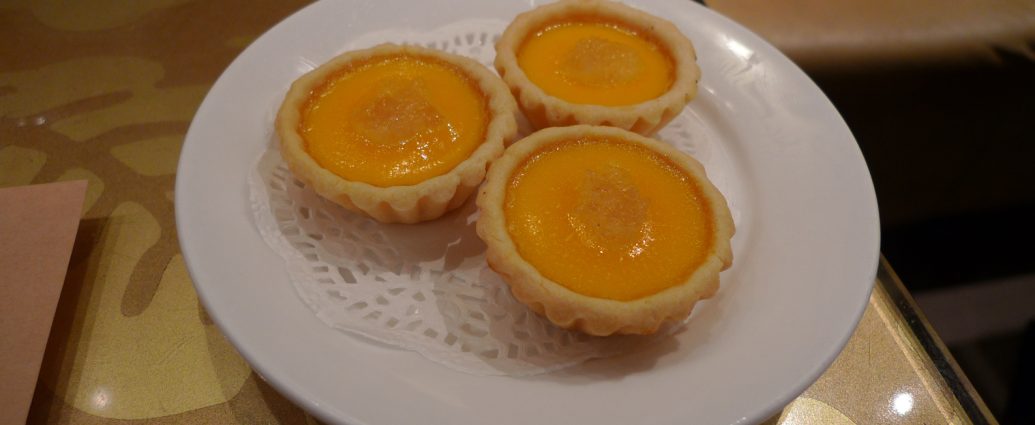
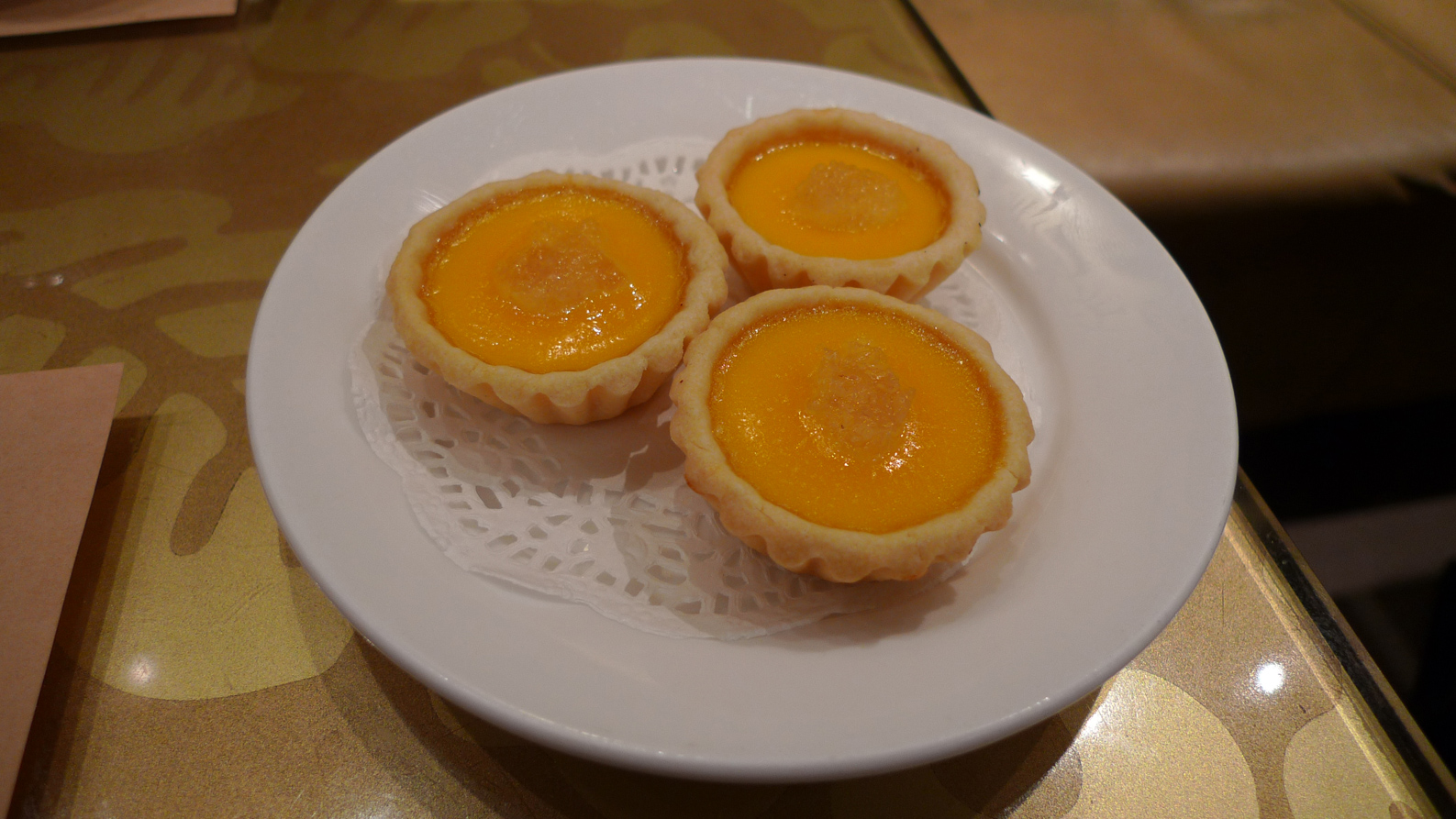
Egg Tart (蛋挞) is Hong Kong’s most beloved bakery treat — a flaky, buttery shortcrust shell filled with a silky, golden egg custard that shimmers like sunlight. Whether from a cha chaan teng (HK cafe) or a dim sum restaurant, the warm, eggy, slightly caramelized tart is pure comfort. Here is the classic Hong Kong-style recipe.
An egg tart (蛋挞) is a Hong Kong pastry of a flaky shortcrust shell filled with a silky, sweet egg custard and baked until golden. It is served warm and is a signature treat of Hong Kong cafes and dim sum restaurants.
The egg tart arrived in Hong Kong by way of two traditions. The Portuguese pastel de nata came through Macau, bringing a caramelized, blowtorched top; the British custard tart came through colonial tea culture. Cantonese bakers merged them into something new — a delicate shortcrust shell with a smooth, pale-gold custard — and by the mid-20th century the 蛋挞 had become the signature item of the cha chaan teng, Hong Kong’s uniquely local cafe. There are two main styles: the flaky 酥皮 version, made with laminated pastry, and the crumbly 牛油皮 shortcrust version, which is what most Hong Kong bakeries sell. This recipe is the shortcrust style, the one you get with your milk tea.
This recipe comes from a Hong Kong bakery master who taught me the essential secret: the custard must be strained through a fine sieve and rested before baking, and the tarts must bake at a HIGH temperature briefly to caramelize the top without overcooking the silky center.
Strain the Custard, Then Rest It
Custard is an emulsion of egg and milk, and whisking introduces air. Those air bubbles are invisible in the bowl but become visible pockmarks and a spongy surface once baked — the difference between a professional tart and a homemade one. Straining the custard through a fine sieve removes the chalazae (the egg white cords), any unincorporated egg, and most of the foam. Letting it rest for 15–20 minutes after straining lets the remaining bubbles rise and dissipate. It is a two-minute step that transforms the texture.
The Shell: Cold, Cold, Cold
- Butter must be cold — warm butter blends into the flour and produces a tough, bready shell instead of a flaky one
- Handle the dough as little as possible — overworking develops gluten, which is the enemy of flakiness
- Chill the lined shells before filling — 30 minutes in the freezer prevents the pastry from slumping in the oven
- Press, do not roll, for shortcrust — pressing the dough into the tin gives the characteristic crumbly texture of Hong Kong tarts
- Prick the base lightly if using a loose-bottom tin, so steam can escape
Ingredients and Where to Find Them
- Cake flour — low-protein cake flour for a tender, crumbly shell
- Evaporated milk — evaporated milk gives the custard its characteristic richness
- Egg tart tins — individual tart tins, about 7cm wide
Also needed: butter, powdered sugar, egg yolk, whole eggs, caster sugar, vanilla, and a pinch of salt. Some recipes add a little custard powder for color and stability.
How to Make Them
- Shell: rub 150g (2/3 cup) cold butter into 250g (2 cups) cake flour with 50g powdered sugar and a pinch of salt until it resembles breadcrumbs
- Add 1 egg and mix gently into a dough; do not knead. Chill 30 minutes
- Divide into 12 pieces and press into the tart tins, working the dough up the sides evenly
- Freeze the lined shells for 30 minutes
- Custard: whisk 3 egg yolks and 1 whole egg with 80g (1/3 cup) sugar, 150ml evaporated milk, 100ml water, and 1 teaspoon vanilla — do not beat in air
- Strain through a fine sieve and rest 15 minutes; pour into the shells to three-quarters full
- Bake at 220°C (425°F) for 12–15 minutes until the custard is set with a slight wobble and the tops are golden and speckled; cool 10 minutes before removing from the tins
Variations
- Portuguese-style — bake hotter and finish with a blowtorch for the signature burnt, caramelized top
- Flaky pastry (酥皮) — laminate the dough with butter layers for the other classic Hong Kong style
- With pandan — add 1 teaspoon pandan extract to the custard for color and aroma
- Mini tarts — use smaller tins and bake 9–10 minutes; popular as dim sum portions
Frequently Asked Questions
Why did my custard turn rubbery?
It was overcooked. Custard sets at around 80°C (175°F); above that, the egg proteins tighten and squeeze out water. Pull the tarts when the center still wobbles slightly — it will finish setting as it cools. A hot oven for a short time is better than a moderate oven for a long one.
Why is my pastry tough instead of flaky?
The butter was too warm, or the dough was overworked. Keep everything cold, handle the dough minimally, and press it into the tins rather than kneading it. Chilling the lined shells before filling also helps them hold their shape.
What is the difference between Hong Kong and Portuguese egg tarts?
Portuguese pastel de nata uses a laminated, very flaky pastry and is baked at extremely high heat so the top caramelizes and blisters. Hong Kong-style tarts use a crumbly shortcrust shell and a smoother, paler custard, and are served just warm from the oven.
How long do they keep?
Best eaten warm, within a few hours. Reheat in a 150°C oven for 5 minutes. Do not microwave — it turns the custard rubbery.
More Dim Sum Sweets
Complete your dim sum spread with the airy Malay Cake 马拉糕, the creamy Custard Buns 奶黄包, or the molten Salted Egg Yolk Custard Buns 流沙包.
As an Amazon Associate, I earn from qualifying purchases. These are affiliate links at no extra cost to you.
1 Comment