
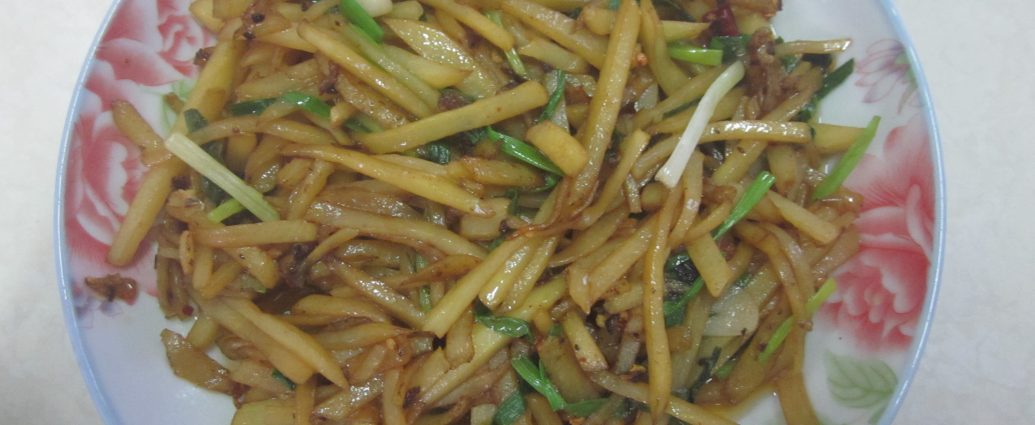
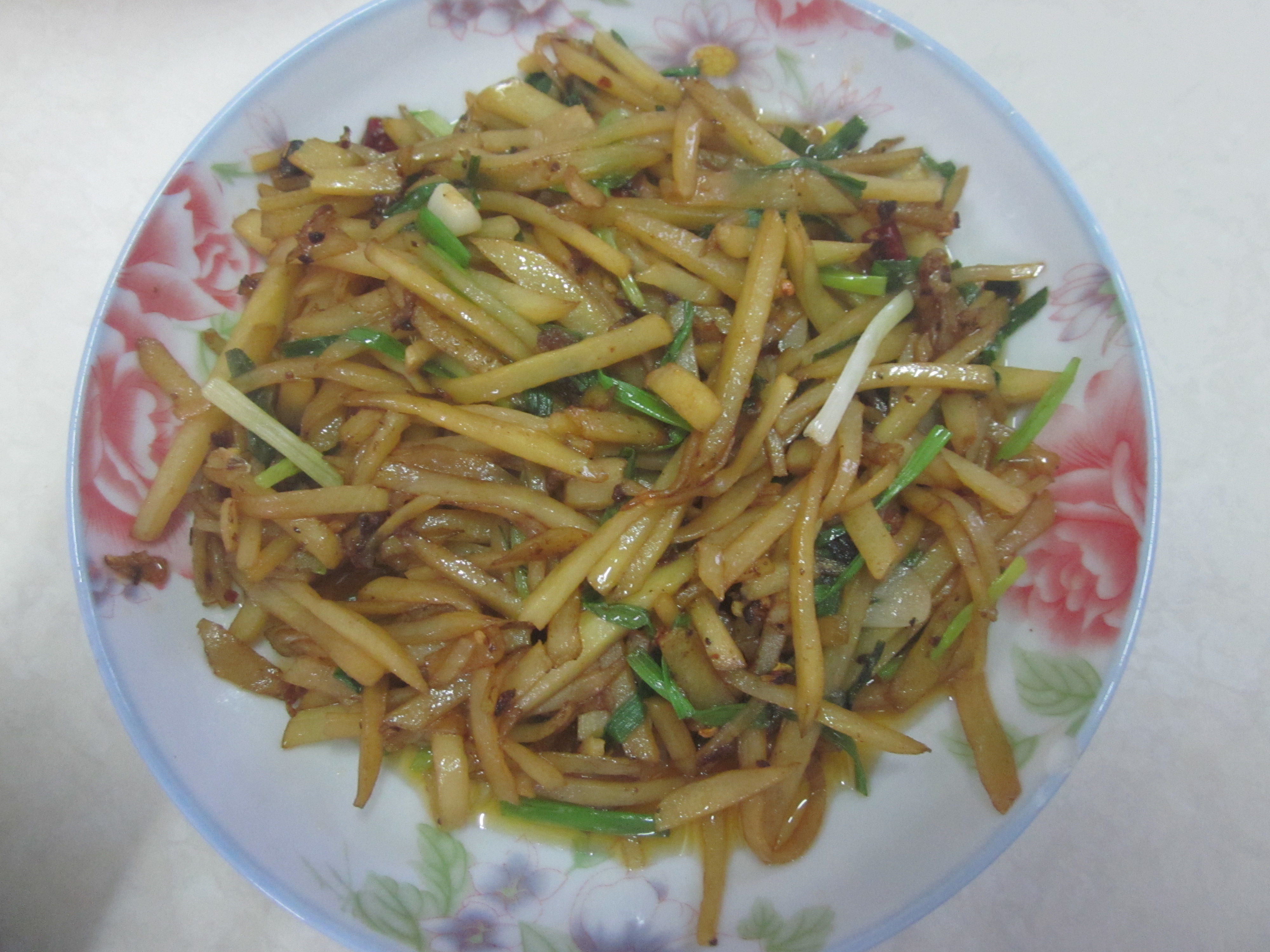
Hot and Sour Shredded Potato (酸辣土豆丝) is the most-ordered home dish in Hunan restaurants — impossibly thin potato shreds stir-fried with dried chilies and vinegar until crisp-tender, with a tangy heat that makes it dangerously addictive. It is cheap, fast, and the ultimate test of a Hunan wok cook’s knife skills. Here is the authentic method.
Hot and sour shredded potato (酸辣土豆丝) is a Hunan home classic of very thin potato shreds stir-fried with dried chilies, Sichuan peppercorns, and vinegar. It is crisp-tender, tangy, and mildly spicy — a staple of Hunan restaurant menus.
酸辣土豆丝 is a dish that costs almost nothing and tells you everything about the cook. In Hunan restaurants it is used as a benchmark: if the shreds are uniform, crisp, and separate, the kitchen knows what it is doing. The dish belongs to the same 酸辣 (hot and sour) family as 酸辣汤 and 酸辣粉, but where those are brothy and warming, this one is dry, snappy, and bracing — a plate of texture as much as flavor.
This recipe comes from a Hunan home cook who taught me the essential trick: rinse the shredded potatoes in cold water at least twice to remove the starch. This is what keeps the shreds crisp and separate instead of gluing together into a starchy mass.
Why the Starch Rinse Matters
Potatoes are roughly 15–20% starch, and the moment you cut them, that starch starts leaching onto the surface. In a hot wok, free starch gelatinizes and acts like glue — the shreds clump, soften, and turn gluey instead of staying separate and crisp. Soaking and rinsing in cold water washes that surface starch away, and a final soak in acidulated water (a splash of vinegar) firms the shreds further. It is a two-minute step that determines whether the dish works at all.
Cutting the Shreds
- Use waxy or all-purpose potatoes — starchy russets break down; waxy varieties hold their shape
- Square the potato first — trim one side flat so it sits stable on the board
- Slice into 2mm sheets, then stack and cut into 2mm matchsticks — uniform thickness is what makes them cook evenly
- A mandoline or julienne peeler cuts the work from ten minutes to two and gives more even results than a knife
- Rinse twice in cold water, then soak 10 minutes with 1 teaspoon vinegar, and drain thoroughly
Ingredients and Where to Find Them
- Chinkiang black vinegar — Chinkiang vinegar gives the rounded, malty sourness that defines the dish
- Dried chilies — dried red chilies, snipped into sections and shaken free of most seeds
- Sichuan peppercorns — Sichuan peppercorns for the faint numbing background note
You will also need garlic, scallions, salt, a pinch of sugar, and a high-smoke-point oil. White vinegar can stand in for Chinkiang in a pinch, though the flavor will be sharper and less complex.
How to Cook It
- Heat a wok over the highest heat until it smokes, then add 2 tablespoons oil
- Add 6 snipped dried chilies and 1 teaspoon Sichuan peppercorns; stir 15 seconds until fragrant — do not let them blacken
- Add 3 sliced garlic cloves and the white parts of 2 scallions; stir 10 seconds
- Add the drained potato shreds and stir-fry over maximum heat for 90 seconds, keeping them moving constantly
- Pour 1.5 tablespoons Chinkiang vinegar down the side of the wok — it should hiss and steam
- Season with 1 teaspoon salt and 1/2 teaspoon sugar; toss 30 seconds
- Add the scallion greens, toss once, and serve immediately — these shreds wait for no one
Variations
- With green and red peppers — thin strips of bell pepper add color and sweetness; a common restaurant version
- With pork — a handful of shredded pork stir-fried first turns it into a heartier dish
- Extra sour — add a second splash of vinegar at the very end, off the heat, for a sharper, fresher tang
- With Sichuan peppercorn oil — finish with 1 teaspoon of 藤椒油 for a brighter, more floral numbing note
Frequently Asked Questions
Why did my shredded potatoes turn mushy?
Almost always because of starch. If you skip the rinsing, the surface starch glues the shreds together and they steam rather than fry. Rinse in cold water at least twice until the water runs clear, soak briefly in vinegared water, and dry the shreds well before they hit the wok.
How do I slice them so thin?
Slice the potato into thin sheets first, then stack the sheets and cut into matchsticks. A mandoline or julienne peeler speeds this up dramatically and produces more even shreds than a knife — even thickness matters more than absolute thinness.
What vinegar should I use?
Chinkiang (black) vinegar is traditional and gives the dish its malty depth. White rice vinegar works if you want a cleaner, sharper sourness — many Hunan cooks use it precisely for that reason. Balsamic is not a substitute; it is too sweet and dark.
Can I make it ahead?
Not really — this is a dish that must be eaten within minutes of leaving the wok, while the shreds are still crisp. You can, however, shred and rinse the potatoes up to a day ahead, keep them submerged in cold water in the fridge, and drain them just before cooking.
More Hunan Home Cooking
Love the hot-and-sour style? Try my Hot and Sour Soup 酸辣汤, the street-style Suan La Fen 酸辣粉, or the everyday Xiao Chao Rou 小炒肉.
As an Amazon Associate, I earn from qualifying purchases. These are affiliate links at no extra cost to you.
1 Comment