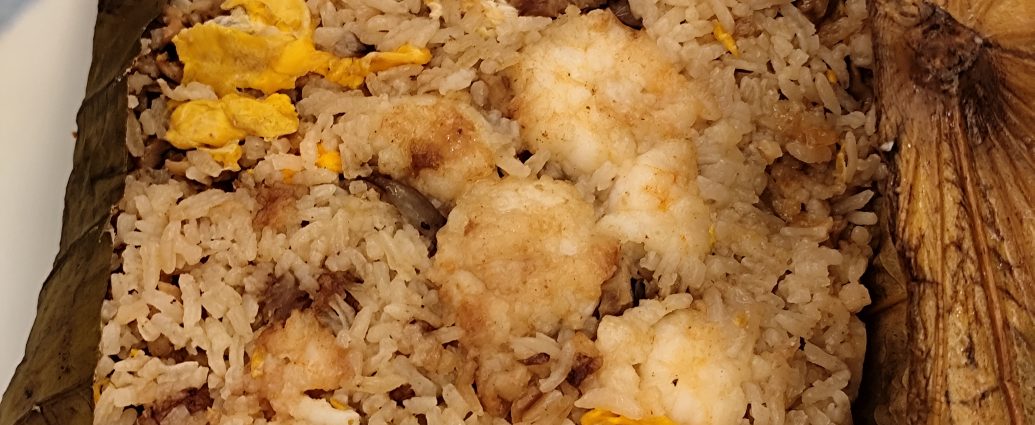
Lotus Leaf Rice (荷叶饭) is a fragrant Cantonese classic — glutinous rice stuffed with chicken, Chinese sausage, and mushrooms, wrapped in a fresh lotus leaf and steamed until the rice absorbs the leaf’s subtle, tea-like aroma. Unwrapping it at the table releases a burst of fragrance that is pure Cantonese comfort. Here is the classic method.
Lotus leaf rice (荷叶饭) is a Cantonese dish of glutinous rice mixed with chicken, sausage, and mushrooms, wrapped in a lotus leaf and steamed. The leaf imparts a subtle, tea-like fragrance to the rice.
荷叶饭 and 糯米鸡 are close cousins, and Cantonese cooks will happily argue about the distinction. Both wrap seasoned glutinous rice and savory filling in a lotus leaf and steam it. The general difference is proportion and purpose: 糯米鸡 is a dim sum item, a compact parcel with a generous filling; 荷叶饭 is a larger, more rice-forward dish, often served as a meal in itself and sometimes with the rice mixed through the filling rather than layered. Both depend entirely on the leaf, which does something no other wrapping can: it perfumes the rice with a green, tea-like fragrance as it steams.
This recipe comes from a Cantonese dim sum chef who taught me the essential trick: the rice must be cooked with the filling juices, not plain water — and the lotus leaf must be soaked until pliable, never boiled. The wrapped parcels steam for at least 30 minutes so the aroma fully penetrates.
Cook the Rice in the Filling’s Juices
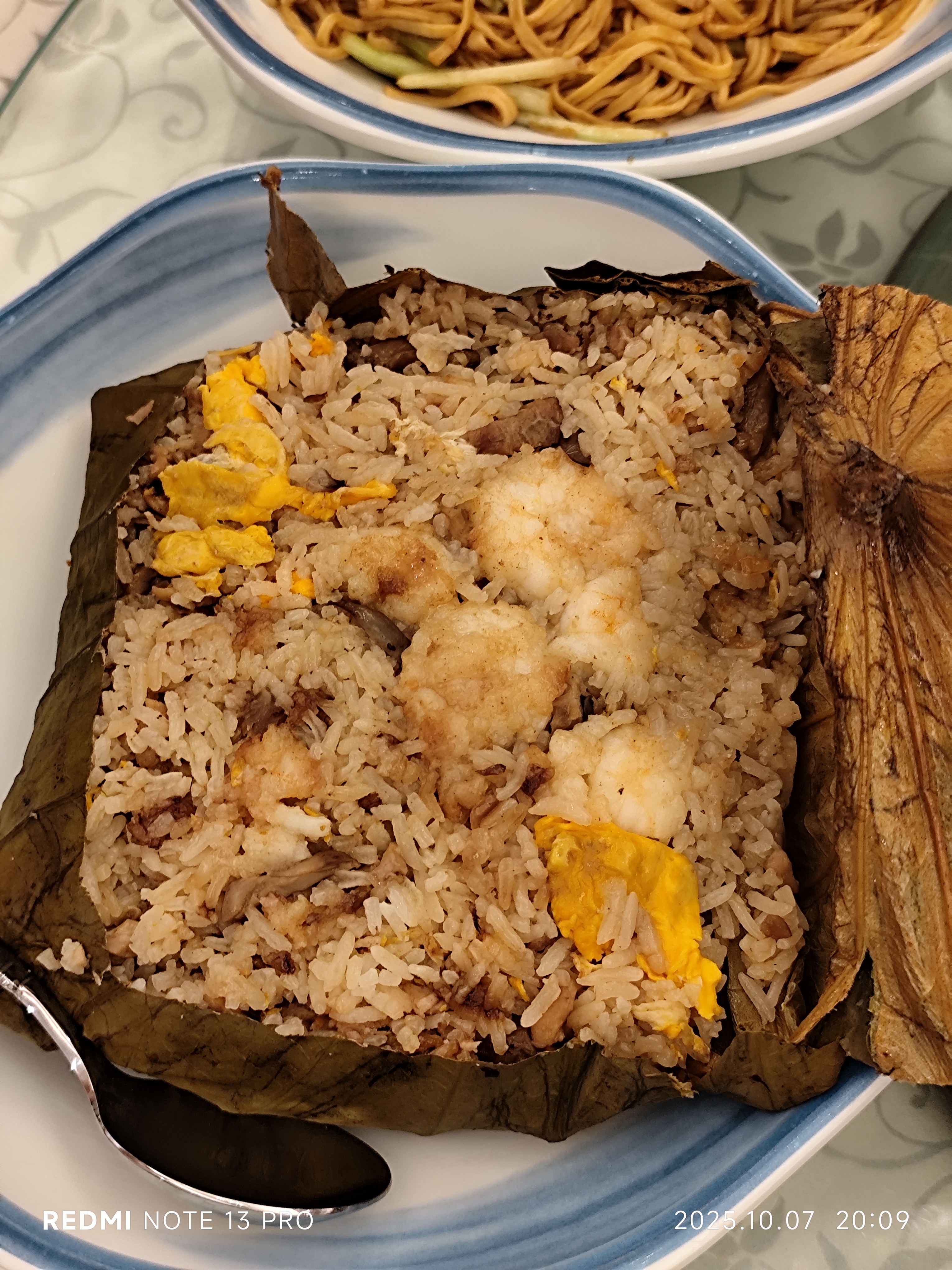
This is the single decision that separates excellent 荷叶饭 from ordinary steamed rice with toppings. The glutinous rice is not cooked in plain water — it is cooked in the liquid produced by stir-frying the filling, seasoned with soy, oyster sauce, and the rendered fat from the sausage. That means every grain carries the flavor of the filling before the parcel is even wrapped. The second steam, in the leaf, then layers the leaf’s aroma on top. Rice cooked in water and mixed with filling afterward tastes like two separate things; rice cooked in the filling’s juices tastes like one dish.
Handling the Lotus Leaf
- Soak dried leaves in warm water 30–60 minutes until fully pliable; a stiff leaf cracks when folded
- Never boil the leaf — boiling strips the aroma compounds you are trying to capture
- Wipe dry and trim the hard stem before wrapping; the stem tears through the leaf
- Shiny side inward — the coated upper surface holds the rice and releases more aroma
- Wrap tight and seam-down so steam stays inside the parcel rather than escaping
Ingredients and Where to Find Them
- Dried lotus leaves — dried lotus leaves, large and unbroken
- Glutinous rice — glutinous (sticky) rice, soaked 4 hours or overnight
- Chinese sausage (lap cheong) — lap cheong, diced
Also needed: chicken thigh, dried shiitake, dried shrimp, garlic, ginger, oyster sauce, light and dark soy sauce, Shaoxing wine, sesame oil, and sugar. Some versions add diced char siu or salted egg yolk.
How to Make It
- Soak 400g (14 oz) glutinous rice 4 hours or overnight; drain well
- Soak 6 dried shiitake and 20g dried shrimp in warm water; dice the mushrooms and reserve the soaking liquid
- Stir-fry diced lap cheong and dried shrimp until fragrant; add 250g diced chicken thigh, the shiitake, garlic, and ginger, and cook through
- Season with 1 tablespoon oyster sauce, 1 tablespoon light soy, 1 teaspoon dark soy, 1 tablespoon Shaoxing wine, and 1 teaspoon sugar
- Add the drained rice and toss through the filling, adding the reserved mushroom liquid and enough water to just cover; cook until the rice has absorbed the liquid
- Soften the lotus leaves 30–60 minutes, pat dry, and trim the stems
- Spoon the rice mixture into each leaf, fold into a tight parcel, and steam 30 minutes; serve hot, unwrapping at the table
Variations
- With salted egg yolk — a quarter yolk in the center adds richness; a banquet favorite
- With char siu — see my Honey Char Siu 蜜汁叉烧 for the homemade version
- Vegetarian — swap the meats for extra mushrooms, tofu, and diced vegetables, using mushroom stock
- Layered version — keep the rice and filling separate, layering rice-filling-rice, for a more formal presentation
Frequently Asked Questions
What is the difference between 荷叶饭 and 糯米鸡?
Both are lotus-leaf-wrapped glutinous rice with savory filling. 糯米鸡 is the dim sum version — smaller, more filling-forward, and typically layered. 荷叶饭 is larger and more rice-forward, often served as a complete meal with the rice mixed through the filling. The techniques are nearly identical.
Can I use fresh lotus leaves?
Yes — fresh leaves need only a brief rinse and are more fragrant. They are seasonal and sold at Chinese grocers in summer; frozen leaves are available year-round and need thawing and a quick soak.
Can I make it vegetarian?
Yes — replace chicken and sausage with mushrooms, tofu cubes, and diced vegetables. Use vegetable stock and add more shiitake for umami.
How long do the parcels keep?
Assembled uncooked parcels freeze well for up to 2 months — steam from frozen for 35 minutes. Cooked parcels keep 3 days refrigerated; re-steam for 10 minutes to bring back the aroma, which fades noticeably in the fridge.
More Dim Sum & Lotus Leaf Dishes
Love lotus-leaf cooking? Try my Lo Mai Gai 糯米鸡, the pork and shrimp Shu Mai 烧卖, or the tender Chicken Feet 凤爪.
As an Amazon Associate, I earn from qualifying purchases. These are affiliate links at no extra cost to you.