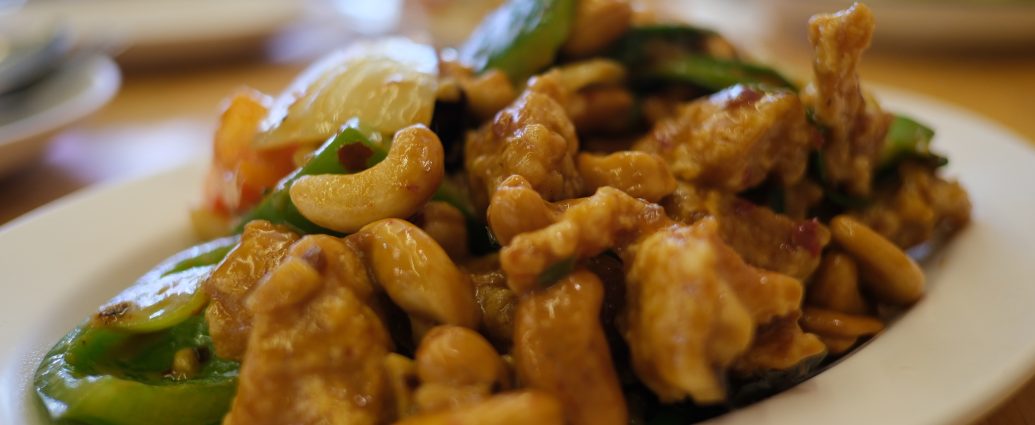
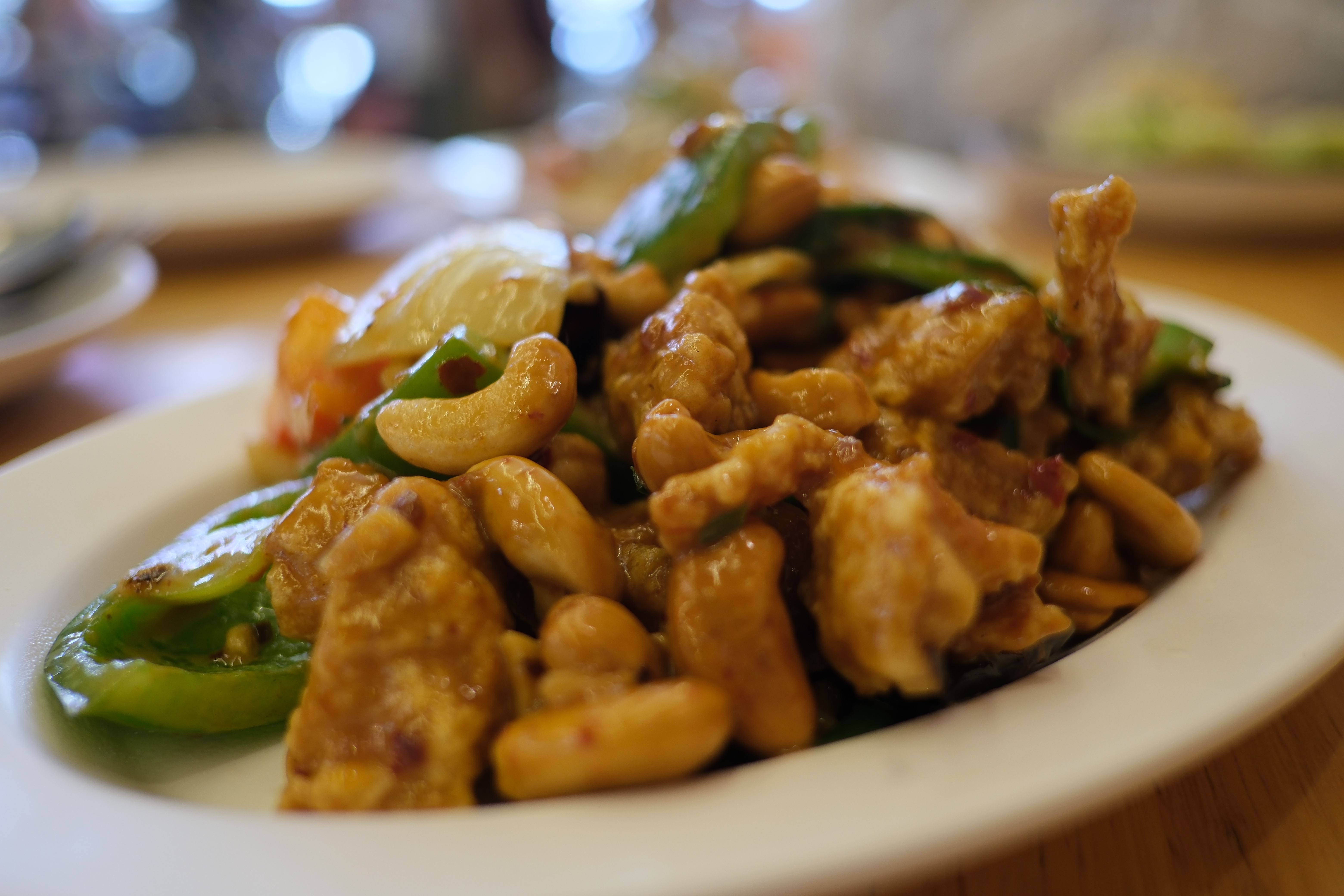
Cashew Chicken (腰果鸡丁) is a beloved Chinese stir-fry — velvety chicken cubes, crisp vegetables, and toasted cashews in a glossy, savory sauce. It is a staple of Chinese restaurants worldwide, beloved for its mix of tender meat, crunchy nuts, and bright vegetables. Here is the classic recipe.
Cashew chicken (腰果鸡丁) is a Chinese stir-fry of velvety chicken cubes, bell peppers, and toasted cashews in a glossy savory sauce. It is a classic restaurant dish loved for its tender meat and crunchy nuts.
腰果鸡丁 belongs to the family of Chinese “diced stir-fries” (丁, dīng) that includes 宫保鸡丁 and 腰果虾仁 — dishes built on uniform cubes so every bite cooks at the same speed and every spoonful delivers the same balance. The name tells you the two stars: 腰果 (cashews) and 鸡丁 (diced chicken). Unlike the fiery Sichuan versions, this one is mild, slightly sweet, and built for broad appeal, which is exactly why it became one of the most-ordered Chinese dishes in the West. In Cantonese kitchens it is a banquet dish; in home kitchens it is a fast weeknight stir-fry.
This recipe comes from a Cantonese wok chef who taught me the essential trick: toast the cashews SEPARATELY in a dry pan until golden, and add them only at the very end. This keeps them crisp — soggy cashews ruin the whole dish.
The 丁 Family of Diced Stir-Fries
腰果鸡丁 belongs to a specific family of Chinese dishes built on the character 丁 (dīng) — “diced.” The principle is uniformity: every solid ingredient is cut to roughly the same small cube, usually about 1.5cm, so that everything cooks at the same rate in a fast wok and every spoonful delivers the same combination of textures. 宫保鸡丁, 腰果虾仁, and 松仁玉米 all follow the same logic. It is a practical approach to stir-frying, but it also shapes how the dishes taste — a diced stir-fry reads as balanced and precise rather than rustic, which is part of why these dishes travel so well to restaurant menus. The technique demands a sharp knife and a little patience at the cutting board, because a wok at full heat gives you no time to correct uneven pieces.
Three Techniques That Make It Work
Velveting. The chicken is marinated with egg white, cornstarch, and a splash of wine before it ever touches the wok. That coating forms a protective layer that traps moisture, so the chicken stays silky even at screaming-hot temperatures. Without it, diced breast meat turns dry and stringy in seconds.
Toasting the cashews separately. Nuts are the one ingredient that cannot survive a wet stir-fry — any sauce turns them soft. Toasting them in a dry pan and folding them in at the very end keeps them crunchy through the last bite.
Cooking in stages. Chicken out, aromatics in, vegetables quickly, then everything back together with the sauce for thirty seconds. Each ingredient gets exactly the time it needs, and nothing overcooks while waiting for something else.
Ingredients and Where to Find Them
- Raw cashews — raw unsalted cashews; dry-toast them yourself, which tastes far better than pre-roasted
- Chicken thighs or breast — boneless chicken thighs stay juicier, though breast is traditional in restaurant versions
- Oyster sauce — premium oyster sauce gives the sauce its glossy body
Also needed: bell peppers (red and green for color), onion or scallion, garlic, ginger, light soy sauce, Shaoxing wine, cornstarch, sugar, and a little sesame oil. Water chestnuts or diced carrot are common additions for extra crunch.
How to Cook It
- Dice 450g (1 lb) chicken into 2cm cubes; marinate 15 minutes with 1 egg white, 1 tablespoon cornstarch, 1 tablespoon Shaoxing wine, and 1 teaspoon light soy
- Dry-toast 100g (3.5 oz) cashews in a pan over medium heat for 3–4 minutes until golden; set aside
- Mix the sauce: 2 tablespoons oyster sauce, 1 tablespoon light soy, 1 teaspoon sugar, 1 teaspoon cornstarch, and 4 tablespoons water
- Heat a wok until smoking, add oil, and sear the chicken in a single layer for 2 minutes; toss 1 minute more and remove
- Stir-fry the garlic and ginger 15 seconds, then add the peppers and onion; toss 2 minutes so they stay crisp
- Return the chicken, pour the sauce around the edge of the wok, and toss over high heat 30–45 seconds until glossy
- Fold in the toasted cashews and a few drops of sesame oil; serve immediately with rice
Variations
- With pineapple — a few chunks of fresh pineapple add sweetness and acidity; a common Cantonese variation
- Spicier version — add 1 teaspoon doubanjiang or a few snipped dried chilies with the aromatics
- Cashew shrimp — swap the chicken for prawns and reduce the searing time to 90 seconds total
- With celery and carrot — the classic Cantonese restaurant mix, adding crunch and color
Frequently Asked Questions
Why did my cashews go soft?
They were added too early or were already coated in sauce for too long. Toast them separately and fold them in at the very end, off the heat. If using pre-roasted salted cashews, add them even later and skip the extra salt in the dish.
What is the velvet technique?
Velveting means marinating the meat with cornstarch and egg white before frying — it creates a protective coating that keeps the chicken silky and juicy at high heat. It is the standard technique in Cantonese stir-fries and is what separates restaurant-tender chicken from dry, overcooked cubes.
Can I use chicken breast?
Yes, and it is what most restaurants use. Dice it evenly, velvet it properly, and pull it from the wok the moment it turns opaque — breast has almost no fat to protect it from overcooking.
How do I make it gluten-free?
Use tamari instead of soy sauce and a gluten-free oyster sauce (or a mushroom-based substitute), and check that your Shaoxing wine is gluten-free — some brands add wheat. The cornstarch marinade is naturally gluten-free.
More Classic Stir-Fries
Try my Kung Pao Chicken 宫保鸡丁, the Cantonese Honey Char Siu 蜜汁叉烧, or the homestyle Moo Shu Pork 木须肉.
As an Amazon Associate, I earn from qualifying purchases. These are affiliate links at no extra cost to you.