
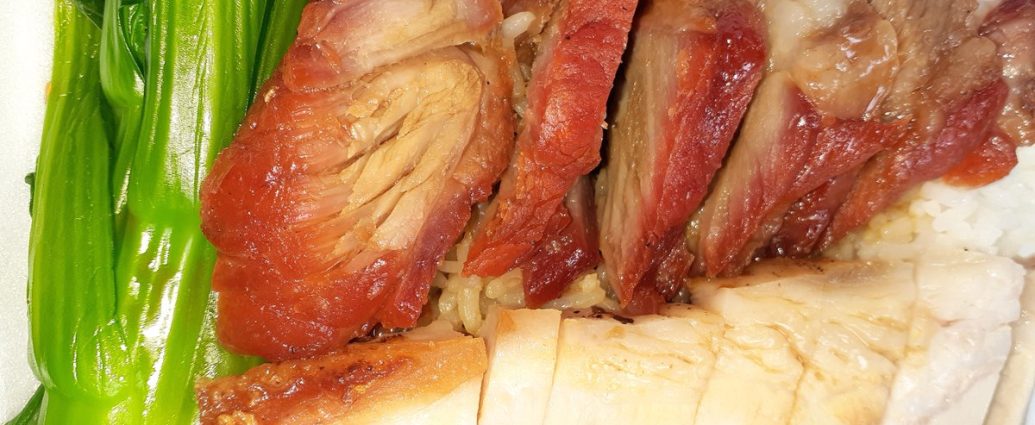
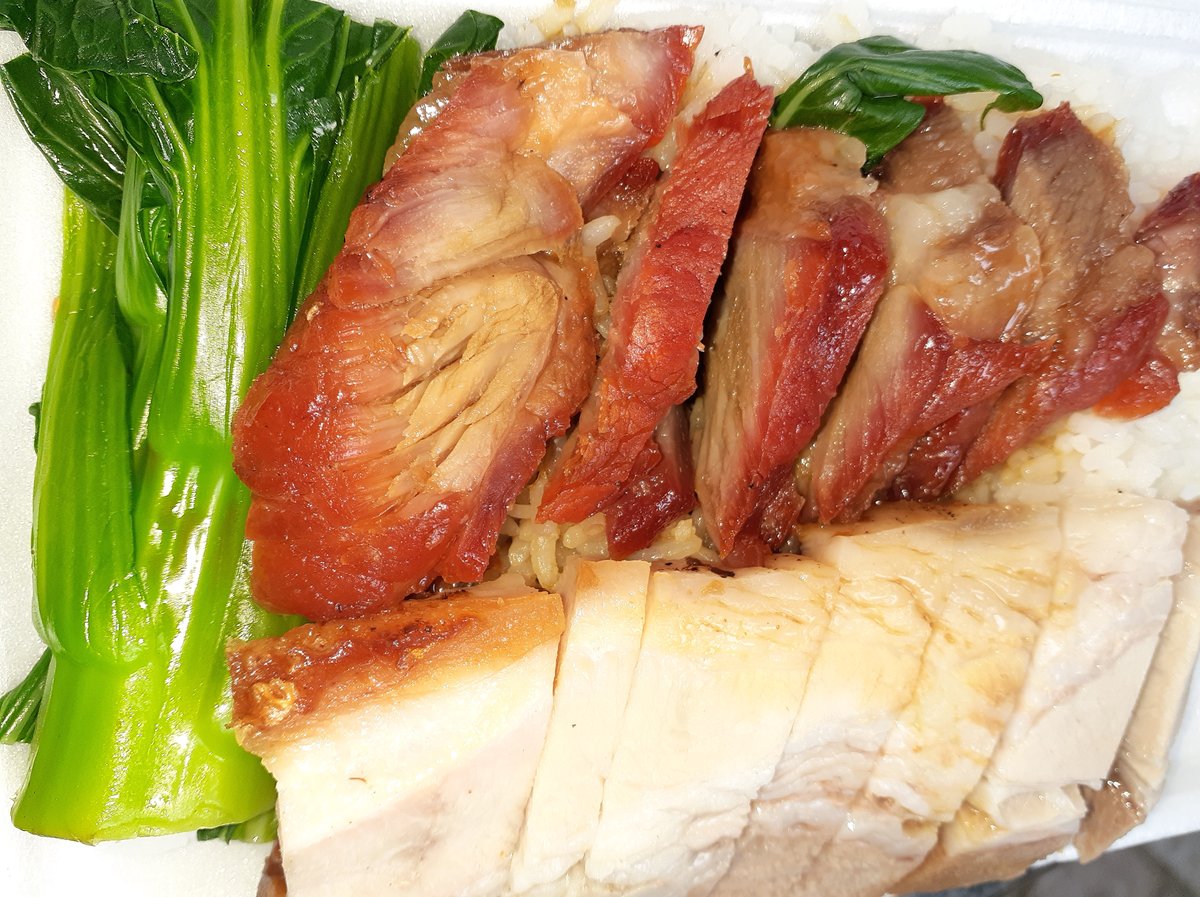
Honey Char Siu (蜜汁叉烧) is one of Cantonese cuisine’s most beloved creations — strips of pork shoulder marinated in a sweet-savory glaze, roasted until caramelized and charred at the edges, then basted with honey for a glossy, sticky finish. The perfect char siu has a deep mahogany color, slightly charred crust, and impossibly tender, juicy meat.
叉烧 (chā shāo) literally means “fork roast” — named for the long two-pronged forks that Cantonese cooks used to hang strips of marinated pork inside a tall charcoal oven. It is one of the pillars of 烧腊 (siu mei), the Cantonese roasting tradition, and alongside roast duck and crispy pork belly it defines the window of every neighborhood roast meat shop. What separates good char siu from great char siu is the balance between the sweet glaze and the savory, fermented depth underneath it — and the charred edges, which Cantonese diners prize above all. There is even a term for it: 燶邊, “the burnt edge,” the part everyone fights over.
This recipe comes from a roast meat master in Hong Kong who taught me that the secret to exceptional char siu is in the marination — a full 24 hours allows the red fermented bean curd (nam yue), honey, and soy sauce to penetrate deep into the meat, creating flavor that goes all the way through.
Why 24 Hours of Marination
Char siu is a thick cut of meat, and surface flavor is not enough. A short marinade seasons only the outer millimeter, so the center tastes of plain pork. Given a full day, the salt, sugar, soy, and fermented bean curd work their way inward through osmosis, seasoning the meat throughout and beginning to tenderize it. The sugar in the marinade also does something else: it draws out moisture initially, then helps the surface caramelize deeply during roasting. If you only have a few hours, pierce the pork all over with a skewer to give the marinade more entry points.
The Three Stages of Roasting
- High heat to set the crust. The pork goes into a very hot oven (or over coals) so the surface sugars caramelize before the interior dries out.
- Moderate heat to cook through. The temperature drops so the pork cooks evenly without burning the glaze.
- Honey baste and char. In the final minutes, a honey glaze goes on and the heat goes back up — this is where the lacquered shine and the prized charred edges come from.
Choosing the Cut
- Pork shoulder (pork butt) — the classic choice: well marbled, forgiving, and flavorful
- Pork collar / neck — a Cantonese favorite for its fat distribution and tenderness
- Pork belly — richer, but can be too fatty for some; excellent if you like it unctuous
- Cut into long strips about 4cm thick so the marinade penetrates and the edges caramelize
- Avoid lean loin — it dries out badly in a high-heat roast
Ingredients and Where to Find Them
- Red fermented bean curd (nam yue) — red fermented bean curd gives the signature color and savory depth
- Maltose or honey — maltose syrup is traditional for the glaze; honey is the easier substitute
- Char siu sauce — bottled char siu sauce works as a shortcut base if you want to skip the from-scratch mix
Also needed: light and dark soy sauce, Shaoxing wine, oyster sauce, garlic, ginger, five-spice powder, sugar, and a little red food coloring if you want the vivid shop-window look (entirely optional — nam yue already provides color).
How to Make It
- Cut 1kg (2.2 lb) pork shoulder into 4cm-thick strips and prick all over with a skewer
- Mix the marinade: 2 tablespoons red fermented bean curd (mashed), 2 tablespoons light soy, 1 tablespoon dark soy, 2 tablespoons oyster sauce, 2 tablespoons Shaoxing wine, 3 tablespoons sugar, 1 tablespoon honey, 3 minced garlic cloves, 1 tablespoon grated ginger, and 1 teaspoon five-spice
- Coat the pork, cover, and refrigerate 24 hours, turning twice
- Bring to room temperature for 30 minutes; reserve the marinade and boil it for 3 minutes to use as a baste
- Roast at 220°C (425°F) for 15 minutes, then lower to 180°C (355°F) for 20 minutes
- Brush with the boiled marinade mixed with 1 tablespoon honey and return to 220°C (425°F) for 5–8 minutes until charred at the edges
- Rest 10 minutes before slicing across the grain; serve with rice, noodles, or in bao buns
Variations
- Char siu bao — the leftover filling for steamed buns; see my Char Siu Bao 叉烧包
- With char siu fried rice — diced char siu is the classic addition; see my Yangzhou Fried Rice 扬州炒饭
- Oven-grill method — finish under the broiler on a rack over a tray of water for a smokier, more shop-like char
- Air fryer version — 200°C (400°F) for 18 minutes, basting twice; excellent for small batches
Frequently Asked Questions
Why is my char siu not red?
Traditional Cantonese shops use red fermented bean curd (nam yue) and sometimes a touch of food coloring for the vivid red. If yours looks brown, add more nam yue or a few drops of red coloring. Home versions are often less red than shop versions — that is normal and does not affect the flavor.
Can I marinate for less than 24 hours?
Yes, but the flavor will be more superficial. Eight hours gives a decent result if you prick the meat thoroughly; 24 hours is noticeably better. Do not exceed 48 hours, as the salt will start to firm up the texture.
How do I store and reheat char siu?
Char siu keeps 5 days in the fridge. Reheat in a 180°C oven for 5 minutes, or slice cold and pan-fry until caramelized. It also freezes beautifully for up to 3 months.
What is nam yue and can I skip it?
Nam yue is red fermented bean curd — a jarred condiment made from tofu fermented with red rice yeast. It provides both the color and a distinctive savory, slightly funky depth. You can skip it, but the char siu will be paler and less complex; add an extra tablespoon of oyster sauce and a pinch of five-spice to compensate.
More Cantonese Roasts & Classics
Love siu mei? Try my Siu Yuk 脆皮烧肉, the lacquered Roast Duck 烧鸭, or the steamed Char Siu Bao 叉烧包.
As an Amazon Associate, I earn from qualifying purchases. These are affiliate links at no extra cost to you.
6 Comments