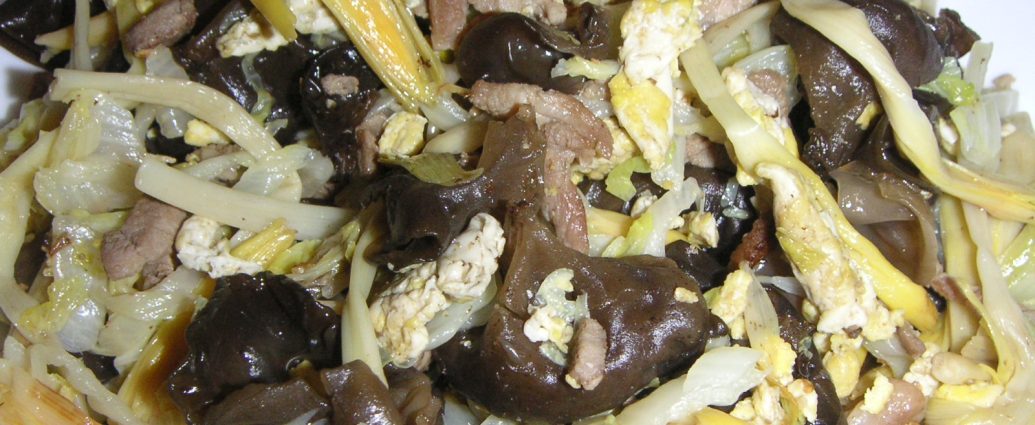
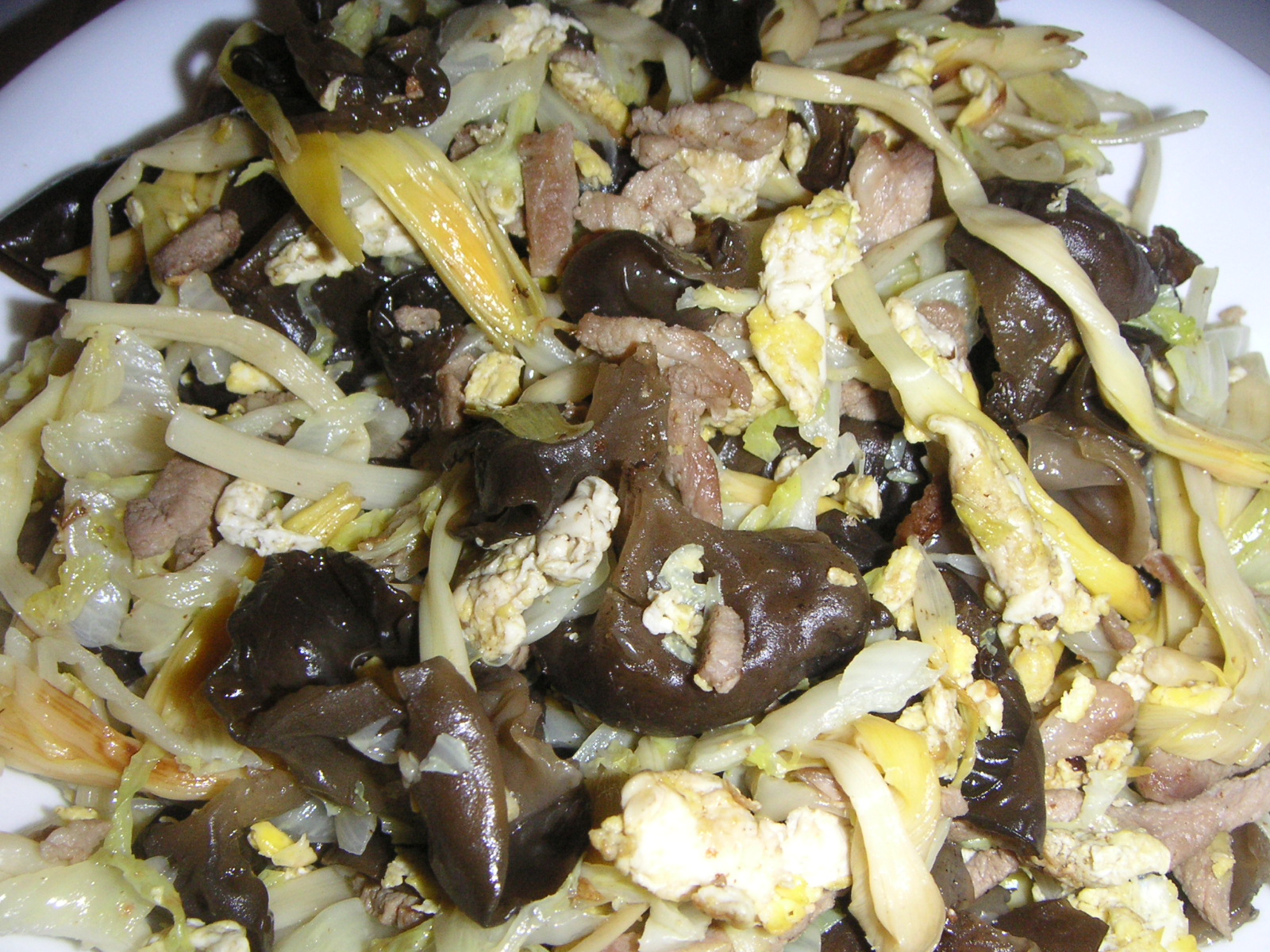
Moo Shu Pork (木须肉) is a beloved northern Chinese stir-fry — tender shredded pork, silky scrambled egg, wood ear mushrooms, and crisp cucumber or lily flower tossed in a savory sauce. The name “moo shu” (wood flower) refers to the wood ear mushrooms and the egg that resembles blooming flowers. It is traditionally wrapped in thin pancakes, but equally delicious over rice. Here is the authentic version.
Moo shu pork (木须肉) is a northern Chinese stir-fry of shredded pork, scrambled egg, wood ear mushrooms, and vegetables in a savory soy-based sauce. It is traditionally served with thin pancakes for wrapping, or over rice, and is a classic Beijing home dish.
The name is a piece of linguistic sleight of hand. 木须 (mù xū) is a folk rendering of 木樨 (mù xī), the osmanthus flower — so called because the shredded, golden scrambled egg scattered through the dish resembles osmanthus blossoms. It is a dish of Beijing and the wider north, where it is one of the standard 家常菜 (home-style dishes) taught to every new cook, and its signature is the combination of textures: silky egg, springy wood ear, tender pork, and crisp cucumber. In northern homes it is often rolled into thin pancakes with a smear of sweet bean sauce — the same wrapping tradition that produced the Western “moo shu pancake.”
This recipe comes from a home cook in Beijing who taught me the secret to the dish’s signature texture: each ingredient is cooked SEPARATELY and then combined. The eggs stay fluffy, the pork stays tender, and the wood ear mushrooms keep their crunch — nothing gets soggy.
Four Textures, Four Cooking Times
This dish is a masterclass in why Chinese stir-fries are cooked in stages. Egg needs thirty seconds and moderate heat to stay soft; pork needs ninety seconds and high heat to stay juicy; wood ear needs a minute to warm through without losing its snap; cucumber needs barely twenty seconds or it releases water and turns limp. Cook them together and the slowest ingredient dictates the timing — which means everything else overcooks. Cook them in sequence and each component arrives at the wok already perfect. The final combination takes thirty seconds.
Prepping Wood Ear and Lily Flower
- Dried wood ear — soak in warm water for 30 minutes until fully rehydrated; they expand dramatically, so a small handful is plenty
- Trim the hard knobs — the woody base of each piece never softens; cut it off before cooking
- Dried lily flower (金针) — soak 20 minutes, then tie each strand in a loose knot so it does not tangle in the wok; the knotted version is called 金针结
- Cucumber — halve, scrape out the seeds, and slice on the bias so it stays crisp
- Pork — cut into thin matchsticks against the grain and velvet lightly with cornstarch
Ingredients and Where to Find Them
- Wood ear mushrooms — dried wood ear mushrooms, soaked and trimmed
- Dried lily flower — dried lily flower (金针), soaked and knotted
- Shaoxing wine — Shaoxing wine for the pork marinade and the sauce
Also needed: pork loin, eggs, cucumber, scallions, garlic, ginger, light soy sauce, oyster sauce, cornstarch, sugar, and sesame oil. Thin Mandarin pancakes and sweet bean sauce (甜面酱) for wrapping are the traditional accompaniment.
How to Cook It
- Soak 15g dried wood ear and 15g dried lily flower for 30 minutes; trim the wood ear and knot the lily strands
- Slice 250g (9 oz) pork loin into matchsticks and marinate 15 minutes with 1 teaspoon light soy, 1 teaspoon Shaoxing wine, and 2 teaspoons cornstarch
- Beat 3 eggs with a pinch of salt; scramble them softly in a hot wok and remove
- Add oil and sear the pork over high heat for 90 seconds until just cooked; remove
- Stir-fry garlic, ginger, and scallion whites for 15 seconds, then add the wood ear and lily flower; toss 1 minute
- Add the cucumber and stir-fry 30 seconds, then return the pork and egg
- Season with 1 tablespoon light soy, 1 teaspoon oyster sauce, 1/2 teaspoon sugar, and a few drops of sesame oil; toss 30 seconds and serve with pancakes or rice
Variations
- With lily flower only — if you cannot find wood ear, double the lily flower; the dish is still excellent
- With cabbage — shredded napa cabbage in place of cucumber gives a softer, sweeter version
- With chicken — chicken thigh works identically; marinate the same way
- Wrapped in pancakes — the traditional northern service: spread a pancake with sweet bean sauce, add the filling, roll, and eat by hand
Frequently Asked Questions
What does “moo shu” mean?
木须 is a folk spelling of 木樨 (mù xī), the osmanthus flower. The dish is named for the golden, shredded egg, which resembles osmanthus blossoms scattered through the stir-fry. It has nothing to do with wood or trees despite the literal characters.
What is wood ear mushroom and where do I buy it?
Wood ear (木耳) is a dried fungus with a mild flavor and an unmistakable crunch. It is sold dried at Chinese grocers and online, keeps for a year in a sealed jar, and rehydrates in about 30 minutes. It contributes texture more than flavor.
Is this dish spicy?
No — authentic moo shu pork is savory and mild, not spicy. Add sliced chili or a drizzle of chili oil at the end if you want heat.
Can I make it ahead?
Prepare all the components up to a day ahead — soak and trim the mushrooms, marinate the pork, slice the vegetables — but do the stir-frying at the last minute. Reheated moo shu pork loses the egg’s fluffiness and the cucumber’s crunch.
More Northern & Homestyle Chinese Dishes
Love homestyle Chinese cooking? Try my Shredded Pork with Green Pepper 青椒肉丝, the braised Hong Shao Rou 红烧肉, or the spicy Xiao Chao Rou 小炒肉.
As an Amazon Associate, I earn from qualifying purchases. These are affiliate links at no extra cost to you.