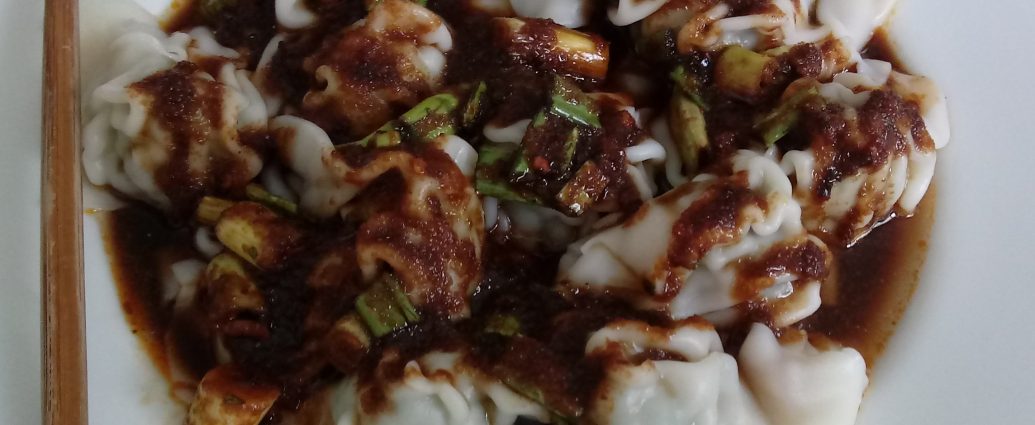
Hong You Chao Shou (红油抄手) is Chengdu’s answer to the wonton — delicate pork wontons boiled until silky, then drowned in a glossy, fiery red dressing of chili oil, black vinegar, garlic, and a whisper of sugar. Each spoonful is a study in Sichuan balance: numbing heat, sour tang, savory depth, and a touch of sweetness that keeps you reaching for the next one.
The name 抄手 (chāo shǒu) means “folded hands,” describing the way the wonton wrapper is pinched — like a person tucking their hands into opposite sleeves. While Cantonese wontons sail in a clear broth (as in wonton noodle soup), Sichuanese 抄手 are usually served dry with the chili-oil sauce clinging to every fold. In Chengdu, a plate of Hong You Chao Shou with a bowl of clear soup is a classic breakfast and late-night ritual alike.
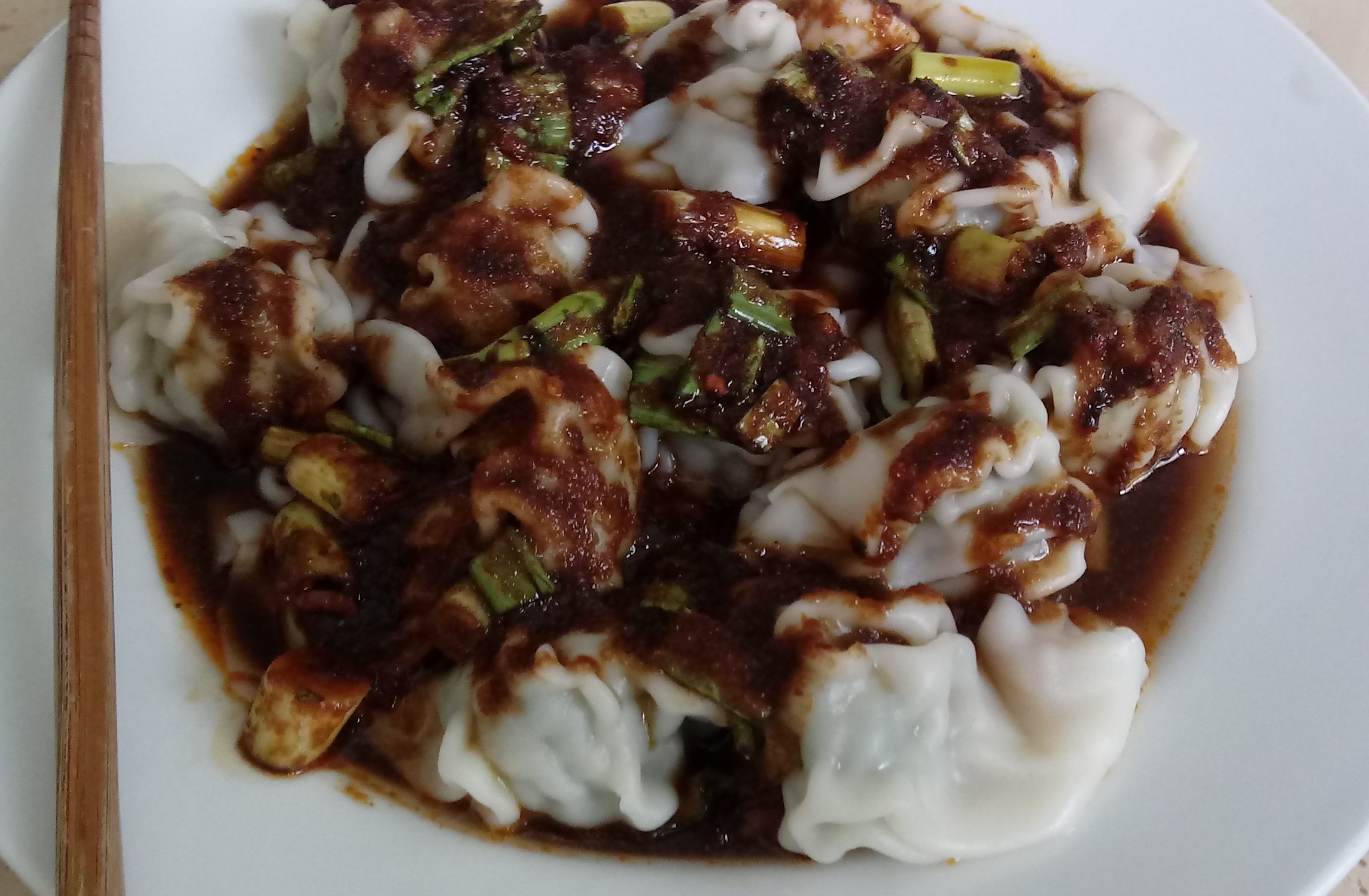
Photo via Wikimedia Commons, CC BY-SA 4.0
抄手, 云吞, 馄饨: One Dumpling, Three Names
The same basic dumpling carries a different name in each region, and each name signals a different dish. In Guangdong it is 云吞 (wonton), served in a clear broth with noodles. In the north and east it is 馄饨 (húntun), typically in a light soup with seaweed and dried shrimp. In Sichuan it is 抄手 (chāoshǒu), and it is usually served dry, dressed in chili oil, or in a rich 红油 or 酸辣 sauce. The wrappers differ too — Sichuanese 抄手 wrappers tend to be slightly thicker and squarer, which suits a heavy dressing, whereas Cantonese wonton wrappers are thin and delicate to match the broth. Same family, three entirely different eating experiences.
The Dressing: Sichuan Balance in a Bowl
- Chili oil with sediment (红油) — the aromatic, red component; the flakes and paste give body as well as heat
- Chinkiang black vinegar — malty and mellow; it provides the sour note that cuts the oil
- Garlic water (蒜水) — crushed garlic steeped in water, so the pungency spreads evenly rather than sitting in sharp bits
- A pinch of sugar — essential; it rounds the vinegar and chili and creates the signature 荔枝味 (lychee) balance
- Light soy sauce — for salt, and a little dark soy for the deep red-brown color
- Sesame oil and toasted sesame seeds — for aroma and a nutty finish
- Ground Sichuan peppercorn — optional but traditional; a small pinch for the numbing note
The Filling
Sichuanese 抄手 filling is typically pork — sometimes with a little shrimp — and the key is texture. The pork is mixed with water or stock in one direction until it becomes sticky and light, which keeps the cooked filling juicy and bouncy rather than dense. A little egg white and cornstarch help it hold, and ginger water (rather than raw ginger) seasons it without leaving fibrous bits. The filling should be chilled before wrapping so it stays firm in the wrapper.
Ingredients and Where to Find Them
- Wonton wrappers — square wonton wrappers
- Sichuan chili oil — chili oil with sediment
- Chinkiang black vinegar — Chinkiang vinegar
Also needed: ground pork, ginger, garlic, scallions, light and dark soy sauce, sugar, sesame oil, cornstarch, egg white, toasted sesame seeds, and cilantro.
How to Make It
- Mix 400g (14 oz) ground pork with 3 tablespoons ginger water, 1 egg white, 1 tablespoon cornstarch, 1 tablespoon light soy, 1 teaspoon sesame oil, and white pepper; stir in one direction until sticky, then chill 30 minutes
- Place a teaspoon of filling in each wrapper, fold into a triangle, then pull the two corners together and pinch — the classic “folded hands” shape
- Make the dressing per bowl: 2 tablespoons chili oil, 1 tablespoon Chinkiang vinegar, 1 tablespoon light soy, 1 teaspoon garlic water, 1/2 teaspoon sugar, and a few drops of sesame oil
- Bring a large pot of water to a boil and cook the wontons for 4–5 minutes until they float and the wrappers turn translucent
- Lift the wontons out with a slotted spoon, draining well, and place them directly into the dressing
- Toss gently to coat, then scatter with toasted sesame seeds, scallions, and cilantro
- Serve immediately, with a small bowl of the cooking water or a light broth alongside
Variations
- With 酸辣 sauce — extra vinegar and a little more chili for a hot-and-sour version
- In soup (清汤抄手) — served in a clear broth instead of dressed; the milder Chengdu alternative
- With sesame paste — a spoonful added to the dressing for a nuttier, milder bowl
- With shrimp — chopped shrimp mixed into the pork for a sweeter filling
Frequently Asked Questions
Why is my wonton filling dry and crumbly?
The pork was not mixed with enough liquid. Add water or stock a tablespoon at a time and stir in one direction until the mixture turns sticky and light — that is what keeps the cooked filling juicy. Chilling the filling before wrapping also helps it hold together.
Can I make these ahead?
Yes — freeze the folded wontons on a floured tray, then transfer to a bag. Boil from frozen for 6–7 minutes, adding a minute to the cooking time. The dressing can be made days ahead and kept chilled.
What is the difference between 抄手 and Cantonese wonton?
Same dumpling family, different serving style. Sichuanese 抄手 are usually served dry in a chili-oil dressing with a thicker wrapper, while Cantonese wontons are thin-wrapped and served in a clear broth with noodles. The fillings are similar, but the eating experience is completely different.
How spicy is this dish?
Moderately to very spicy, depending on the chili oil. The vinegar and sugar balance the heat, so it reads as flavorful rather than purely hot. For a milder bowl, reduce the chili oil to one teaspoon and increase the vinegar slightly.
More Sichuan Classics to Try
Love Sichuan flavors? Try my Kou Shui Ji 口水鸡 (Mouthwatering Chicken), the classic Dan Dan Noodles 担担面, or the street-style Bo Bo Chicken 钵钵鸡. For a Cantonese wonton contrast, see my Wonton Noodle Soup 云吞面.
As an Amazon Associate, I earn from qualifying purchases. These are affiliate links at no extra cost to you.