
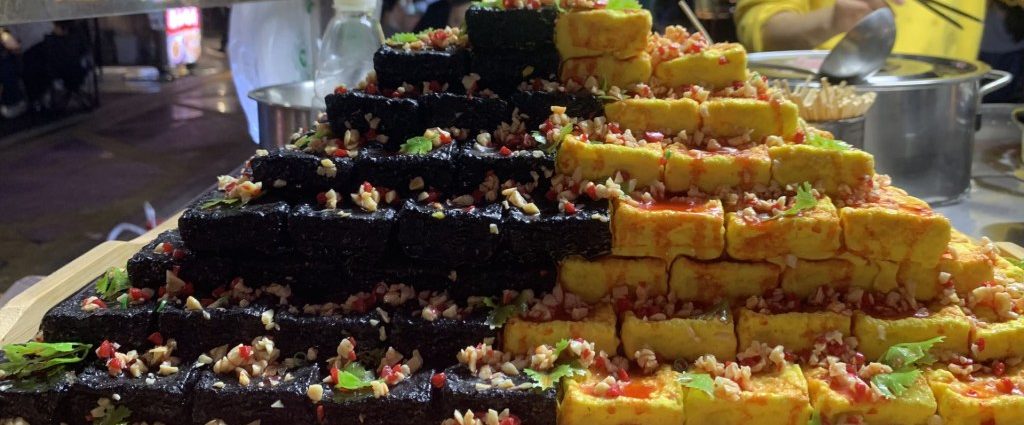
Stinky tofu (臭豆腐, chòu dòufu) is the most misunderstood food in China. It is fermented tofu with a smell that arrives before the plate does — and a taste that converts sceptics faster than almost anything else in Chinese cooking. Walk through any night market from Changsha to Taipei and you will find it: black or yellow, fried or braised, eaten on a stick, in a bowl, or bubbling in a hot pot.
This guide covers what it actually is, why it smells the way it does, how the black and yellow versions differ, where each regional style comes from, and how to eat it. If you want to cook, jump straight to the recipes at the end.
Stinky tofu (臭豆腐) is tofu that has been fermented in a brine made from fermented vegetables — classically 苋菜梗 (amaranth stems), bamboo shoots and shiitake — for several days to several weeks. The brine breaks down proteins and creates the signature smell; the tofu itself becomes creamy, savoury and faintly tangy inside. It is then fried, braised, steamed or grilled. It is fermented, not rotten, and commercially made stinky tofu is safe to eat.
Fermentation, Not Rotting
The English name does the dish a disservice. 臭 means “smelly”, but the process behind it is a controlled fermentation, not decay. Tofu is submerged in a brine — 卤水 — built from vegetables that are themselves fermented: amaranth stems, bamboo shoots, shiitake, sometimes fermented black beans and rice wine. That brine is often aged for months before any tofu goes into it.
During fermentation, enzymes break down the tofu’s proteins into amino acids and aromatic compounds. Some of those — ammonia and various sulfur compounds — are exactly what your nose picks up. The same breakdown is what makes the tofu taste so savoury: the amino acids released are the same ones behind the umami in aged cheese and cured meat. That is why stinky tofu is so often compared to a strong blue cheese. The smell is the by-product of the flavour.
Commercially produced stinky tofu is made under controlled conditions and is safe. Home fermentation from scratch is a different matter — an uncontrolled brine can grow the wrong things, which is why the recipes on this site start from ready-fermented tofu rather than raw.
Black or Yellow: The Two Families
Almost every first-time question about stinky tofu comes down to colour, and the answer explains a lot about regional style.
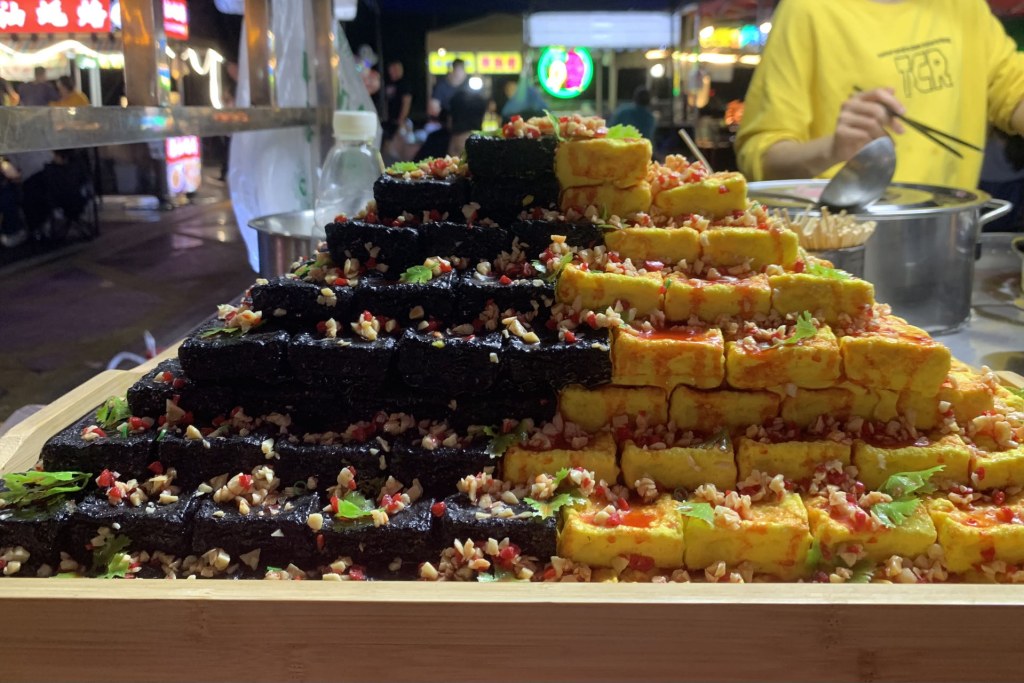
黑臭豆腐 (black) is the Changsha and Nanjing style. The brine is darker and the fermentation longer, and the finished tofu has a grey-black crust that fries to a deep charcoal. It looks alarming and tastes the most intense — crisper shell, creamier centre. This is what most people picture when they hear “stinky tofu”.
黄臭豆腐 (yellow or pale) comes from a lighter, shorter fermentation. The tofu keeps a golden-beige colour and fries to a bright amber. It is milder, and it is the default in many Taiwanese and northern Chinese stalls.
Neither is “more authentic”. They are two different brine traditions, and which one you meet depends entirely on where you are standing.
The Regional Map
Stinky tofu is not one dish but a family of them, and the cooking method changes as much as the fermentation.
Changsha, Hunan — deep-fried black tofu, served with a spoonful of chili-garlic sauce or broth poured into the centre. 火宫殿 (Huogongdian) is the city’s best-known address for it. This is the version most associated with Hunan, and the one my Changsha-style stinky tofu 臭豆腐 covers.
Nanjing and Jiangsu — fried yellow tofu, often eaten with a thin sauce and sometimes with pickled vegetables. Milder and less pungent than the Hunan version.
Taiwan — the most inventive branch. Here stinky tofu is braised in a mala broth, steamed with pickles, or thrown into 臭臭锅, the “stinky hot pot” that has become a night-market staple. My mala stinky tofu 麻辣臭豆腐 is from this tradition.
Shaoxing, Zhejiang — 蒸双臭, “steamed double stinky”: stinky tofu steamed together with fermented amaranth stems. Subtle, funky, and almost unknown outside the region.
Xi’an — a griddled and fried style sold around the Muslim Quarter, usually with a heavier chili and cumin seasoning.
One common confusion worth clearing up: 毛豆腐, the “hairy tofu” of Anhui, is not stinky tofu. It is fermented with a mould that grows a white fuzz on the surface — a completely different microbe and a completely different flavour. If you see a plate of fuzzy white tofu, you are looking at 毛豆腐.
What It Actually Tastes Like
The smell and the taste are not the same thing, and that gap is the whole point. A good piece of fried stinky tofu has a thin, shatteringly crisp shell and a custardy centre. The flavour is deeply savoury, lightly sour, slightly fermented, and — this surprises people — not remotely as strong as the aroma promised. Braised versions are gentler still, because the broth carries the aroma away and replaces it with chili, garlic and stock.
If you like aged cheese, kimchi, fish sauce or blue cheese, you already like this flavour family. If you do not, start with a braised version rather than a fried one — the broth does a lot of the work.
How It Is Eaten
- Fried — the classic. Skewered or boxed, with chili sauce, garlic water or a light vinegar dip. Best eaten within minutes, while the shell is still crisp
- Braised in mala broth — simmered in a numbing chili stock until it drinks up the liquid. The Taiwanese night-market favourite
- Steamed — with pickles or fermented vegetables, the mildest and most aromatic preparation
- In hot pot — as the centrepiece of 臭臭锅, or as an ingredient you drop into a regular mala hot pot alongside tripe and blood
- Grilled — brushed with chili oil and cumin, common in Xi’an and in street stalls across the north
Buying It: What to Look For
Outside China, stinky tofu almost always comes vacuum-packed, and that is a good thing — the sealed packs are fermented and pasteurised, so they travel well and behave predictably.
- Vacuum-packed stinky tofu — vacuum-packed stinky tofu is the practical starting point; look in the refrigerated section of a Chinese or Taiwanese grocery
- Chili sauce or 辣酱 — chili-garlic sauce for the fried version
- Sichuan peppercorns — Sichuan peppercorns if you are making the mala broth
Open the pack and use it within a few days. The aroma is strong and it will perfume everything else in the fridge — wrap it well, and cook it outdoors or with the extractor fan on if you can.
Frequently Asked Questions
Is stinky tofu safe to eat? Is it actually rotten?
It is fermented, not rotten. Commercially produced stinky tofu is made with a controlled brine and is safe — it has been eaten across China for centuries. The confusion comes from translation: 臭 means “smelly”, not “spoiled”.
Does it taste as bad as it smells?
No. The smell is far stronger than the taste. Fried stinky tofu is crisp, creamy and savoury; braised stinky tofu is milder still. Most first-timers are surprised by how approachable it is once it is in their mouth.
Is stinky tofu the same as 毛豆腐?
No. 毛豆腐 is fermented with a mould that grows white fuzz on the surface, and it is a speciality of Anhui. Stinky tofu is brined in fermented vegetable liquid. Different microbes, different textures, different flavours.
Is stinky tofu vegetarian?
Usually yes. It is tofu plus a vegetable brine, so the classic versions are vegan. A minority of commercial brines include shrimp or fish derivatives, so check the label if it matters to you.
Where to Start
If you want to cook it, start with the Changsha fried version 臭豆腐 for the classic night-market experience, or the mala braised version 麻辣臭豆腐 if you prefer something soupier and less pungent. Both go well with Hunan Rice Noodles 湖南米粉 or a bowl of plain rice.
For more Chinese street food, see my Spicy Crayfish 口味虾 and Mala Xiang Guo 麻辣香锅.
Photo: 水餃喵 via Wikimedia Commons, CC BY 4.0. Adapted by cropping and resizing.
As an Amazon Associate, I earn from qualifying purchases. These are affiliate links at no extra cost to you.
1 Comment