
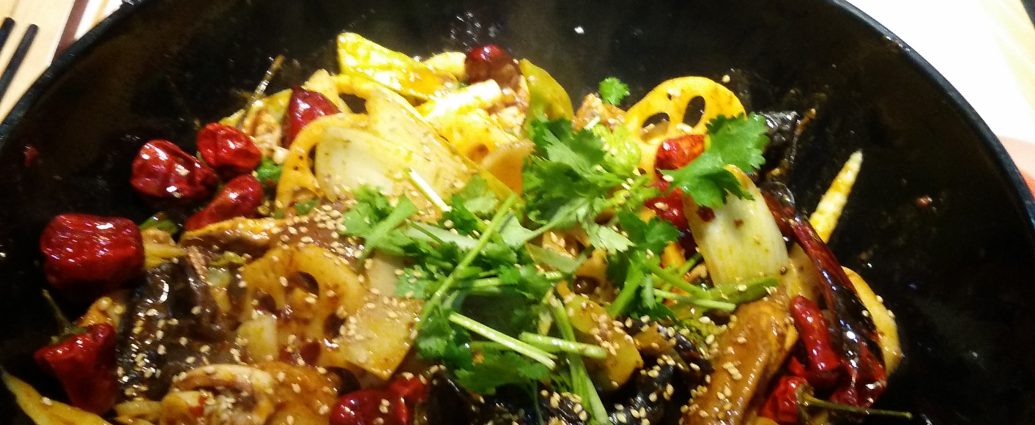
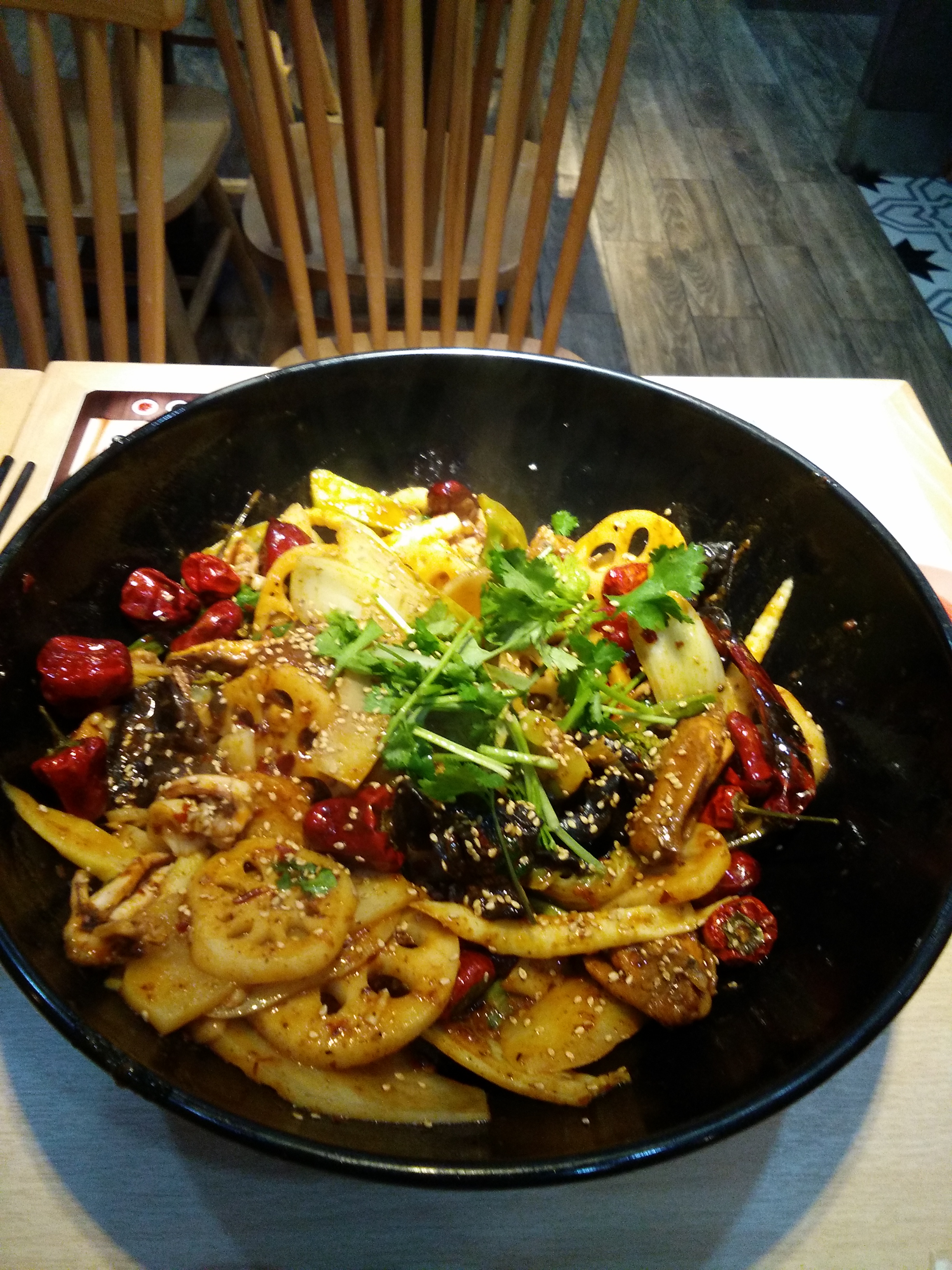
Mala Xiang Guo (麻辣香锅), or “spicy numbing fragrant pot,” is one of Sichuan’s most addictive dishes — a wok-fried medley of meats, vegetables, and tofu tossed in a fiery, fragrant sauce of dried chilies, Sichuan peppercorns, and doubanjiang. Every ingredient is custom-picked, like hotpot, but the result is a dry, intensely flavored stir-fry. Here is the home method.
Mala xiang guo (麻辣香锅) is a Sichuan dish of assorted meats, vegetables, and tofu wok-fried in a dry, intensely spicy sauce of dried chilies, Sichuan peppercorns, and doubanjiang. You pick your own ingredients, like hotpot, but everything comes back in one fiery, fragrant stir-fry.
麻辣香锅 is the dry cousin of hotpot, and it emerged from Chengdu’s restaurant culture in the 2000s as a way to serve the hotpot experience without the table-top pot. The name says everything: 麻辣 (numbing-spicy), 香 (fragrant), 锅 (pot). Where 麻辣烫 cooks your choices in broth and 重庆火锅 has you simmer them yourself, 香锅 fries them — driving off moisture so the seasoning clings to each piece rather than diluting into a soup. The result is more intense than any of them, which is exactly why it became one of Sichuan’s most exported restaurant formats.
This recipe comes from a Chengdu restaurant cook who taught me the essential trick: each ingredient is cooked separately FIRST (meats fried, vegetables blanched), then all tossed together in the spicy oil at the end. This keeps every component perfectly cooked — nothing overdone or soggy.
Why Cook Everything Separately First
The defining problem of a mixed-ingredient wok dish is that lotus root, shrimp, and potato need completely different cooking times. If you throw them all in together, the shrimp turns to rubber while the potato is still raw. The 香锅 solution — and the reason restaurant versions taste better than most home attempts — is to pre-cook each ingredient to its own ideal point, then combine them for a brief final toss in the spicy oil. The final toss is where the flavor happens; everything before it is just making sure nothing is overcooked by the time it gets there.
Building Your Xiang Guo
Pick two or three items from each group. The classic combination balances textures — something chewy, something crisp, something soft:
- Meats: thinly sliced beef, chicken thigh, pork belly, luncheon meat, sausage
- Seafood: shrimp, squid rings, fish balls, crab sticks
- Vegetables: lotus root, potato slices, cauliflower, broccoli, green beans, celery
- Tofu and fungi: firm tofu, tofu skin, fried tofu puffs, wood ear, shiitake, enoki
- Noodles: optional — wide sweet potato noodles are a popular addition
Ingredients and Where to Find Them
- Pixian doubanjiang — doubanjiang, the fermented chili-bean paste that anchors the sauce
- Dried chilies — dried red chilies, snipped into sections
- Sichuan peppercorns — whole Sichuan peppercorns for the numbing layer
Also needed: garlic, ginger, scallions, star anise, bay leaves, rock sugar, light soy sauce, Shaoxing wine, and a generous amount of oil — xiang guo is intentionally oil-rich.
How to Cook It
- Prepare your ingredients: slice meats thinly, cut vegetables into even bite-sized pieces
- Blanch the firm vegetables (lotus root, potato, cauliflower) in salted water for 3–5 minutes; drain well
- Sear the meats separately in a hot wok until just cooked; set aside. Cook seafood for 1–2 minutes only
- Heat 100ml oil over low heat with 3 star anise and 2 bay leaves for 5 minutes, then strain out the whole spices
- Add 2 tablespoons doubanjiang and fry gently until the oil turns deep red, about 3 minutes
- Add 20 snipped dried chilies, 1 tablespoon Sichuan peppercorns, garlic, and ginger; stir 30 seconds until fragrant
- Toss in all the pre-cooked ingredients over high heat for 2–3 minutes until every piece is coated in the red oil
- Season with 1 tablespoon light soy and a pinch of sugar, scatter with scallions and sesame, and serve straight from the wok
Variations
- Seafood xiang guo — shrimp, squid, and clams with less meat; cook the seafood in the final toss only
- Vegetarian xiang guo — skip the meats and add extra mushrooms, tofu skin, and potato for substance
- With noodles — toss in cooked sweet potato noodles at the very end for a fuller meal
- Milder version — halve the chilies and peppercorns, add an extra teaspoon of sugar, and serve with a bowl of plain rice
Frequently Asked Questions
What is the difference between mala xiang guo and mala tang?
Mala tang cooks your chosen ingredients in a spicy broth and serves them wet. Mala xiang guo fries them in spiced oil and serves them dry, so the seasoning clings to each piece rather than diluting. Xiang guo is more intense and oilier; tang is soupier and lighter.
Can I use a store-bought xiang guo seasoning?
Yes — packaged 麻辣香锅调料 is widely available and quite good. Fry it in oil until fragrant, then toss with your pre-cooked ingredients. Making the base from scratch gives you control over the heat and salt, but the shortcut is genuinely respectable.
Why is my sauce bitter?
The chilies or peppercorns were burned. Fry them over medium heat just until fragrant — 20 seconds max. Burnt chilies turn bitter.
How spicy is it?
Quite spicy by Western standards, but adjustable. The heat comes from the doubanjiang, dried chilies, and peppercorns, all of which you control. Start with half the chilies, taste, and add more chili oil at the table.
More Sichuan Favorites
Love the mala style? Try my Mao Xue Wang 毛血旺, the nine-grid Chongqing Hotpot 重庆火锅, or the personal-bowl Mala Tang 麻辣烫.
As an Amazon Associate, I earn from qualifying purchases. These are affiliate links at no extra cost to you.
3 Comments