
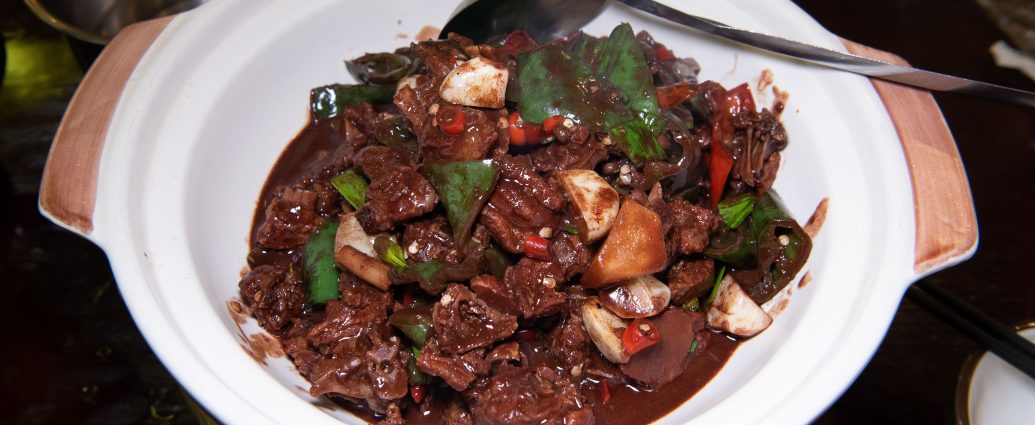
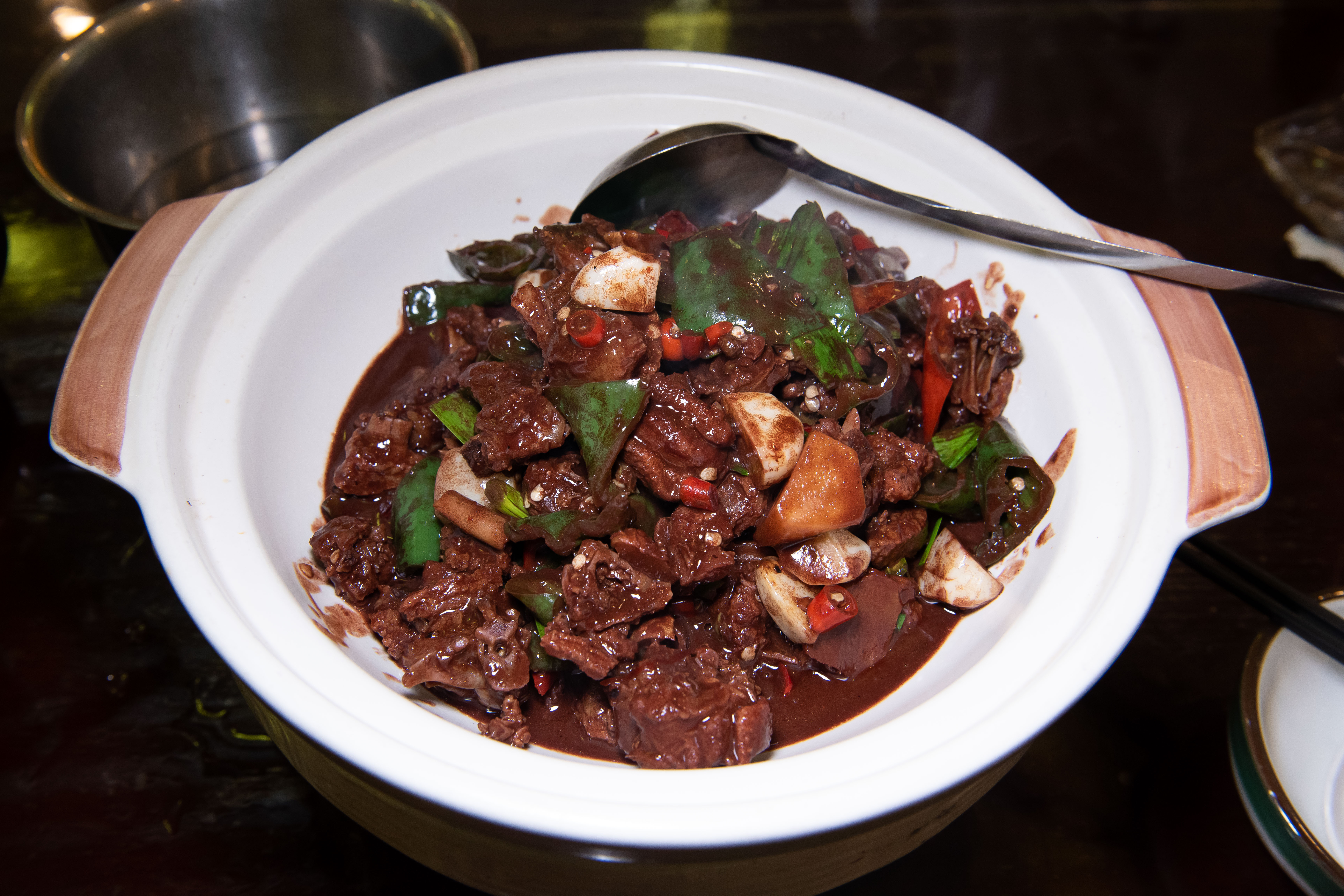
Yongzhou Blood Duck (永州血鸭) is a legendary Hunan dish from Yongzhou — tender duck pieces stir-fried with fresh chilies, ginger, and garlic, then finished by pouring the duck’s fresh blood over the wok so it coats every piece in a glossy, savory dark sauce. It is bold, earthy, and unmistakably Hunan. Here is the authentic method.
Yongzhou blood duck (永州血鸭) is a famous Hunan dish of stir-fried duck tossed with fresh duck blood, chilies, ginger, and garlic. The blood is poured over the cooked duck at the end, creating a glossy, rich, savory sauce that coats every piece.
永州血鸭 is a dish of place and pride. Yongzhou, in southern Hunan, is the region associated with the Tang dynasty writer Liu Zongyuan, and its cooking is known for directness — fresh chilies, ginger, and duck, the region’s signature protein. The technique of finishing a dish with fresh blood is an old one, found across southern China as a way to use every part of the animal and to thicken and enrich a sauce without starch. When the blood hits the hot wok, it darkens and thickens into a glossy coating that clings to each piece of duck, adding a deep, mineral savoriness that no soy sauce can imitate. The dish is a fixture of Yongzhou tables and one of the most distinctive things in Hunan cooking.
This recipe comes from a home cook in Yongzhou who taught me the essential trick: the blood must be added at the very end, off the highest heat, and stirred just enough to coat — cook it too long and it curdles into rubbery bits instead of a silky glaze.
Why the Blood Must Go In Last
Fresh blood is essentially a protein solution, and it behaves like egg. Over heat it sets — gently and into a smooth, glossy mass if handled correctly, or into rubbery curds if it is cooked hard or too long. The technique is therefore identical to thickening a sauce with egg: the duck is fully cooked and seasoned first, the wok is taken off the highest heat, and the blood is poured in and folded through for just a few seconds. It coats each piece, darkens to a deep reddish-brown, and turns the dish glossy. The traditional way to keep the blood fluid is to stir a little vinegar or water into it before it goes in, which prevents premature clotting.
Building the Dish
- Use a whole duck, cut small — bone-in pieces give the sauce more flavor; ask your butcher to save the blood
- Render the fat first — duck is fatty, and its own rendered fat is the cooking medium for everything that follows
- Fresh chilies in quantity — Hunan cooking means real heat; use green and red chilies, chopped coarsely
- Ginger in slivers — a generous amount, to warm the dish and cut the duck’s richness
- Simmer with a little beer or stock — the traditional braising liquid for the duck before the blood goes in
- Stir the blood with a splash of vinegar before adding — it keeps the texture silky
Ingredients and Where to Find Them
- Duck — whole duck, cut into bite-sized pieces; ask the butcher to save the blood
- Fresh chilies — fresh green and red chilies
- Shaoxing wine — Shaoxing wine for the braise
Also needed: ginger, garlic, scallions, dried chilies, light soy sauce, dark soy sauce, salt, sugar, and a little vinegar for the blood. Some cooks add pickled chilies or a spoonful of doubanjiang.
How to Make It
- Cut 1.5kg (3.3 lb) duck into bite-sized pieces; stir 1 teaspoon vinegar into the reserved blood and set aside
- Heat a wok and render the duck pieces over medium heat for 8 minutes until the skin is golden and the fat has rendered; pour off excess fat
- Add 30g sliced ginger, 6 minced garlic cloves, and 8 chopped fresh chilies; stir-fry 2 minutes until fragrant
- Add 2 tablespoons Shaoxing wine, 2 tablespoons light soy, 1 tablespoon dark soy, and 300ml beer or stock
- Cover and simmer 20 minutes until the duck is tender and the liquid has reduced by half
- Remove from the highest heat, pour in the blood mixture, and fold gently for 20–30 seconds until it thickens and coats every piece
- Scatter with scallions and serve immediately with steamed rice
Variations
- With pickled chilies — 剁椒 or pickled green chilies add a fermented tang that many Yongzhou cooks prefer
- With more heat — add dried chilies with the fresh ones for a smokier, fierier dish
- With duck blood cubes — some versions add set blood cubes alongside the fresh blood for extra texture
- With chicken — the same technique works on chicken (血鸡), though duck’s richer fat suits it better
Frequently Asked Questions
Is the blood safe to eat?
Yes — fresh blood is fully cooked when it thickens in the hot wok, and blood-based dishes have been eaten across China for centuries. Source it from a reputable butcher, keep it refrigerated, and use it the same day. If you are uncomfortable with it, the dish can be made without the blood, though it will be a different dish.
Why did my blood curdle?
The wok was too hot, or the blood cooked too long. Take the pan off the highest heat before adding it, stir a teaspoon of vinegar into the blood beforehand, and fold it through for only 20–30 seconds — just until it coats.
What duck parts are used?
All of it — the whole duck is cut into pieces. The dark meat absorbs the sauce best. Ask your butcher to save the blood when you buy the duck.
Is this dish very spicy?
Yes — it is a Hunan dish and uses fresh chilies generously. You can reduce the quantity, but the dish is defined by its boldness, and the duck’s richness stands up to serious heat.
More Hunan Classics
Explore Hunan flavor with my Xiao Chao Rou 小炒肉, the steamed Fish Head with Chopped Chili 剁椒鱼头, or the Changsha favorite Hunan Rice Noodles 湖南米粉.
As an Amazon Associate, I earn from qualifying purchases. These are affiliate links at no extra cost to you.
2 Comments