
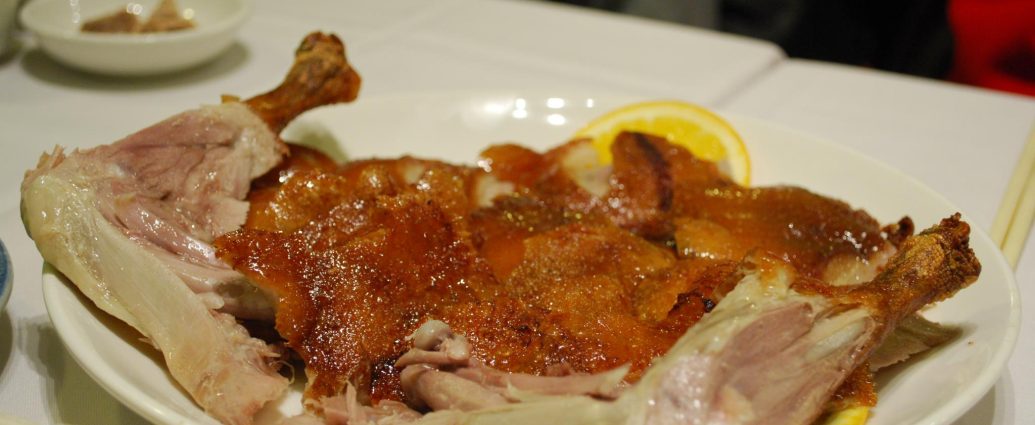
Roast Duck (烧鸭) is one of Cantonese siu mei’s (烧腊) crown jewels — whole duck lacquered with a sweet-spiced marinade, air-dried until the skin tightens, then roasted until mahogany and shatteringly crisp. Sliced and served over rice or noodles with plum sauce, it is the taste of Hong Kong’s roast meat shops. Here is the home-oven method.
Cantonese roast duck (烧鸭) is a whole duck marinated with five-spice, soy, and honey, air-dried, and roasted until the skin is mahogany-crisp. It is a signature siu mei dish served with plum sauce over rice or noodles.
烧腊 (siu mei) is the Cantonese craft of roasting and braising meats — a tradition so central to Guangdong and Hong Kong food culture that every neighborhood has its own 烧腊店, its window hung with glistening ducks, char siu, and crackling pork belly. Roast duck sits at the top of that hierarchy. In the classic shop setup, ducks are marinated inside and out, briefly blanched, coated in a maltose glaze, then hung in front of a fan for hours before going into a tall charcoal or gas oven. The home oven cannot replicate the hanging oven, but it can absolutely produce crisp, lacquered duck — provided you respect the drying step.
This recipe comes from a Hong Kong siu mei master who taught me the essential trick: the AIR-DRYING step is non-negotiable. After marinating, the duck must hang (or rest on a rack) in the fridge for at least 6 hours so the skin dries completely — dry skin is what roasts into that glassy crackle.
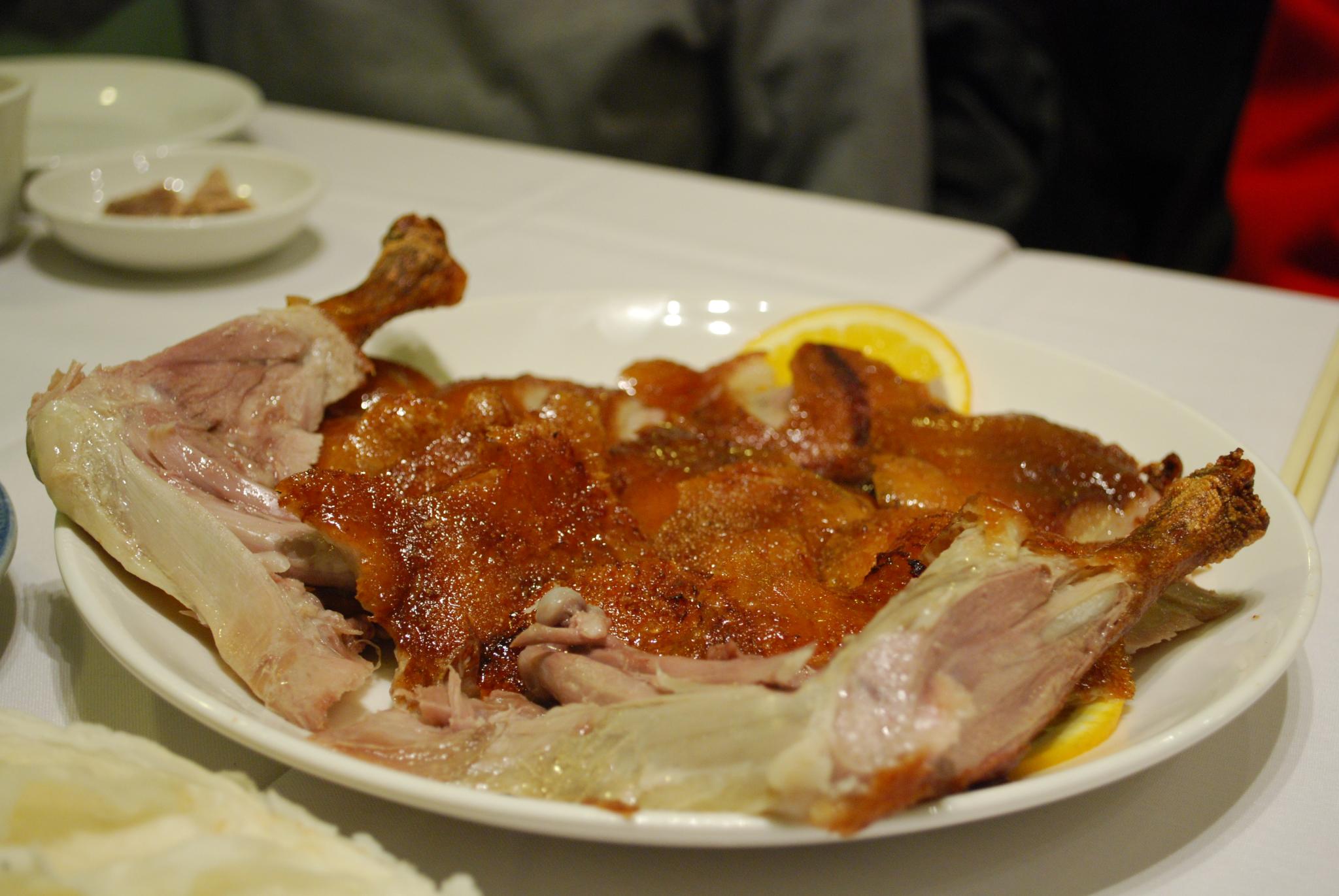
Why Dry Skin Equals Crisp Skin
Crispness is a moisture problem. When duck skin goes into a hot oven wet, the surface water has to evaporate before the skin can brown, and by the time it does, the meat underneath is already overcooked. When the skin goes in dry, browning and crisping begin immediately. This is why every serious roast duck recipe includes a drying period, and why the Cantonese tradition hangs ducks in front of a fan. The home version is simpler: blot the duck thoroughly, brush it with a maltose-vinegar glaze (which also helps the skin tighten), and leave it uncovered on a rack in the refrigerator for at least six hours — overnight is better. The cold, dry fridge air does the work of the fan.
The Three Stages of Cantonese Roast Duck
- Season inside. The cavity is rubbed with five-spice, salt, sugar, and often a fermented bean paste, then sewn or skewered shut so the seasoning steams into the meat from within.
- Blanch and glaze. Boiling water poured over the skin tightens it; a maltose and vinegar glaze gives the mahogany lacquer and helps it crisp.
- Dry, then roast. Hours of air-drying, then a hot roast with the duck on a rack so fat renders away rather than pooling.
Ingredients and Where to Find Them
- Whole duck — whole duck, about 2kg (4.5 lb); Pekin or Long Island both work
- Maltose — maltose syrup is what gives the signature lacquer; honey is a workable substitute
- Five-spice powder — five-spice powder for the cavity seasoning
Also needed: light and dark soy sauce, Shaoxing wine, sugar, salt, rice vinegar, garlic, ginger, and scallions. Plum sauce (苏梅酱) is the classic accompaniment.
How to Roast It
- Rinse and dry a 2kg whole duck; prick the skin all over with a skewer, avoiding the meat
- Rub the cavity with 1 tablespoon five-spice, 2 teaspoons salt, 1 tablespoon sugar, 1 tablespoon soy sauce, and 1 tablespoon Shaoxing wine; seal the opening
- Pour boiling water over the skin until it tightens and pales, then pat dry
- Brush with a glaze of 2 tablespoons maltose, 1 tablespoon rice vinegar, and 1 tablespoon hot water
- Hang or rest the duck on a rack, uncovered, in the refrigerator for at least 6 hours (overnight is best)
- Roast at 200°C (400°F) for 20 minutes, then lower to 170°C (340°F) for 50–60 minutes, turning once and brushing with glaze at the halfway point
- Rest 15 minutes before carving; serve with plum sauce, steamed rice, and scallions
Variations
- With hoisin glaze — add 1 tablespoon hoisin to the glaze for a deeper, sweeter lacquer
- Tea-smoked version — see my Zhang Cha Duck 樟茶鸭 for the Sichuan smoked-and-roasted tradition
- Spatchcocked duck — butterflied duck cooks in half the time and crisps more evenly; a good option for a weeknight
- Duck legs only — the same marinade and glaze work beautifully on four duck legs, roasted 40 minutes
Frequently Asked Questions
Why is my roast duck skin not crispy?
Almost always insufficient drying. The skin must be completely dry before roasting — at least 6 hours uncovered in the refrigerator, ideally overnight. The maltose glaze also helps the skin tighten and brown. If the skin is still soft after roasting, blast it under the broiler for 2–3 minutes, watching closely.
What is the difference between 烧鸭 and Peking duck?
烧鸭 is Cantonese-style roast duck: marinated inside with five-spice and soy, glazed with maltose, and roasted until the skin is crisp and the meat deeply seasoned. Peking duck is a Beijing tradition with a different preparation — the skin is separated from the meat and served first, and the duck is typically served with pancakes, scallions, and hoisin. Both are excellent; they are simply different dishes.
Can I make the glaze ahead?
Yes — the glaze keeps 2 weeks refrigerated. Reheat gently to brush again for extra shine before serving.
What do I do with the leftover duck?
Shredded roast duck is superb in fried rice, noodle soups, or stir-fried with rice cakes. The carcass makes an excellent stock — simmer it with ginger and scallions for 90 minutes. Keep the rendered fat in a jar; it is outstanding for frying potatoes or greens.
More Cantonese Roasts & Classics
Love siu mei? Try my Honey Char Siu 蜜汁叉烧, the poached White Cut Chicken 白切鸡, or the crackling Siu Yuk 脆皮烧肉.
As an Amazon Associate, I earn from qualifying purchases. These are affiliate links at no extra cost to you.
2 Comments