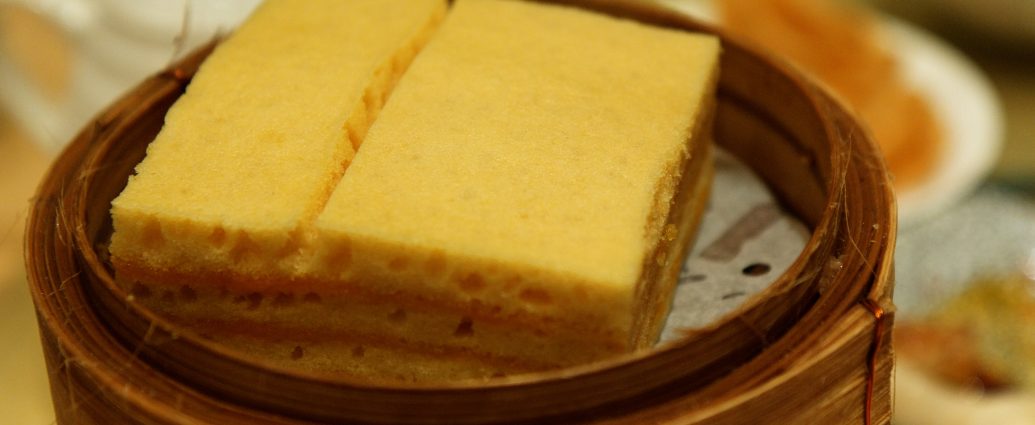
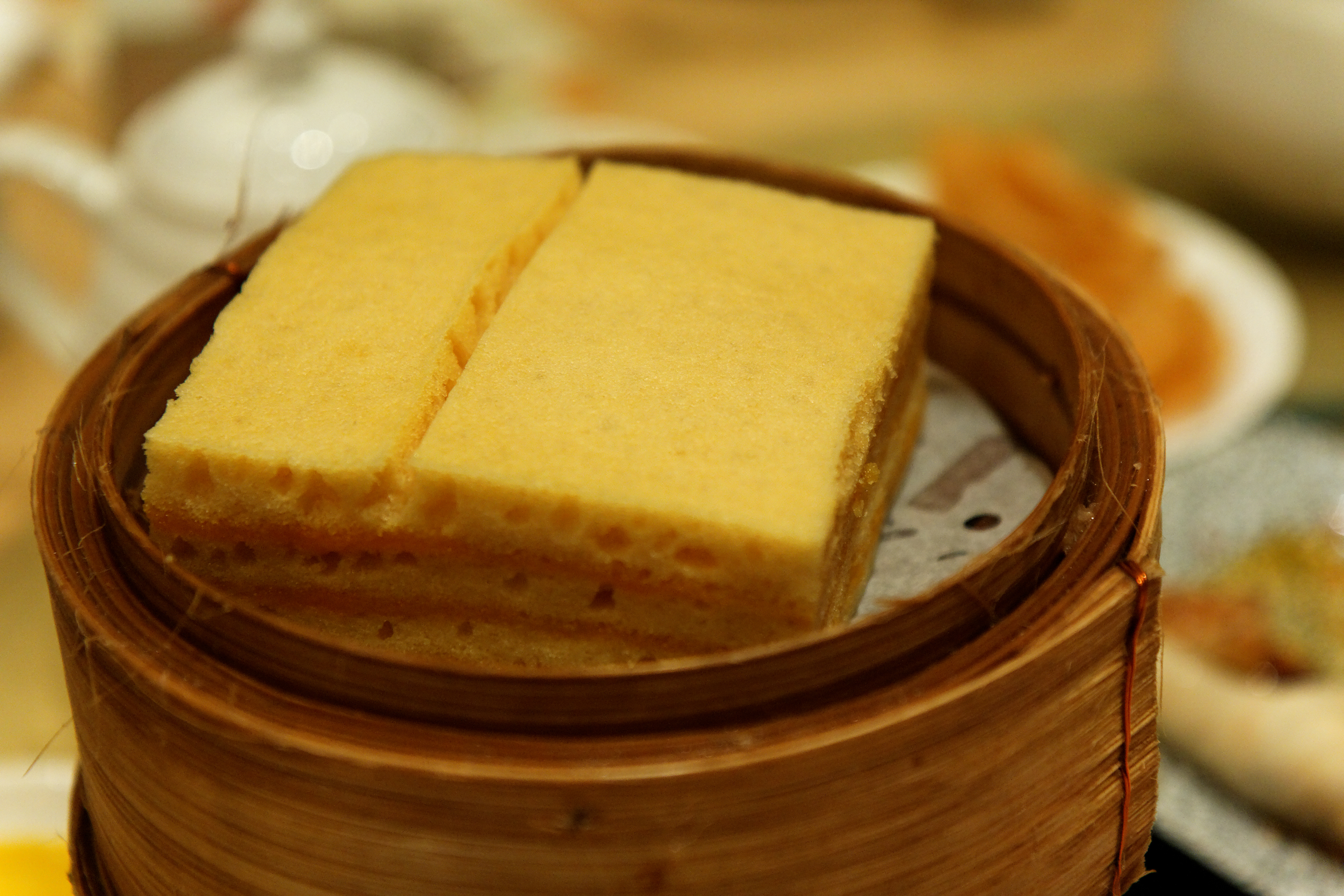
Malay Cake (马拉糕), known as Ma Lai Go in Cantonese, is the pillowy golden sponge cake of dim sum — steamed to a honeycomb-soft crumb with a rich caramel-brown color from brown sugar. It is sweet, airy, and impossibly light, with a subtle warmth from caramelized sugar. Here is the classic Hong Kong recipe.
Malay cake (马拉糕) is a Cantonese dim sum dessert — a steamed golden sponge cake made with brown sugar, flour, eggs, and yeast. It is soft, airy, and honeycomb-textured with a caramelized sweetness.
Despite the name, 马拉糕 has nothing to do with Malaysia. The story most dim sum cooks tell is that the technique traveled from Southeast Asia to Guangdong in the early 20th century — the Cantonese name literally means “Malay cake” — and was then transformed by Cantonese kitchens into the tall, mahogany-colored, honeycomb-crumbed cake served today. Unlike a Western sponge, it is never baked: the batter is steamed, which keeps it extraordinarily moist and gives it that distinctive bouncy, resilient crumb. In Hong Kong, it is eaten at any hour — as a dim sum dessert, an afternoon snack with milk tea, or breakfast.
This recipe comes from a Hong Kong dim sum master who taught me the essential trick: the batter must be RESTED (at least 1 hour) so the yeast and baking powder develop the signature honeycomb structure. Steaming it covered, gently, keeps the cake moist and even.
Why the Rest Matters
Ma Lai Go rises twice. The first rise happens in the bowl: yeast and baking powder work on the batter during a one-hour rest, building the gas bubbles that will become the honeycomb crumb. The second happens in the steamer, where heat sets the structure before the bubbles can collapse. Skip or shorten the rest and the cake still cooks — but it comes out dense and flat instead of tall, airy, and springy. The rest is not optional; it is the recipe.
The Steaming Rules
- Wrap the lid in a towel — condensation dripping onto the batter leaves soggy craters
- Steam over medium, not rolling-boiling heat — violent steam makes the surface ripple and crack
- Line the tin with parchment and leave an overhang so you can lift the cake out cleanly
- Do not open the lid during the first 15 minutes — the cake deflates if the temperature drops
- Test with a skewer at the center; it should come out clean, and the top should spring back when pressed
Ingredients and Where to Find Them
- Brown sugar (or dark muscovado) — dark brown sugar gives the signature mahogany color and caramel depth
- Cake flour — cake flour keeps the crumb tender; all-purpose makes it slightly chewier
- Instant yeast — instant yeast for the first rise
Also needed: eggs, evaporated milk (or whole milk), melted butter or oil, baking powder, and a pinch of salt. Traditional versions use a little custard powder for color and aroma — optional, but it is what many dim sum kitchens do.
How to Make It
- Warm 150ml (2/3 cup) evaporated milk with 120g (2/3 cup) dark brown sugar until dissolved; cool to lukewarm
- Whisk in 3 eggs, 2 tablespoons melted butter, and 1 teaspoon vanilla
- Sift in 200g (1.6 cups) cake flour, 1 teaspoon instant yeast, 1 teaspoon baking powder, and a pinch of salt; whisk until smooth
- Cover and rest at room temperature for 1 hour, until bubbly and slightly risen
- Pour into a parchment-lined tin about 20cm (8 in) square, filling no more than two-thirds
- Steam over medium heat for 25–30 minutes with a towel-wrapped lid
- Cool 10 minutes in the tin, then lift out and cut into squares; serve warm
Variations
- Coconut version — replace half the evaporated milk with coconut milk for a fragrant, tropical crumb
- Custard-swirl version — drop spoonfuls of salted egg custard over the batter before steaming and swirl with a skewer
- Pandan version — add 1 teaspoon pandan extract for color and aroma; popular in Malaysian and Singaporean Chinese kitchens
- Raisin or red date version — scatter raisins or chopped red dates over the top before steaming, a common home variation
Frequently Asked Questions
Why is my malay cake dense instead of fluffy?
Either the batter was not rested long enough, or the lid was opened during steaming. The yeast needs a full hour to build the honeycomb structure, and a sudden temperature drop collapses it. Rest the full hour, keep the lid on, and steam gently over medium heat.
Can I bake it instead of steaming?
You can, but the result is a different cake — drier and more like a brown-sugar sponge. Steaming is what gives Ma Lai Go its distinctive moist, bouncy crumb, and it is worth buying or improvising a steamer for.
Can I add flavorings?
Yes — a splash of evaporated milk or coconut milk adds richness. Some versions add a touch of rum or vanilla for aroma. Pandan and custard swirls are also traditional.
How long does it keep?
Two days at room temperature in an airtight container, or four days refrigerated. It firms up when cold, so re-steam for 5 minutes or microwave briefly to bring back the soft, springy texture. It also freezes well for up to a month.
More Dim Sum Sweets & Breads
Complete your dim sum spread with my Custard Buns 奶黄包, the molten Salted Egg Yolk Custard Buns 流沙包, or the classic Hong Kong Egg Tart 蛋挞.
As an Amazon Associate, I earn from qualifying purchases. These are affiliate links at no extra cost to you.