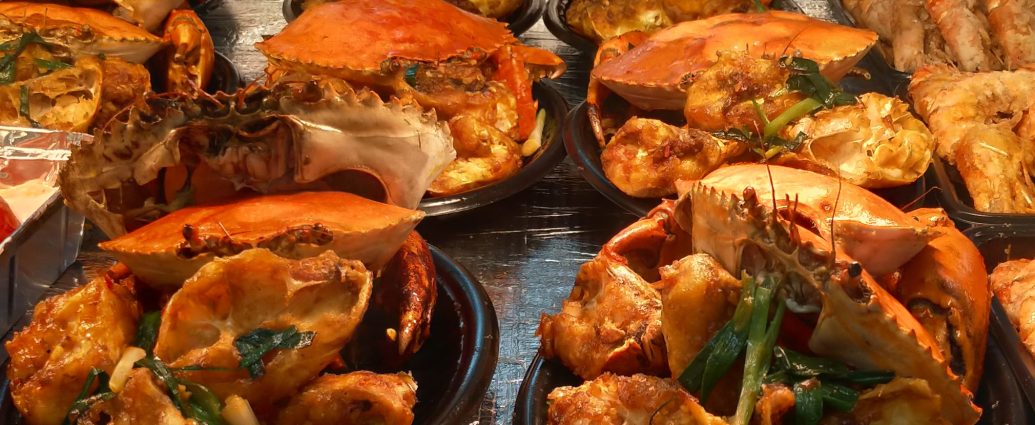
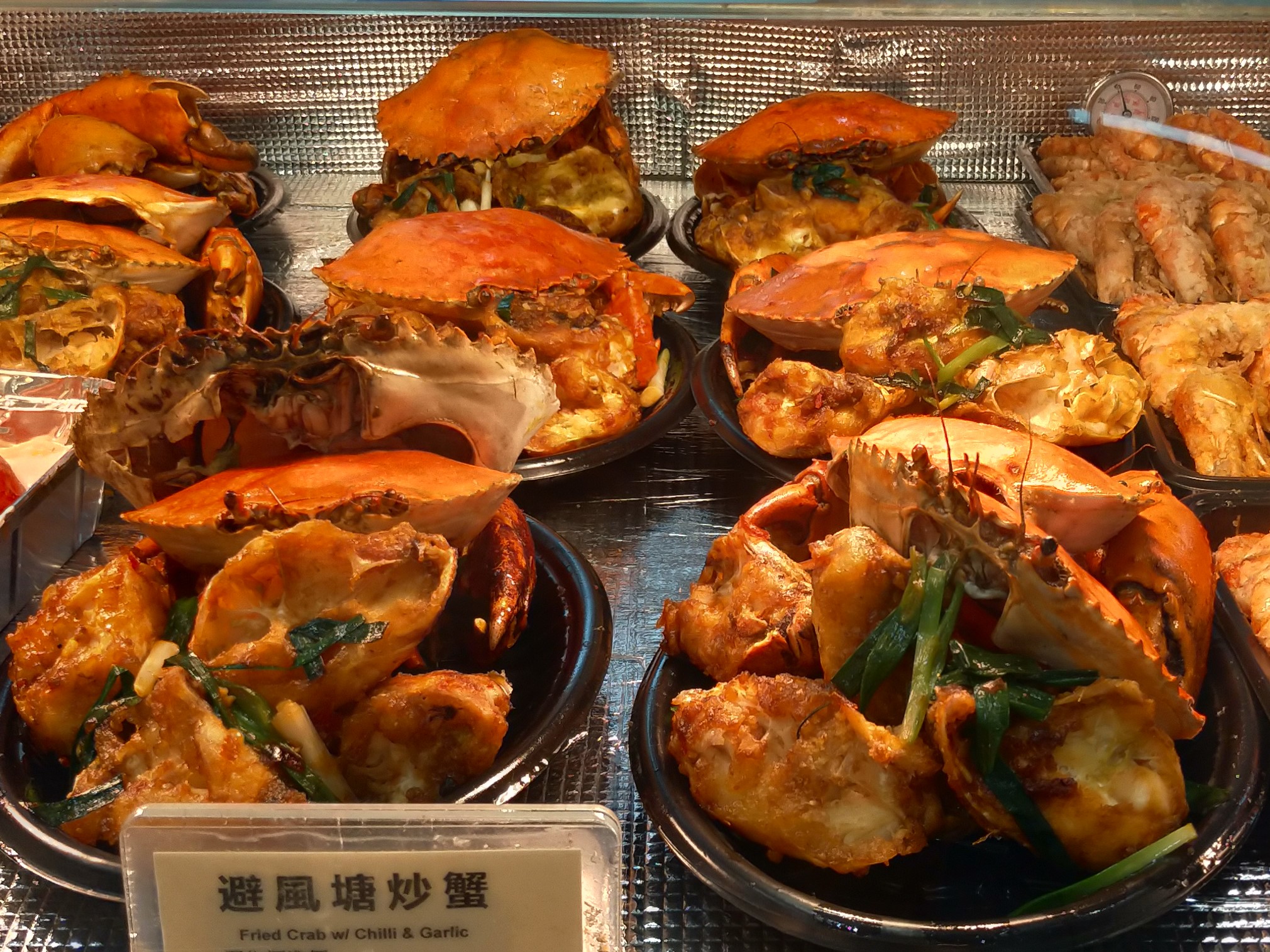
Typhoon Shelter Crab (避风塘炒蟹) is one of Hong Kong’s most celebrated seafood dishes — whole crab deep-fried and tossed with a dramatic mountain of golden garlic crumbs, chili, and scallions. The name comes from the typhoon shelters of Victoria Harbour, where boat-dwelling cooks invented this style of cooking. It is crispy, fragrant, garlicky, and utterly addictive.
Typhoon shelter crab is a Hong Kong dish of deep-fried crab tossed with crispy fried garlic, dried chilies, fermented black beans, and scallions. It originated with boat people sheltering from typhoons in Hong Kong’s harbors, and is famous for its crunchy golden garlic crumb coating.
避风塘 means “typhoon shelter,” and the name records a specific community. For much of the twentieth century, Hong Kong’s harbour was home to thousands of 水上人 — boat-dwelling people who lived, worked, and cooked on their vessels. When typhoons came, they sheltered together in the protected anchorages of Causeway Bay and Aberdeen. In those crowded waters, with limited equipment, they developed a style of cooking that needed only a wok and hot oil: seafood fried hard, then tossed with a mass of crisp fried garlic and chili. The technique became known as 避风塘 style, and today it is applied to crab, prawns, squid, and even tofu. The boat community has largely moved ashore, but the cooking it produced is now a cornerstone of Hong Kong seafood restaurants.
This recipe comes from a seafood restaurant in Causeway Bay, where the chef taught me that the secret is in the garlic: it must be fried LOW and SLOW until deep golden and crisp (never brown), then mixed with a little butter and sugar to create a sweet, savory crumb that you want to eat by the spoonful.
The Garlic Crumb Is the Dish
The crab is the vehicle; the garlic crumb is what people remember. Making it well is a matter of temperature discipline. Finely chopped garlic goes into oil that is warm but not hot — around 130–140°C (265–285°F) — and fries slowly for several minutes. At this temperature, the garlic’s moisture cooks off gradually and it turns an even, pale gold with a light, sandy crunch. Turn the heat up and the outside burns before the inside dries, leaving bitter, chewy bits. The finished crumb is drained, then tossed with a little butter, sugar, and salt, and returned to the wok with the fried crab, chilies, and fermented black beans. The sugar is not for sweetness so much as for balance — it rounds the garlic’s bite and makes the crumb compulsively eatable.
Preparing the Crab
- Use a meaty crab — blue crab or Dungeness; mud crab is traditional in Hong Kong
- Clean and joint it — remove the shell, gills, and guts, then cut the body into quarters and crack the claws so the meat is accessible
- Pat absolutely dry — surface moisture causes violent spattering and prevents the shell from crisping
- Dust lightly with cornstarch — this helps the shell crisp and gives the garlic something to cling to
- Fry in batches at 190°C (375°F) — hot and fast, about 3 minutes, until the shells turn bright red
- Do not overcrowd — a crowded wok drops in temperature and the crab steams instead of frying
Ingredients and Where to Find Them
- Crab — whole crab, or frozen cooked crab as a convenience
- Fermented black beans (douchi) — douchi, rinsed and mashed
- Dried chilies — dried red chilies, snipped
Also needed: a large head of garlic (you need a lot), scallions, ginger, butter, sugar, salt, white pepper, Shaoxing wine, cornstarch, and oil for deep-frying.
How to Cook It
- Clean and joint a 1kg (2.2 lb) crab into quarters, crack the claws, and pat completely dry; dust lightly with cornstarch
- Fry the crab in batches at 190°C (375°F) for 3 minutes until the shells are bright red; drain on a rack
- Finely chop 2 whole heads of garlic; fry in oil at 135°C (275°F) for 4–5 minutes, stirring, until pale golden and crisp; drain and reserve the oil
- Toss the drained garlic with 1 tablespoon butter, 1 teaspoon sugar, and 1/2 teaspoon salt
- In a hot wok with 2 tablespoons of the garlic oil, fry 1 tablespoon mashed douchi, 6 snipped dried chilies, ginger, and scallion whites for 30 seconds
- Return the crab, add 1 tablespoon Shaoxing wine, and toss 1 minute
- Add the garlic crumb and toss for 30 seconds until the crab is coated; scatter with scallion greens and serve immediately
Variations
- With prawns (避风塘虾) — the same crumb with shell-on prawns; see my Salt and Pepper Prawns 椒盐虾
- With squid — scored squid tubes fried and tossed the same way
- With tofu — firm tofu cubes fried and coated in the crumb; a popular vegetarian version
- With more heat — add fresh bird’s eye chilies or a teaspoon of chili flakes with the dried chilies
Frequently Asked Questions
Why did my garlic turn bitter?
The oil was too hot. Garlic needs to fry slowly at a low temperature — around 130–140°C (265–285°F) — so it dries out evenly and turns golden rather than scorching. Burnt garlic is bitter and there is no way to rescue it; start again with fresh garlic.
What kind of crab is best?
Blue crab, Dungeness, or any meaty crab works. Frozen crab is fine — thaw completely and pat very dry before frying. Fresh live crab yields the sweetest meat.
Do I have to deep-fry the crab?
It is the traditional method and gives the shell its crisp texture. You can shallow-fry in a large wok with 3cm of oil, turning the pieces, but deep-frying is easier and more even.
Can I make the garlic crumb ahead?
Yes — fry the garlic, drain it thoroughly, and store it in an airtight container for up to three days. Re-crisp it in a dry pan for a minute before tossing with the crab, and add the butter and sugar at that point.
More Cantonese Seafood & Classics
Explore more Cantonese favorites: my Salt and Pepper Prawns 椒盐虾, the lacquered Roast Duck 烧鸭, or the sweet Honey Char Siu 蜜汁叉烧.
As an Amazon Associate, I earn from qualifying purchases. These are affiliate links at no extra cost to you.