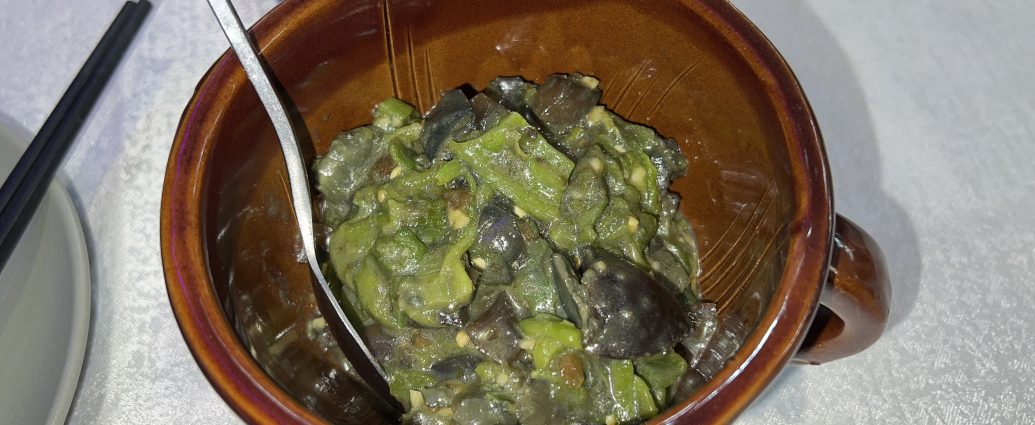
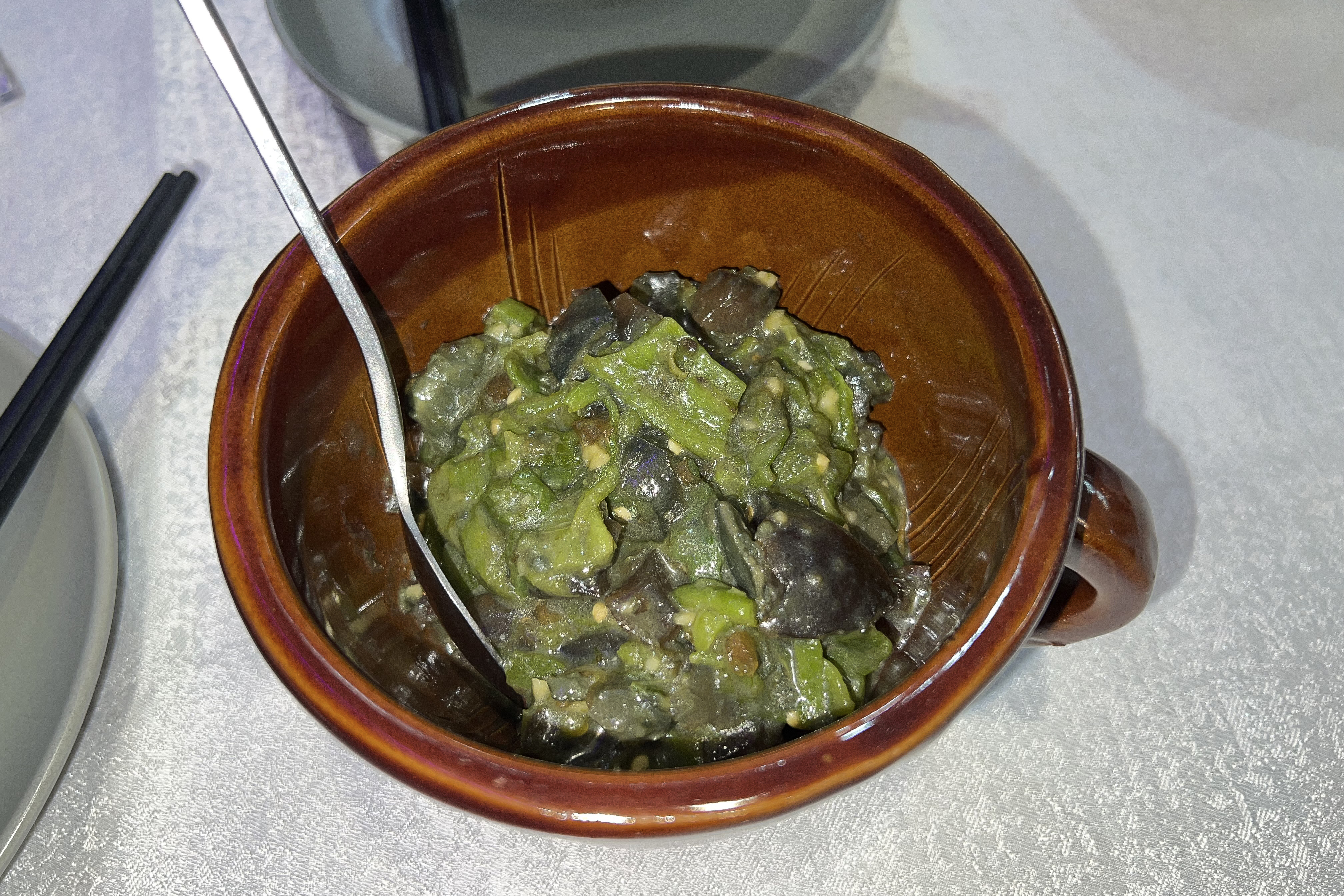
Pounded Chili with Century Egg (擂辣椒皮蛋) is a rustic Hunan classic that combines two love-it-or-hate-it ingredients into one unforgettable dish — creamy, earthy century eggs smashed together with charred green chilies, garlic, and a zesty dressing. The chilies are roasted until smoky, then pounded with the eggs into a chunky, addictive salad that is served cold. Here is the authentic Hunan method.
Pounded chili with century egg (擂辣椒皮蛋) is a Hunan cold dish where charred green chilies and century eggs are pounded together with garlic, soy sauce, and vinegar into a chunky, smoky, savory salad. The “lei” (擂) means to pound in a mortar, which melds the flavors together.
擂 (léi) means “to pound” or “to grind,” and it names a whole family of Hunan dishes: 擂辣椒, 擂茶, 擂茄子 — preparations where ingredients are crushed together in a stone mortar rather than chopped. The technique is old, rural, and practical: pounding bruises the ingredients so their juices mingle, producing a texture and flavor that slicing cannot achieve. In this dish, charred chilies and century egg are pounded together until the creamy yolk binds the smoky chili flesh into a rough, spoonable salad. It is one of the most distinctive things in Hunan cooking — humble, intense, and completely unlike anything else.
This recipe comes from a village kitchen in western Hunan, where a stone mortar and pestle (lei) sits permanently on the table. The cook taught me that the chilies must be charred over open flame until the skins blister — this smoky char is what makes the dish, not the heat.
Char the Chilies Over Open Flame
The single most important step is charring the chilies. Held over a gas flame, a grill, or a hot dry pan, the skins blister and blacken while the flesh inside steams and softens. That charring does two things: it removes the raw, grassy edge of the chili, and it creates smoky compounds that become the backbone of the dish’s flavor. The blistered skins are then rubbed off (or left partly on for extra smokiness), and the softened flesh is ready to pound. Boiling or roasting in an oven will soften the chilies but will not produce the same char — this dish is defined by fire.
Century Egg: What It Is
- Preserved duck egg — cured for weeks in an alkaline mixture of clay, ash, salt, and lime, which transforms the white into a translucent amber jelly and the yolk into a creamy, dark green-grey paste
- The flavor is savory and faintly ammoniacal — mild in small amounts, and it makes sense once you taste it against the smoky chili
- The yolk is the binder — its creaminess holds the pounded salad together; do not discard it
- Ready-to-eat — sold cooked and peeled in jars or vacuum packs; simply cut into wedges
- Buy from a reputable brand — quality varies significantly, and a good century egg is much milder than a poor one
Ingredients and Where to Find Them
- Century eggs — century eggs, ready to eat
- Long green chilies — long green chilies, or mild Italian frying peppers for a gentler version
- Chinkiang black vinegar — Chinkiang vinegar for the dressing
Also needed: garlic, light soy sauce, sesame oil, sugar, and salt. Some versions add a spoonful of chili oil, a splash of fish sauce, or a few drops of 花椒油 (Sichuan peppercorn oil) for a numbing edge.
How to Make It
- Char 6 long green chilies over an open flame or in a dry hot pan until the skins blister and blacken, about 5 minutes
- Transfer to a bowl, cover, and steam 5 minutes; then rub off most of the skins and remove the stems
- Peel 3 century eggs and cut each into 6 wedges
- Pound 3 garlic cloves with a pinch of salt in a mortar until crushed
- Add the chilies and pound roughly — you want a chunky paste, not a purée
- Add the century eggs and pound gently just until they break up and bind the chilies
- Season with 1 tablespoon light soy, 1 teaspoon Chinkiang vinegar, 1 teaspoon sesame oil, and 1/2 teaspoon sugar; mix and serve at room temperature
Variations
- With roasted eggplant — 擂茄子皮蛋 adds a whole charred eggplant, making it a fuller dish
- With fresh bird’s eye chili — for serious heat, pound one or two raw hot chilies in with the charred ones
- With 擂茶 — the same pounding technique applied to tea leaves, peanuts, and herbs makes Hunan’s famous ground tea
- With century egg only — the egg with garlic, vinegar, and sesame oil alone is a common cold appetizer on its own
Frequently Asked Questions
What is a century egg?
A preserved duck egg, cured for several weeks in an alkaline mixture of clay, ash, salt, and lime. The white becomes a translucent amber jelly and the yolk a creamy dark paste. Despite the name, it is not fermented for a century — typically a few weeks to a few months.
Do I need a mortar and pestle?
A stone mortar is traditional and gives the best texture, but a bowl and a fork work fine — press and crush rather than mash to a purée. The goal is a chunky, rustic salad, so do not overwork it.
How spicy is this dish?
Mild to moderate — the charred chilies provide smoky flavor more than raw heat. Use milder long peppers for a gentle version, or add a fresh bird’s eye chili for extra fire.
Is century egg safe to eat?
Yes — commercially produced century eggs are made with modern alkaline curing rather than the lead oxide once used historically, and they are safe to eat as sold. Buy from a reputable brand and keep them refrigerated after opening.
More Hunan Classics
Explore Hunan flavor with my Hunan Rice Noodles 湖南米粉, the fiery Xiao Chao Rou 小炒肉, or the bold Yongzhou Blood Duck 永州血鸭.
As an Amazon Associate, I earn from qualifying purchases. These are affiliate links at no extra cost to you.