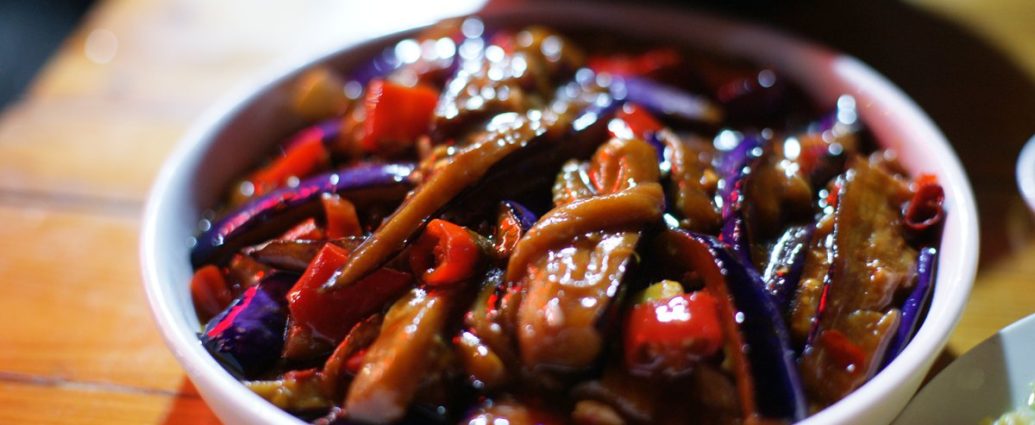
Yu Xiang Eggplant (鱼香茄子), or Fish-Fragrant Eggplant, is a classic Sichuan stir-fry where tender eggplant is bathed in a glossy, aromatic sauce of pickled chilies, garlic, ginger, and scallions. Despite the name, there is no fish — “fish-fragrant” refers to a traditional Sichuan flavor profile. The eggplant soaks up the sauce like a sponge, creating a dish that is simultaneously savory, tangy, sweet, and lightly spicy. Learn how to make this vegetarian Sichuan classic at home.
The name 鱼香 (yú xiāng, “fish-fragrant”) comes from a genuine culinary tradition: in Sichuan, cooks once prepared freshwater fish with a particular combination of pickled chilies, garlic, ginger, sugar, and vinegar to mask any muddiness. The seasoning was so good that it was applied to other ingredients — pork, eggplant, tofu — and 鱼香 became a flavor profile in its own right, entirely without fish. The formula is one of the most recognizable in Chinese cooking: 咸甜酸辣兼备 (salty, sweet, sour, and spicy all at once), with the aromatics of garlic, ginger, and scallion running through it. 鱼香茄子 is where that profile shows best, because eggplant absorbs sauce better than almost anything else.
This recipe comes from a Chengdu chef who taught me the most important trick for fish-fragrant eggplant: salt the eggplant cubes and let them rest for 20 minutes before cooking. This draws out moisture, prevents the eggplant from absorbing excessive oil, and gives it a creamy, custard-like texture.
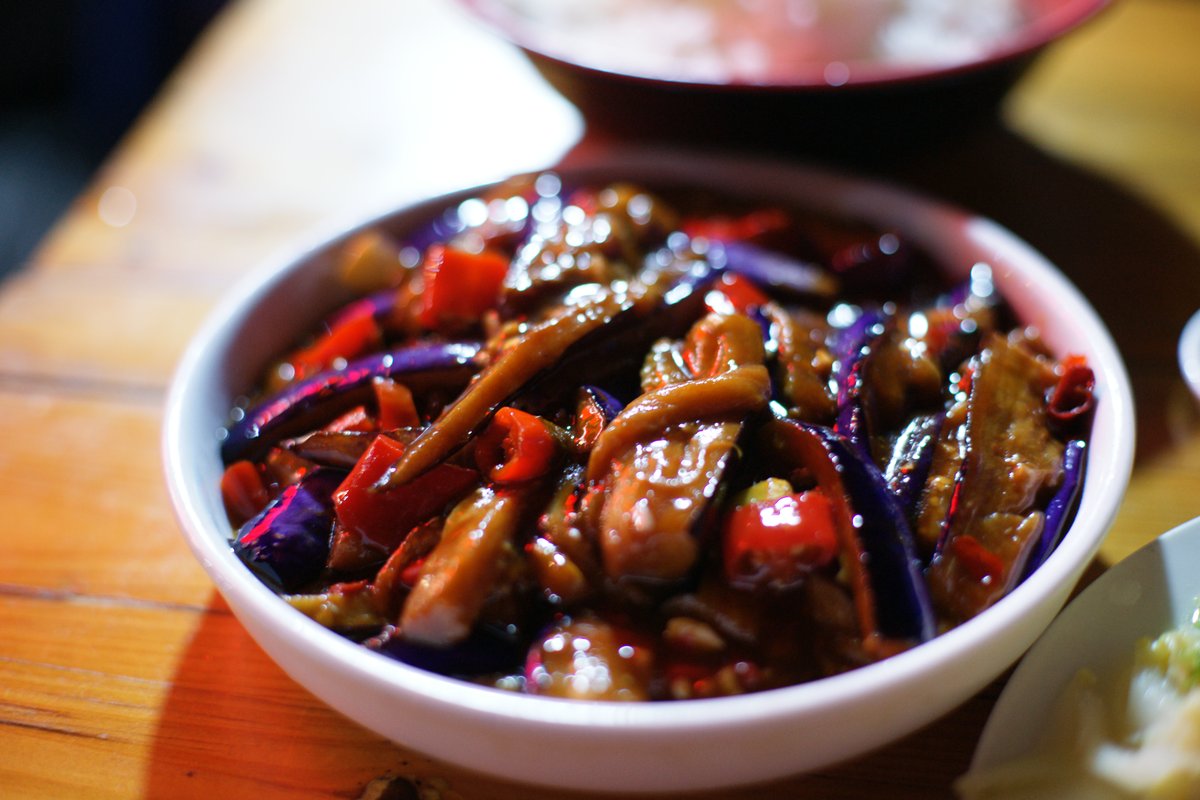
Why Salting the Eggplant Matters
Eggplant is a sponge. Its flesh is full of tiny air pockets that collapse under heat and fill with whatever liquid is available — which, in a stir-fry, means oil. That is why badly made eggplant dishes are greasy and heavy. Salting solves it: the salt draws water out of the cells, the air pockets fill with that water instead of oil, and the flesh softens into a creamy, custard-like texture that absorbs sauce rather than grease. Twenty minutes is enough. Pat the cubes dry afterward and they will brown rather than steam. This one step changes the dish from heavy to silky.
The 鱼香 Balance
The flavor profile is a precise four-way tension, and the classic ratio is worth learning by heart:
- 咸 (salty) — light soy sauce and the saltiness of the pickled chilies
- 甜 (sweet) — sugar, which rounds the vinegar and gives the sauce its gloss
- 酸 (sour) — Chinkiang vinegar, added late so it stays bright
- 辣 (spicy) — pickled red chilies (泡椒) or doubanjiang, for a fermented, aromatic heat
Garlic, ginger, and scallion provide the aromatic spine, and a cornstarch slurry gives the sauce its characteristic clinging body. Sichuan cooks describe the ideal as 荔枝味 — “lychee flavor” — because the sweet-sour balance should be bright and fruity rather than heavy.
Ingredients and Where to Find Them
- Asian eggplant — long Asian eggplant, or Western eggplant with the skin partly peeled
- Pickled chilies or doubanjiang — Pixian doubanjiang is the accessible substitute for 泡椒
- Chinkiang black vinegar — Chinkiang vinegar for the sour element
Also needed: garlic, ginger, scallions, sugar, light soy sauce, Shaoxing wine, cornstarch, and a high-smoke-point oil. Minced pork is a common optional addition for a non-vegetarian version.
How to Cook It
- Cut 600g (1.3 lb) eggplant into 3cm cubes, toss with 1 teaspoon salt, and rest 20 minutes; pat dry
- Mix the sauce: 2 tablespoons light soy, 2 tablespoons Chinkiang vinegar, 1.5 tablespoons sugar, 1 teaspoon Shaoxing wine, 1 teaspoon cornstarch, and 4 tablespoons water
- Heat 3 tablespoons oil in a wok over medium-high heat and fry the eggplant until golden and soft, 5–6 minutes; remove
- Add 1 tablespoon oil, then 1.5 tablespoons doubanjiang; fry 30 seconds until the oil turns red
- Add 4 minced garlic cloves, 1 tablespoon minced ginger, and the scallion whites; stir 20 seconds
- Return the eggplant, pour in the sauce, and toss over high heat 1 minute until glossy and thickened
- Add the scallion greens, toss once, and serve with steamed rice
Variations
- With minced pork — brown 100g minced pork after the doubanjiang for a heartier version
- With 鱼香肉丝 — the same sauce applied to shredded pork; see my Yu Xiang Rou Si 鱼香肉丝
- With tofu — firm tofu cubes, pan-fried first, work beautifully in the same sauce
- Less oily — steam the salted eggplant for 8 minutes instead of frying, then finish in the sauce
Frequently Asked Questions
Why is it called “fish-fragrant” if there is no fish?
The name refers to a Sichuan seasoning combination traditionally used to prepare fish — pickled chilies, garlic, ginger, sugar, and vinegar. The flavor was so popular that cooks applied it to other ingredients, and 鱼香 became a standalone profile. There is no fish in the dish.
How do I stop the eggplant from soaking up all the oil?
Salt it first. Twenty minutes of salting draws out water, which fills the eggplant’s air pockets so they cannot absorb as much oil. Pat the cubes dry before frying, and use a hot pan so the surface seals quickly. Steaming the eggplant before saucing it is an even lighter option.
Can I use regular eggplant?
Yes, but peel the skin partially (leaving stripes) and cut into smaller pieces, as Western eggplant has thicker skin and more seeds. The salting step becomes even more important.
Is this dish vegetarian?
As written, yes — the sauce contains no meat or fish. Do check your doubanjiang, as a few brands include meat or fish derivatives. The dish is traditionally vegetarian in many Sichuan homes, which is part of its enduring popularity.
More Sichuan Classics
Love Sichuan flavors? Try my Yu Xiang Rou Si 鱼香肉丝, the iconic Mapo Tofu 麻婆豆腐, or the beloved Twice-Cooked Pork 回锅肉.
As an Amazon Associate, I earn from qualifying purchases. These are affiliate links at no extra cost to you.